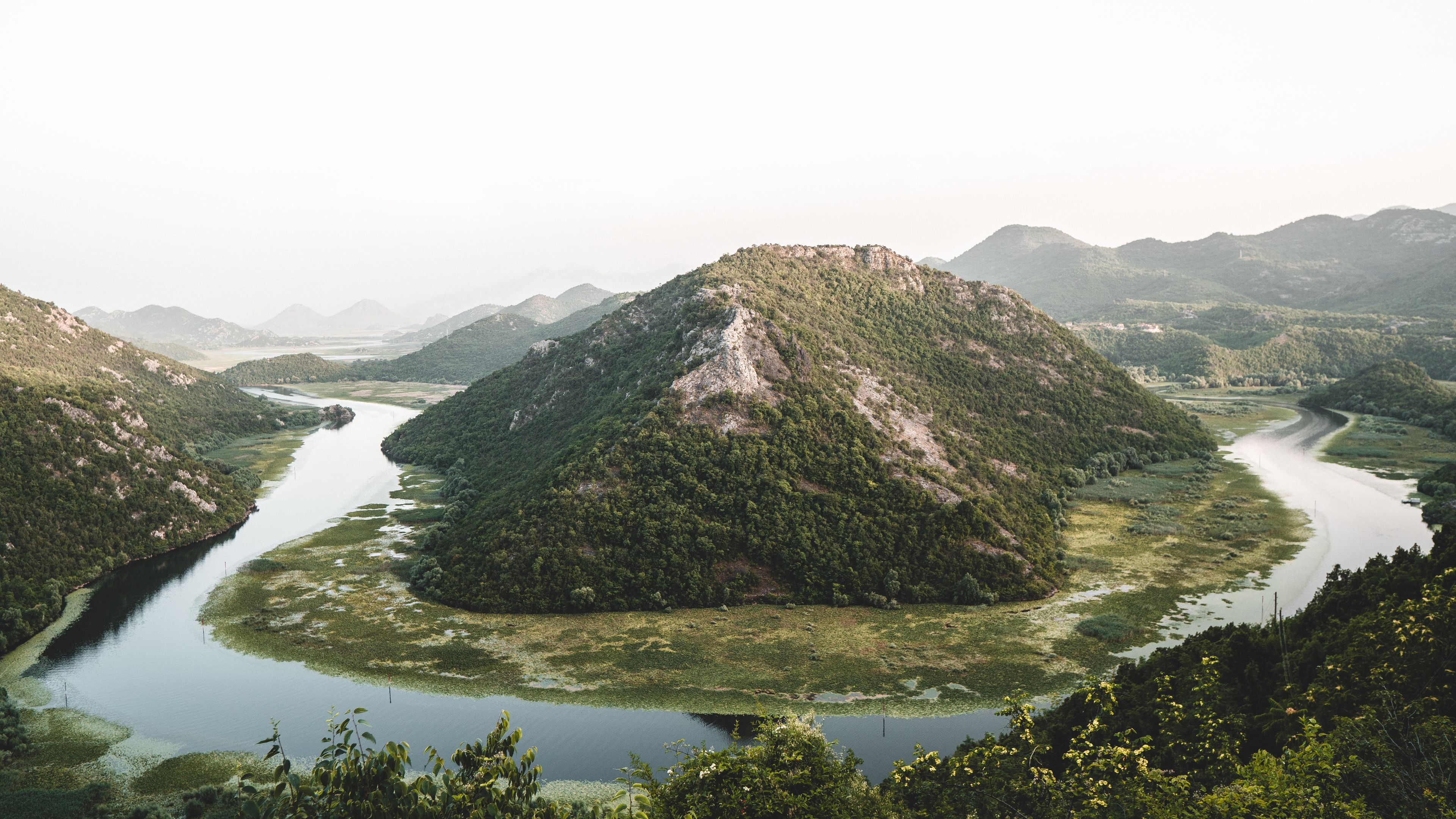
Lake Skadar
Spring turns the plain into water, and the lake steps quietly outward.
Lake Skadar is a wide, soft-edged lake where land and water keep trading places.
In spring it doesn’t just rise—it spreads, seeping into fields and willow lines until the map feels provisional.
It matters because it teaches you to watch change without noise: a slow overflow, a quieter kind of drama.
Where the Fields Become Water Without a Shoreline
Most visitors arrive looking for the lake as a single surface—open water, boats, the classic views. In spring, Skadar is less a lake than a decision being revised. The water moves off the obvious basin and into the low plains, taking back channels, vineyards’ edges, and the spaces between reed beds. There isn’t always a clean shoreline to stand on. Instead, there are half-submerged fences, lone fruit trees with their trunks darkened by tide-like stains, and roads that feel a little too close to the water. If you slow down near Virpazar or along the quieter rural edges, you’ll notice how sound changes first. The lake dampens it. Cars become distant; birds feel closer. The flooded fields hold reflections in a thinner layer than the main lake—like a second surface laid over the land. This is the Skadar many people miss: not a destination, but an atmosphere that expands beyond the waterline.
The Late-Spring Morning When the Floodwater Is Glass
The transformation happens on a mild spring morning after a night of rain upstream—when the water has risen just enough to touch the plains, but the wind hasn’t arrived. Between about 06:15 and 08:00, the flooded fields are at their most convincing. The shallow water is smooth and pale, holding the sky with almost no texture. Reeds and willow branches look doubled, as if the lake has started practicing illusions. In that window, Skadar feels wider than it is. The mountains that ring the basin—Rumija and the dark ridges toward Albania—seem to lean closer because their reflections are uninterrupted by waves. Even small movements become visible: a ripple drawn behind a waterbird, the slow drift of pollen, the faint current where a channel meets the plain. As the sun climbs, the surface breaks into glare and small wind patterns, and the spell loosens. If you want to feel the lake stepping outward, come early, when it still believes in stillness.
The Reflections
In flood season, reflections appear in layers: mountains on the deeper lake, reeds and fence posts on the thin field-water. When the air is calm, the flooded plain becomes a mirror with interruptions—each reed stem a small, deliberate cut in the image.
The Water
The water shifts between green-grey and tea-brown, colored by silt and wetland tannins stirred by spring inflow. Where it spreads thinly over grass, it turns lighter—silvery, almost milky—because the pale sky and submerged vegetation brighten it from below.
The Landscape
Skadar is framed by low mountains and long reed margins that make the horizon feel soft rather than sharp. In spring, mist often sits just above the water at dawn, separating the dark hills from the brighter surface like a seam.
Best Angles
Virpazar bridge and the canal edge
Stand just off the bridge and look outward toward the reeds; frame the canal leading into wider water. Best in early morning when the surface is unbroken and the town behind you goes quiet.
Pavlova Strana overlook (Rijeka Crnojevića bend)
Face the river’s curve and keep the mountains high in the frame; the S-shape reads differently in spring when the surrounding flats look saturated and dark. Late afternoon side light gives the bend depth.
Rural edges near Godinje/Murići (field-water margins)
Look for shallow floodwater among grasses and isolated trees; shoot low, parallel to the surface, to catch thin reflections most people walk past. The mood is quieter than the main viewpoints.
A reed corridor at water level (small boat, no rush)
Let the reeds close in and keep the camera down; it’s less about the panorama and more about the hush of narrow water. Pause and listen before you frame anything.
Crowd pattern — Virpazar is busiest late morning to mid-afternoon, especially on weekends; early mornings are often empty except for fishermen and a few boats preparing.
Effort level — minimal walking if you stay near Virpazar; moderate if you add overlooks and rural edges by car with short roadside stops.
Access note — Lake Skadar is a national park; expect an entrance fee for certain activities/areas and boat tours, and confirm current rules locally, especially in spring high water.
What to bring — waterproof shoes for muddy margins, a light jacket for dawn chill, insect repellent near reeds, and a lens cloth (spring mist and spray settle quickly).
Handpicked Stays & Tables
Places chosen for beauty and intention, not algorithms. Each one is worth your time.

Hotel Pelikan Virpazar
Virpazar

Apartments Rijeka Crnojevića (local guesthouses)
Rijeka Crnojevića

Konoba Badanj
Near Virpazar

Restaurant Mostina
Rijeka Crnojevića
In spring, Skadar doesn’t ask you to arrive—it simply expands until you notice.