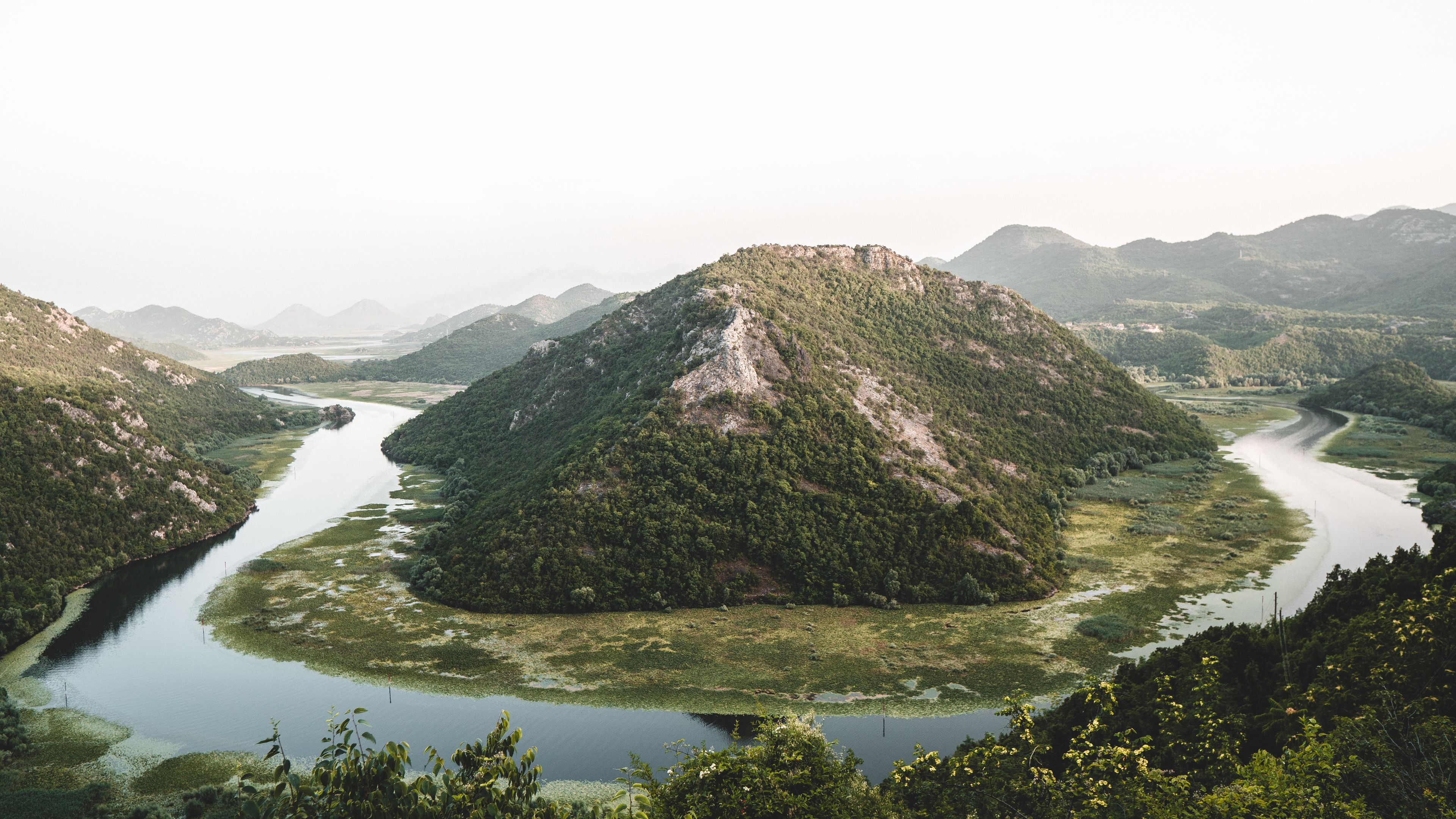
Lake Skadar
Where the reeds do the talking, and the lake listens back.
Lake Skadar is a wide, living quiet, held between limestone and low water.
It doesn’t behave like a single lake—more a shifting reed country with channels, shallows, and soft edges.
If you come for stillness, it gives you something rarer: a place where silence has texture.
The Reeds Aren’t Background — They’re the Main Event
Most visitors skim Skadar the way you skim a map: Virpazar, a quick boat, a photo of water lilies, then back to the road. But the lake’s real character sits low, in the reedbeds that look like nothing from a distance. Step away from the loudest pontoons and you begin to hear it: the dry click of stalks, the small percussion of insects, the hush of a bird lifting out of cover, the soft slap of water against a stem. The reeds turn wind into sound you can locate—near, then far, then gone. Skadar is shallow and changeable, and the reed line marks that change with precision. You can watch the lake “breathe” as ripples thicken and thin along the edge, as floating leaves tremble, as light breaks into long strips. People miss this because it isn’t a single view. It’s a slow perimeter—ten quiet minutes where nothing dramatic happens, and everything becomes specific.
The Minute the Boat Engines Cut — Late Afternoon into Blue Hour
Skadar shifts when the last tour boats turn back and the channels stop carrying noise. It’s not an abstract calm; you can hear the transition. The water’s surface loosens, then smooths. The reedbeds stop shivering and begin to hold their shape. Birds that stayed hidden during the day start moving in short, practical flights, as if the lake has reopened. This moment often lands in the last 30–45 minutes before sunset and continues into the first stretch of blue hour. The hills around the lake lose their glare and become evenly toned—grey-green, then slate. The open water darkens first, while the shallows keep a faint, tea-colored translucence. Even the smells change: warm plant matter, damp silt, a trace of minty wild herbs near the shore. If you’re on a quiet bank or a small wooden platform, you’ll notice how distance returns. Skadar feels larger when it stops performing.
The Reflections
In calm conditions the lake reflects in layers: sky first, then a darker band of hills, then a thin mirrored fringe of reeds that looks like a pencil line. When a light breeze arrives, reflections don’t disappear—they fragment into small, repeating tiles along the channels.
The Water
The water often reads as olive-green with brown undertones, stained by vegetation and the lake’s shallow, silty bottom. In the reed corridors it turns darker—almost bottle-green—while lily areas can look like muted jade where leaves filter the light.
The Landscape
Skadar is framed by low mountains and limestone slopes that feel close even when the water is wide. Mist doesn’t always sit on the whole lake; it gathers in pockets over channels and fields, leaving the rest clear, like selective soft focus.
Best Angles
Virpazar waterfront, but 5 minutes away from the main docks
Walk along the quieter edge away from the loudest boats; face south-southwest to frame reeds in the foreground with the hills as a low horizon.
Pavlova Strana viewpoint (Rijeka Crnojevića bend)
Stand at the stone wall and aim down into the river’s curve; late afternoon works best when the water becomes a dark ribbon and the slopes turn matte.
Vranjina causeway edge (near the bridge)
Most people shoot the road and move on; instead frame the reed flats parallel to the causeway—look for repeating lines and small boats as scale.
A still reed channel reached by a small, non-rushed boat ride
Stop asking for the next sight; ask for a pause. Sit low, let the frame fill with reeds and water, and notice how the sound changes before the light does.
Crowd pattern — midday around Virpazar is busiest; the lake empties quickly in the last hour before sunset, especially outside July–August.
Effort level — mostly flat walking and standing; the real effort is patience and choosing quieter edges over the central docks.
Access note — Lake Skadar is a national park; expect small fees in some areas/activities and check current rules for boats, fishing, and protected zones.
What to bring — insect repellent for reed areas, a light layer for blue hour, water, and something to sit on if you plan to wait in one place.
Handpicked Stays & Tables
Places chosen for beauty and intention, not algorithms. Each one is worth your time.

Hotel De'Andros
Virpazar

Cekin Apartments
Rijeka Crnojevića

Konoba Badanj
Virpazar

Restaurant Poseljani
Godinje (Skadar wine village area)
Skadar doesn’t ask you to do much—only to stay long enough to hear it settle.