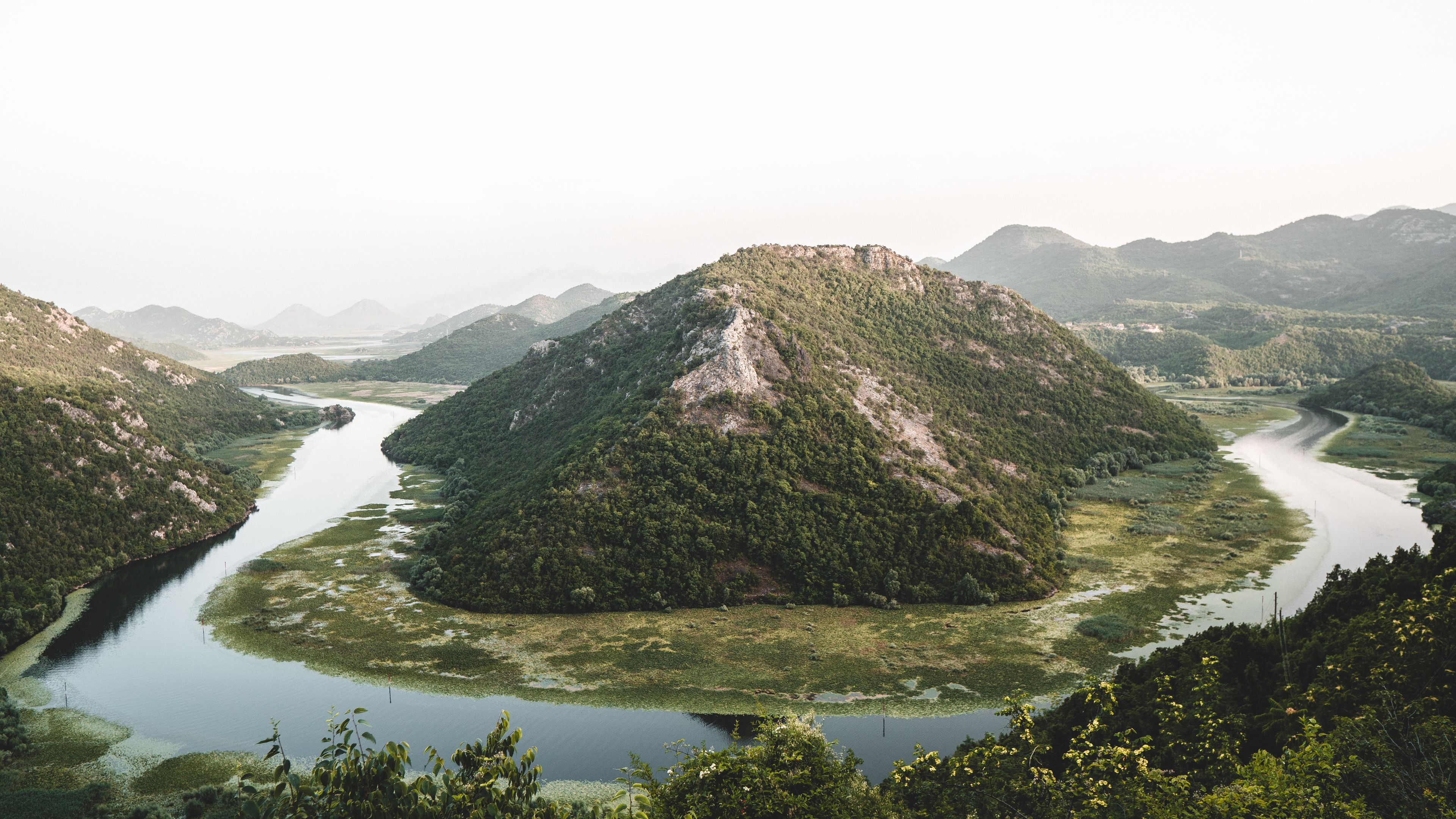
Lake Skadar
When the reeds hold their breath and the pelicans drift in.
Lake Skadar is a wide, living lake where water and reeds trade places.
It isn’t defined by a single shoreline, but by quiet channels that keep changing.
If you’re drawn to soft sound and slow presence, it meets you there.
Where the Lily Pads Stop Being Decorative
Most visits stay near Virpazar and the obvious open water, where the lake behaves like a lake: horizon, boats, chatter carrying across the surface. The quieter Skadar is in the backwaters—those narrow, reed-walled corridors where lily pads thicken into a floating ceiling and the world becomes close again. Here, distance collapses. A heron’s step is loud. A fish turning under the pads makes a small, private tremor. The smell shifts too: warm vegetation, sun on mud, the faint sour-sweet note of still water. Pelicans are often searched for like a checklist item, but in these channels they arrive as a change in pressure and pace—white bodies sliding low, wings barely bothering the air. You notice them first by how everything else pauses. Even the boatman tends to speak less. The lake doesn’t feel bigger here; it feels deeper, as if it’s keeping something to itself.
The Half Hour Before the First Tour Boats
Lake Skadar transforms in the quiet half hour before the day’s first departures—when Virpazar is awake but not yet performing, and the water has not been cut into lanes. In late spring and early summer, this window carries a particular softness: light comes in low and pale, and the reeds hold their color without glare. The backwaters stay in shadow longer than the open lake, so you move through alternating bands of cool and gold, like walking between rooms. This is when pelicans feel most like part of the lake’s own rhythm rather than visitors passing through. They drift in small groups, patient, almost heavy with calm, and their reflections remain intact because the surface hasn’t been unsettled. You hear small things clearly: a wing brushing water, the click of insects, the distant clank of a gate in the village. Then, gradually, the soundscape changes—an engine starting, voices gathering—and the lake loosens its stillness, as if it has been exhaling all along.
The Reflections
In the backwaters, reflections are less about mountains and more about reeds and sky stitched together. Pelicans appear twice—once as a white presence, once as a slightly darker echo that ripples at the edges.
The Water
The water shifts between smoked green and tea-brown, depending on depth and plant matter. Where lily pads thicken, it darkens to an inked olive, absorbing light instead of throwing it back.
The Landscape
Skadar is framed by low mountains and broad marsh, but the backwaters feel enclosed, almost corridor-like. Mist sits lightly in spring mornings, not dramatic—just enough to soften the far line into a suggestion.
Best Angles
Reed channels north of Virpazar (boat access)
Ask to go slowly into the narrow backwaters; face east for first light filtering through reeds, framing pelicans against a thin, bright strip of sky.
Rijeka Crnojevića bend viewpoint (Pavlova Strana)
Stand at the guardrail and look down into the river’s curve; late afternoon works best, letting the water read like brushed metal with the surrounding slopes as a quiet frame.
Near the island monasteries (Kom area, at distance)
Most people shoot the monastery straight-on; instead, frame it small behind reeds and lily pads to show how the lake swallows architecture back into wetland.
A stopped boat in a shaded channel
Turn off the engine and let the boat drift; don’t compose immediately—wait for the surface to settle, then watch for a pelican’s reflection to complete the scene.
Crowd pattern — Virpazar is calm early; late morning to mid-afternoon brings the densest boat traffic and the loudest water.
Effort level — physically light, but patience matters; stillness improves if you can linger without moving quickly.
Access note — the lake is a national park; expect an entrance fee and occasional route limits depending on water level and protected zones.
What to bring — a light layer for the first hour, insect repellent for the backwaters, binoculars for pelican distance, and a lens cloth for humid air spray.
Handpicked Stays & Tables
Places chosen for beauty and intention, not algorithms. Each one is worth your time.

Hotel DeAndros
Virpazar

Cuckoo's Nest (Čaršija / Rijeka Crnojevića area guesthouses)
Rijeka Crnojevića

Konoba Badanj
Virpazar

Restaurant Rijeka (local riverside spots in Rijeka Crnojevića)
Rijeka Crnojevića
In Skadar’s backwaters, the day doesn’t begin loudly—it simply becomes visible.