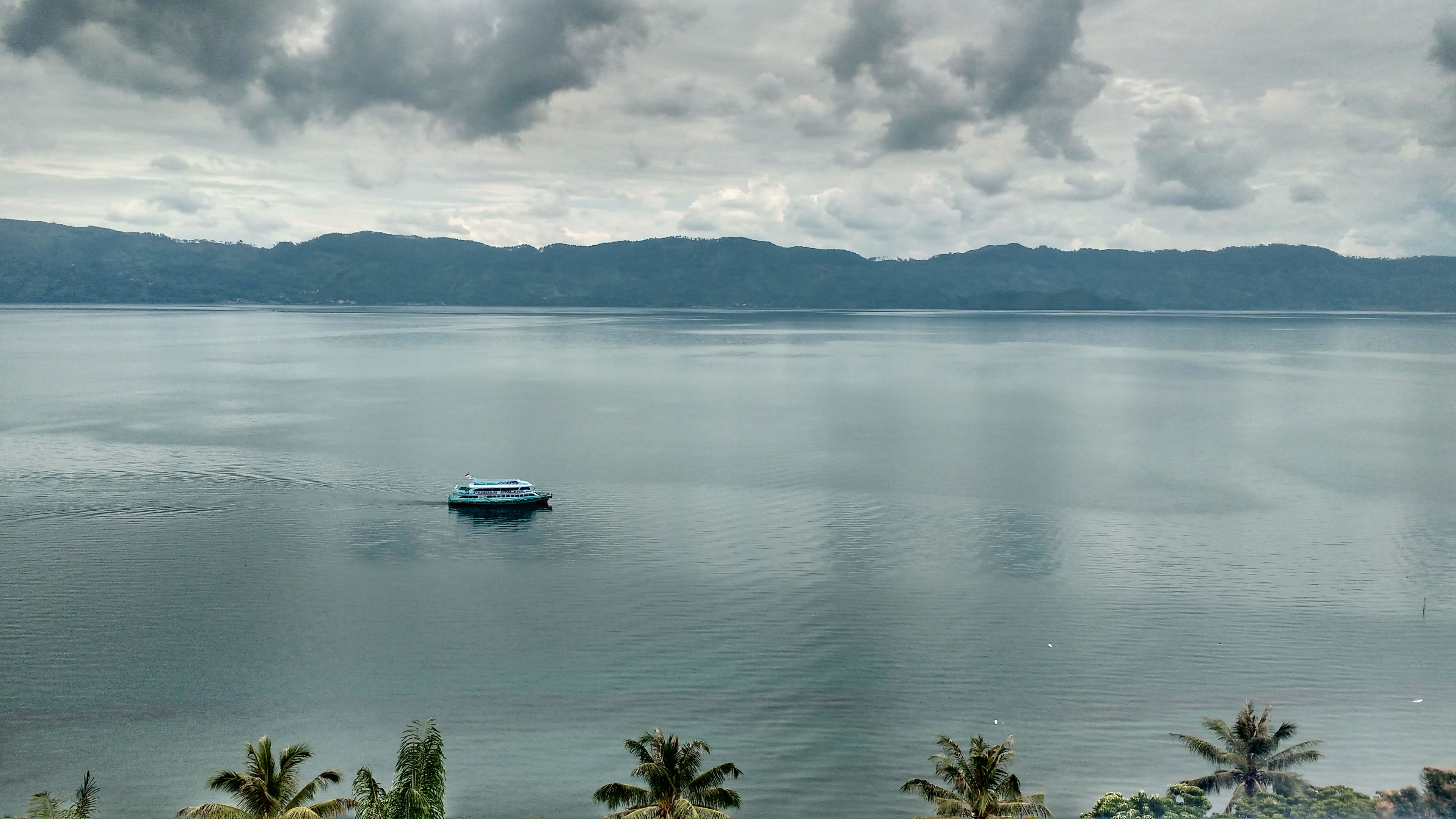
Lake Sentani
Where the reeds hold the sound until the hills let it go.
Lake Sentani sits under low, guarding hills, wide enough to feel like a held breath.
Its western edge turns the lake into a soft instrument—reeds, silted shallows, and villages shaping the quiet.
It matters because it teaches you to listen for distance: what sound does when water stays calm.
The Western Reeds When the Motorboats Turn Back
Most visitors meet Lake Sentani from the road and look outward—toward the open water, the scatter of islands, the bright line where sky and lake agree. The western reeds ask for the opposite. Here, the shoreline is not a border but a gradual softening: water becomes grass, grass becomes floating stems, and the lake takes on the slow logic of a wetland. In late afternoon, when the small motorboats begin to thin out, the surface stops being interrupted. The reeds start to show their own geometry: narrow lanes of darker water, little pockets where hyacinth gathers, a faint tremor where fish move without breaking the surface. Sound changes too. Village life is still there—voices, a distant drum practice, a clink of cooking pans—but the hills and reeds muffle it into something like a memory. If you stay long enough, you notice how the wind arrives in sections, not all at once, and how the western side seems to absorb it first.
The First Quiet Hour After Sunset Prayer
The lake shifts most clearly in the brief hour after dusk settles and before night fully takes the villages. On the western side, the reeds darken into a single mass, and the water loses its sparkle—becoming a flat, listening surface. Lights begin to appear one by one along the shore: small, warm points that don’t reflect sharply at first, only smearing into the shallows as if the lake is still deciding whether to mirror them. This is when the hills do their work. The daytime soundscape—engines, calling, splashes—falls away, and what remains travels differently. Drums from a village practice can reach you, but softened, the rhythm slowed by distance and damp air. The smell changes too: smoke from cooking fires, wet plant matter, and the clean metallic note of rain in the far hills. If there’s no wind, the reeds stand like a curtain, and the lake feels less like a view and more like a room you’re sitting inside.
The Reflections
On windless evenings, the reeds cast thin, vertical strokes that double in the water like pencil lines. Houses on stilts and small shoreline lights appear as stretched amber threads, broken only where floating plants gather.
The Water
The water near the western reeds often reads as tea-brown to olive, tinted by sediment and plant tannins in the shallows. Farther out, it shifts toward a muted blue-gray, especially under overcast skies or in the last light.
The Landscape
Low hills ring the lake in overlapping layers, making the horizon feel close and protective rather than vast. In the wet months, a light haze can sit in the folds of the hills, softening the edges of villages and palms.
Best Angles
Reed edge on the western shore near small village jetties
Stand at the end of a wooden jetty and face east-northeast; frame the reed curtain in the foreground with the lake opening behind it.
A slow boat ride skimming the reed line at dusk
Ask for an unhurried route tight to the reeds; shoot low across the water so the stems become a dark border and the hills sit quietly above.
Shallow channels where floating plants collect
Most people avoid these pockets—use them. They create still micro-reflections and a textured surface that makes the rest of the lake look smoother.
A seated pause on the shoreline, back to the road
Don’t frame anything. Listen for how the drumbeat arrives late and softened, and notice how the reeds hold the last light longer than open water.
Crowd pattern — Midday tends to be louder near roads and boat points; late evening thins out quickly, especially away from the main viewpoints.
Effort level — Minimal walking on flat ground, but expect uneven boards, soft mud near reeds, and the gentle instability of small jetties.
Access note — Village areas are lived-in spaces; ask before stepping onto private jetties or photographing people, and arrange boats through locals when possible.
What to bring — A small towel for humidity and boat spray, insect repellent for the reed edge at dusk, and a light layer for the temperature drop after rain.
Handpicked Stays & Tables
Places chosen for beauty and intention, not algorithms. Each one is worth your time.

Hotel Sentani Indah
Sentani, near the lake

Swiss-Belhotel Papua (Jayapura)
Jayapura, by the coast (day-trip distance to Sentani)

Restoran Yougwa
Around Sentani / Lake Sentani area

Local warung by the lakeside road
Sentani lakeshore
On the western reeds, Lake Sentani doesn’t perform—it settles, and the sound learns to soften.