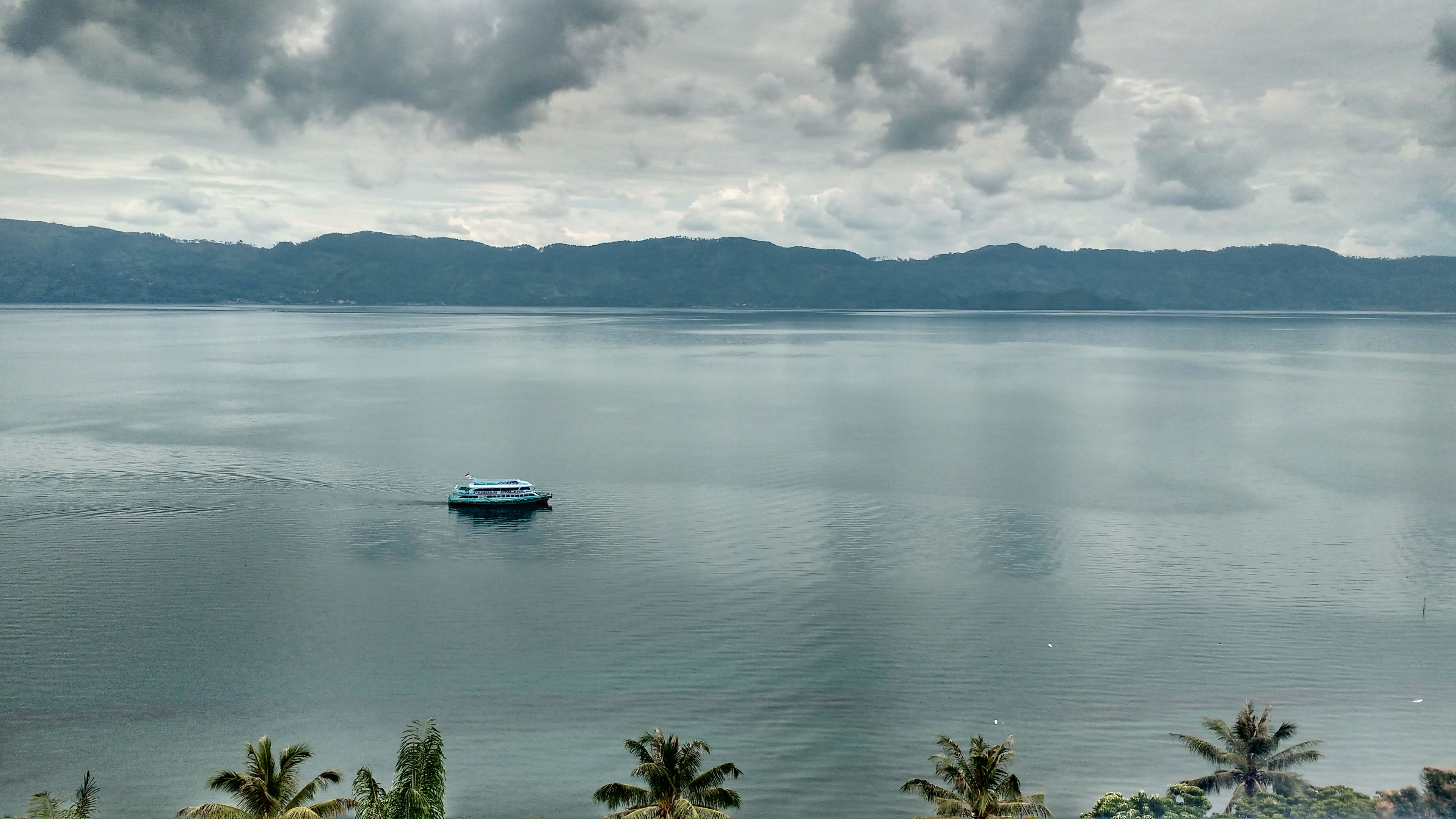
Lake Sentani
When rain lowers the sky and the hills turn to softened ink.
Lake Sentani lies wide and low beneath Papua’s ring of hills, close to the sea but held inland.
Its beauty is not sharp-edged; it arrives through weather—cloud, rain, and the slow changing of green into haze.
It asks for patience, then pays you back with a quiet kind of presence that stays after you leave.
The Islands When the Engines Pause
Most people meet Sentani through motion: a boat cutting across open water, a shoreline sliding by, a quick stop for photos. What gets missed is the lake’s in-between life—when the engines fall quiet and the small islands stop being destinations and start being silhouettes. In monsoon season, rain rarely arrives as drama. It comes as a softening. The hills on the far side lose their texture first, then their edges, until the whole horizon looks like it’s been lightly rubbed with charcoal. Watch the water close to the stilt villages: the surface holds tiny rings from drops, then smooths again, as if the lake can’t decide whether to speak. The air carries smoke from cooking fires—faint, vegetal, mixed with wet wood—and it settles low, making the greens look older, less bright, more lived-in. Stand still long enough and you notice how Sentani is less about seeing far, and more about seeing near: ripples, poles, reflections, and the slow rearranging of light under cloud.
The Hour the Cloud Base Drops
Sentani transforms when the monsoon cloud base lowers—usually in the late afternoon, when the day has warmed and the rain begins to gather weight. It’s a specific shift: the wind thins, the far hills dim, and the lake stops flashing. Colors don’t disappear; they mute. The greens move toward smoke-soft olive, the water toward steel with a quiet green undertone. If you’re on the shore, you feel the first coolness before you see the first heavy drops. If you’re on a boat, the world seems to contract: islands appear closer together, and the distance between you and the hills feels reduced, as if the lake is being gently folded. In this hour, the surface becomes a working mirror—interrupted by rain, then briefly restored between showers. The change is not sudden like a storm line; it’s gradual, almost tender, and that’s why it feels different. Sentani doesn’t turn dramatic. It turns intimate.
The Reflections
Between showers, the lake reflects in fragments: a dark hill line, then broken by stippled rain. Near the stilt houses, reflections stretch into long, thin bands around posts and boats, slightly blurred by current and wind.
The Water
The water reads as deep green-grey, with tea-dark shallows near the edges where sediment and plant matter tint it. Under monsoon cloud it loses sparkle, becoming matte, so the color feels heavier and more even across the surface.
The Landscape
A basin of low mountains holds the lake, their slopes dense with tropical green that turns subdued under rain. Islands scatter across the middle like quiet punctuation, and mist moves in layers, hiding and revealing the far shore in slow edits.
Best Angles
Hamak shoreline pull-offs (east side of the lake)
Stand close to the waterline and aim west toward the island-dotted center; keep the far hills high in frame to show the cloud ceiling pressing down.
Asei Island approach by small boat
Shoot low from the boat’s edge as you near the island; let rain texture the surface while the island stays dark and steady, almost cut-out.
Near the stilt villages around Yoboi
Most creators chase wide vistas—focus instead on posts, boats, and the narrow channels; frame reflections as vertical lines and let mist erase the background.
A quiet jetty at dusk, after the last crossings
Put the camera down for a minute; listen for rain on tin roofs and watch the lake’s surface settle between drops—the mood is the subject.
Crowd pattern — Midday shoreline areas can be active; early morning and late afternoon feel noticeably quieter, especially in rain
Effort level — Minimal walking if you stay near shore; boat time is easy but exposed to weather
Access note — Boat availability and prices vary; confirm return plans before weather thickens toward evening
What to bring — A light rain jacket, a dry bag for electronics, anti-fog cloth for lenses, and sandals that handle wet docks
Handpicked Stays & Tables
Places chosen for beauty and intention, not algorithms. Each one is worth your time.

Hotels in Sentani (lake-adjacent stays)
Sentani, near Lake Sentani and the airport

Jayapura city hotels
Jayapura (coastal city, west of Sentani)

Lakeside warungs in Sentani
Along the shore near Sentani town

Simple seafood spots in Jayapura
Jayapura waterfront areas
In monsoon light, Sentani doesn’t open outward—it gathers itself, and asks you to do the same.