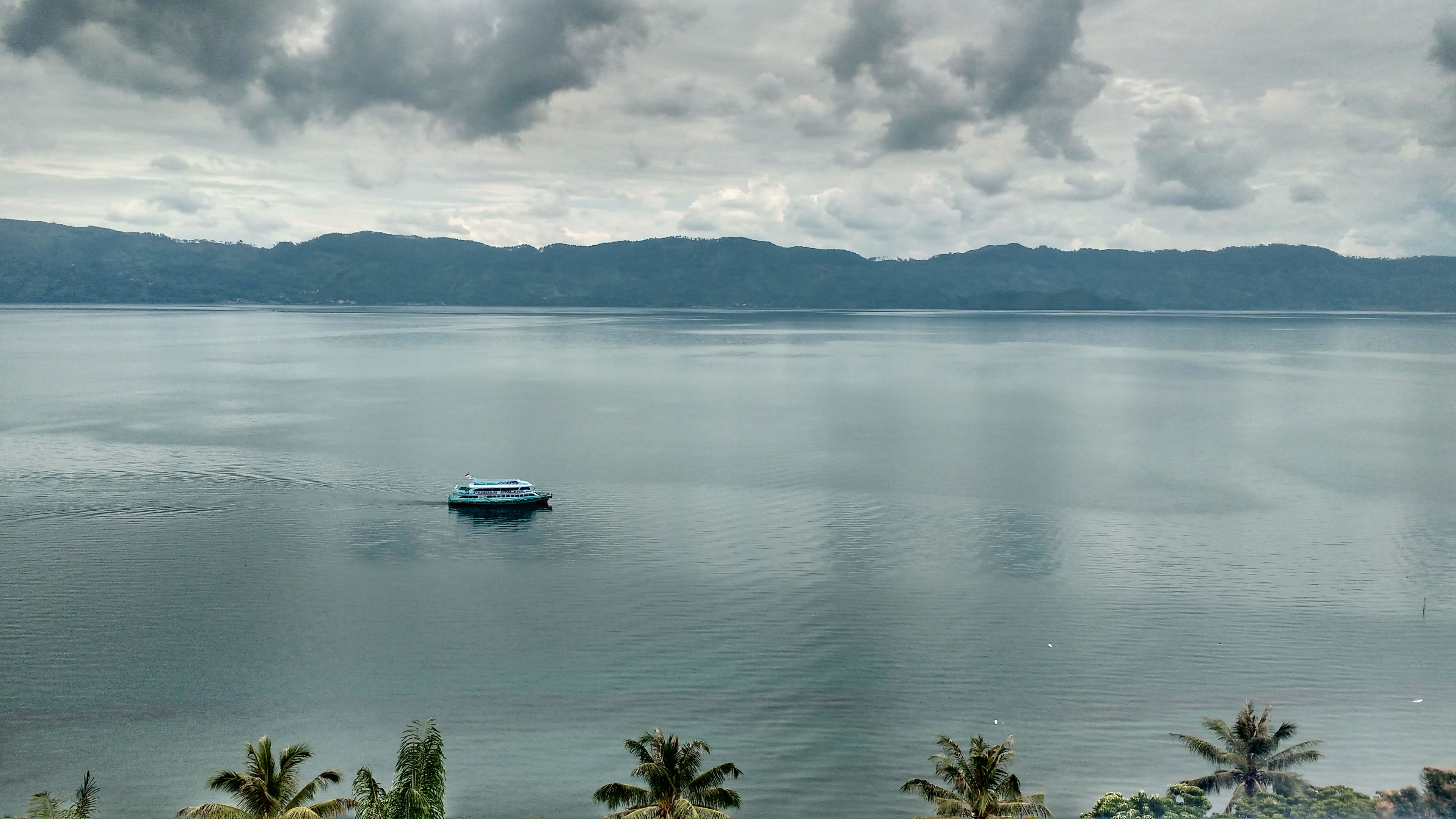
Lake Poso
After the last boat, the lake becomes a listening room.
Lake Poso sits inland in Central Sulawesi, long and quiet, held by hills.
Its scale reads like sea, but its details are small: insects, oars, changing light.
It matters because it rewards attention when there is almost nothing happening.
Beyond the Jetty, Where the Sound Changes
Most visitors stop at the jetty for photos: a few planks, a horizon line, a quick proof that the lake is here. But Lake Poso’s real shift begins one step past that point, when you stop using your eyes as the main tool. After dusk, the shoreline becomes two separate rooms: behind you, the village settles into soft domestic noise; in front, the water opens into a darker, cleaner silence. Listen for the night insects first. They arrive in layers—close, then farther back in the trees—until the sound feels like a ceiling. Under it, there is a second, thinner line: the faint dip of an oar from a canoe crossing late, not to be seen but to be heard. The lake carries that rhythm farther than you expect. Even when the surface looks still, it keeps transmitting. What people miss is that the “view” isn’t the far shore—it’s the distance between sounds, and how the lake makes that distance feel calm instead of empty.
The Fifteen Minutes After the Lamps Come On
Lake Poso transforms in the short interval when the last daylight drains away and the first house lights begin to appear along the shore. It’s not full night yet—there’s still a soft cobalt remaining over the water—but the contrast sharpens everything. The jetty posts turn into dark markers. Small ripples start to look like brushed metal rather than water. If you stand still, you’ll notice a change in the lake’s “volume.” In daylight, the surface distracts with brightness and movement; in this window, it becomes a receiver. The insects take over, steady and unhurried, and the lake seems to hold their sound in place. If a canoe moves, you hear the oar catch and release—one quiet syllable repeated at a human pace. It’s the moment when the lake stops being scenery and becomes presence. You don’t need a long plan—just enough time to let your attention slow down to match the water.
The Reflections
In calm evenings, the shoreline lights stretch into thin, trembling lines that break and rejoin with each small wave. During blue hour, the hills appear as a single dark mass reflected as a softer, slightly blurred twin.
The Water
On clear days the water reads deep blue-green, with lighter jade near shallow edges where sand and pale stones brighten it. After rain, it can turn tea-tinted along the margins as runoff softens the clarity without fully dulling the lake.
The Landscape
Low hills and forested slopes frame the lake with a continuous, unshowy outline. Mist is subtle here—more a veil at the far shore than a dramatic curtain—making distance feel gentle rather than remote.
Best Angles
Tentena lakeside jetty (facing across the open water)
Stand at the very end and frame wide, letting the horizon sit low; shoot toward the darker hills as the first lights appear to get thin reflection lines.
Small shoreline path just beyond the jetty, under trees
Turn back toward the village lights; the branches create a quiet border and the water becomes a dark plate with small points of light.
A low rock or step at the waterline near Tentena’s calmer coves
Get close to the surface and frame only water + a single boat; most creators stay chest-high and miss how the ripples texture the light.
A still corner near moored canoes, after the last departures
Leave the camera down for a minute; watch the rope slack, the slight turning of hulls, and listen for oars in the distance—this is the lake’s intimate scale.
Crowd pattern — Midday shore areas near town can be active; early morning and after 18:00 the lake thins out quickly and feels private.
Effort level — Mostly flat walking, but expect uneven edges, wet steps, and occasional mud after rain; night listening means standing still more than moving.
Access note — No formal permit is typically required for public shore access, but private jetties and hotel fronts may be restricted; ask before lingering after dark.
What to bring — A small headlamp for the walk back, insect repellent, a light layer for cooler night air, and a tripod if you want reflection lines without raising ISO too far.
Handpicked Stays & Tables
Places chosen for beauty and intention, not algorithms. Each one is worth your time.

Ue Datu Cottages
Tentena, lakeside

A lakeside homestay in Tentena (local family-run options)
Tentena, near the shore roads

Local lakeside warung in Tentena (seasonal stalls near the shore)
Tentena waterfront area

Simple town eateries along Tentena’s main road
Tentena center
At Lake Poso, night isn’t a curtain—it’s the moment the water starts to speak softly.