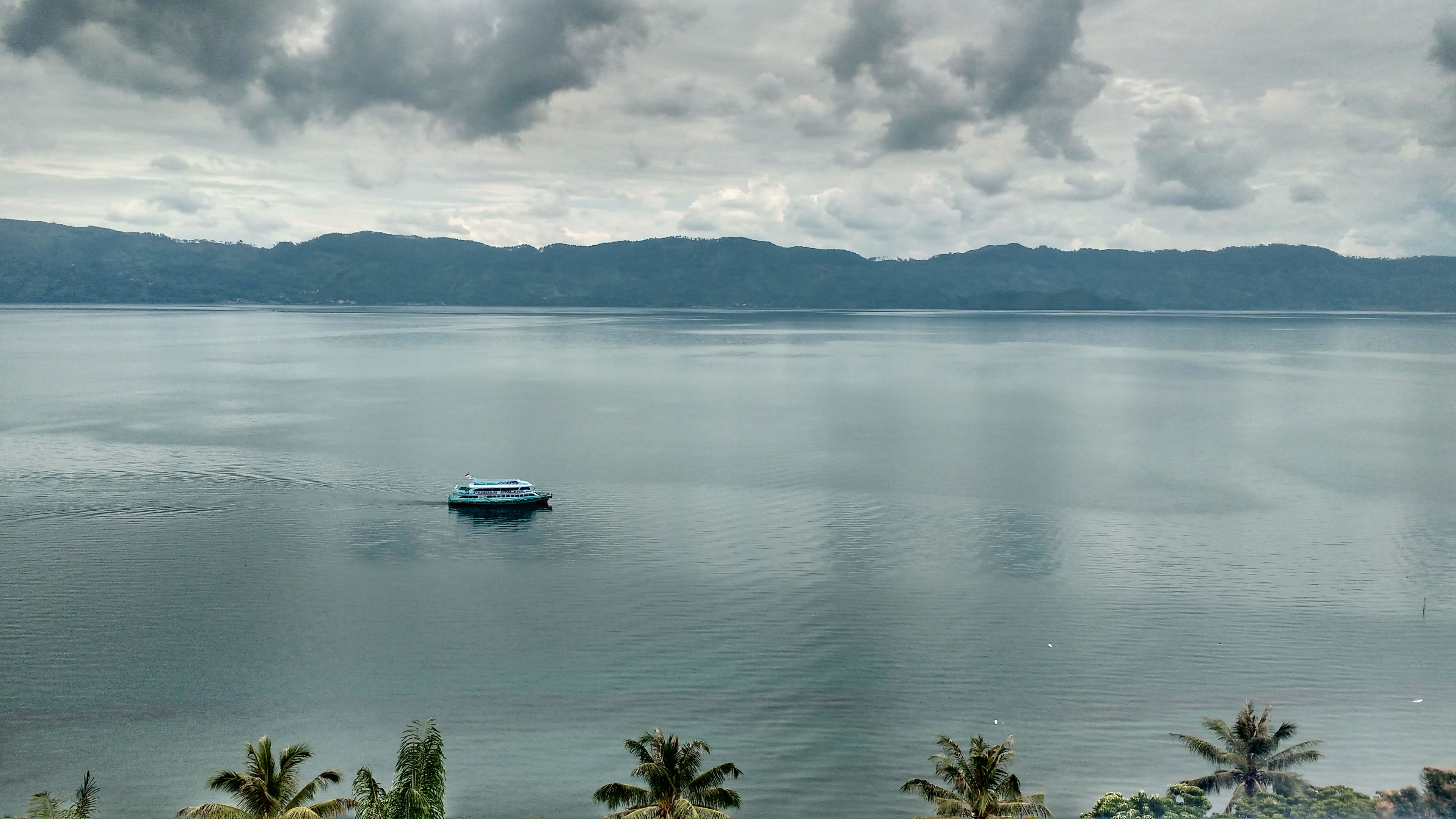
Lake Poso
Where the road ends in cacao shade, the lake arrives quietly.
Lake Poso is encountered more than it is revealed, a wide freshwater presence set deep in Central Sulawesi.
It doesn’t offer a single, agreed-upon lookout; it shows itself in fragments—between trees, houses, and low docks.
Its pull is subtle: the sense that the lake has been living its own day long before you arrived, and will continue after you leave.
The Shoreline You Only Notice When You Stop Looking for the Lake
Most arrivals at Lake Poso are spent trying to “find the view.” The back road through cacao groves does the opposite: it keeps the water withheld. You pass under a low canopy of leaves, the air slightly sweet and damp, and the lake keeps slipping away behind trunks and garden fences. Then, without any announcement, you hear it—small wave sounds against wood, a hollow tap from a moored boat, the hush that comes from open water nearby. What visitors miss is that Lake Poso is often best met at ground level, where the shoreline is lived-in: a narrow strip of sand, a few steps, a washing platform, a small jetty that isn’t meant as a photo spot. The lake’s scale becomes clearer here because it doesn’t need to perform. Watch the surface in the gaps between daily movements—after a motorbike passes, after a voice fades. The water settles back into itself, and you understand the lake as a presence, not a panorama.
The Fifteen Minutes After the Afternoon Wind Lets Go
Lake Poso changes fastest when the day’s breeze finally loosens its grip. In the late afternoon, the surface often carries a fine restlessness—small chop, quick flashes of light, a sense of constant re-drawing. Then, sometimes without warning, the wind drops. Not gradually, but as if someone closed a door. For about fifteen minutes, the lake rearranges its mood. The noise reduces first: less slap on the shore, fewer rattles from ropes and tin roofs nearby. Then the reflections begin to hold. Dark shapes—coconut trunks, stilted edges of houses, the soft line of the opposite shore—stop breaking apart and become legible. Even the air feels more spacious, as if the heat lifts slightly off the water. This is the moment to stay still where you already are, even if there’s no “viewpoint.” The transformation is close-range: the lake turns from movement into surface, from brightness into depth, and you can feel the scale of it without needing to see the whole thing.
The Reflections
When the wind pauses, reflections appear in narrow, exact bands: tree trunks become vertical ink lines, and low roofs repeat as softened rectangles. The best reflections aren’t the dramatic kind—they’re steady, domestic, and strangely calming.
The Water
The water reads as deep green-blue near shaded banks, shifting to pale steel where the sky opens above it. In clear, calm spells, the color brightens along sandy shallows, where suspended light makes the edge look slightly milky.
The Landscape
Lake Poso is framed less by a single mountain wall and more by a layered horizon—low hills, tree lines, and occasional openings that suggest how wide the basin really is. The most persuasive atmosphere comes from the near shore: cacao shade, coconut silhouettes, and the quiet geometry of jetties and steps.
Best Angles
A small wooden jetty near Tentena’s lakeside neighborhoods
Stand at the end of the boards and frame back toward the shore, not out to the center—include posts, ropes, and the first band of water where reflections settle.
Cacao-grove edge where the road briefly runs parallel to the water
Stop where the trees thin and shoot through the gap; aim low to keep leaves as a dark frame and let the lake appear as a quiet strip of light.
A simple shoreline step or washing platform at dusk
Most creators chase the widest scene; instead, frame the meeting point—wet wood, a single boat shadow, and the surface texture changing as the wind drops.
Sitting level with the water on sand or a low bank
No camera-first composition—just stay close enough to hear the smallest waves, and let the lake feel larger than what you can see.
Crowd pattern — Most areas feel quiet on weekdays; late afternoons near town can be busier with local routines rather than tourism.
Effort level — Expect slow, stop-and-start exploration by road and on foot; the best encounters are short walks to the water, not long trails.
Access note — Shore access is often informal and passes near homes; be respectful, ask if you’re unsure, and avoid treating working jetties as viewpoints.
What to bring — Light rain layer, sandals that can get wet, insect repellent for shaded grove edges, and a small cloth for humidity on lenses/phones.
Handpicked Stays & Tables
Places chosen for beauty and intention, not algorithms. Each one is worth your time.

Tentena lakeside guesthouses (local losmen options)
Tentena, near the shore

Basic homestay in a lakeside neighborhood
Around Tentena / Lake Poso edges

Warung makan by the lakeside road (Tentena)
Tentena, near the water

Simple coffee stall near the market area
Tentena
At Lake Poso, the clearest meeting happens when you stop asking the shoreline to explain itself.