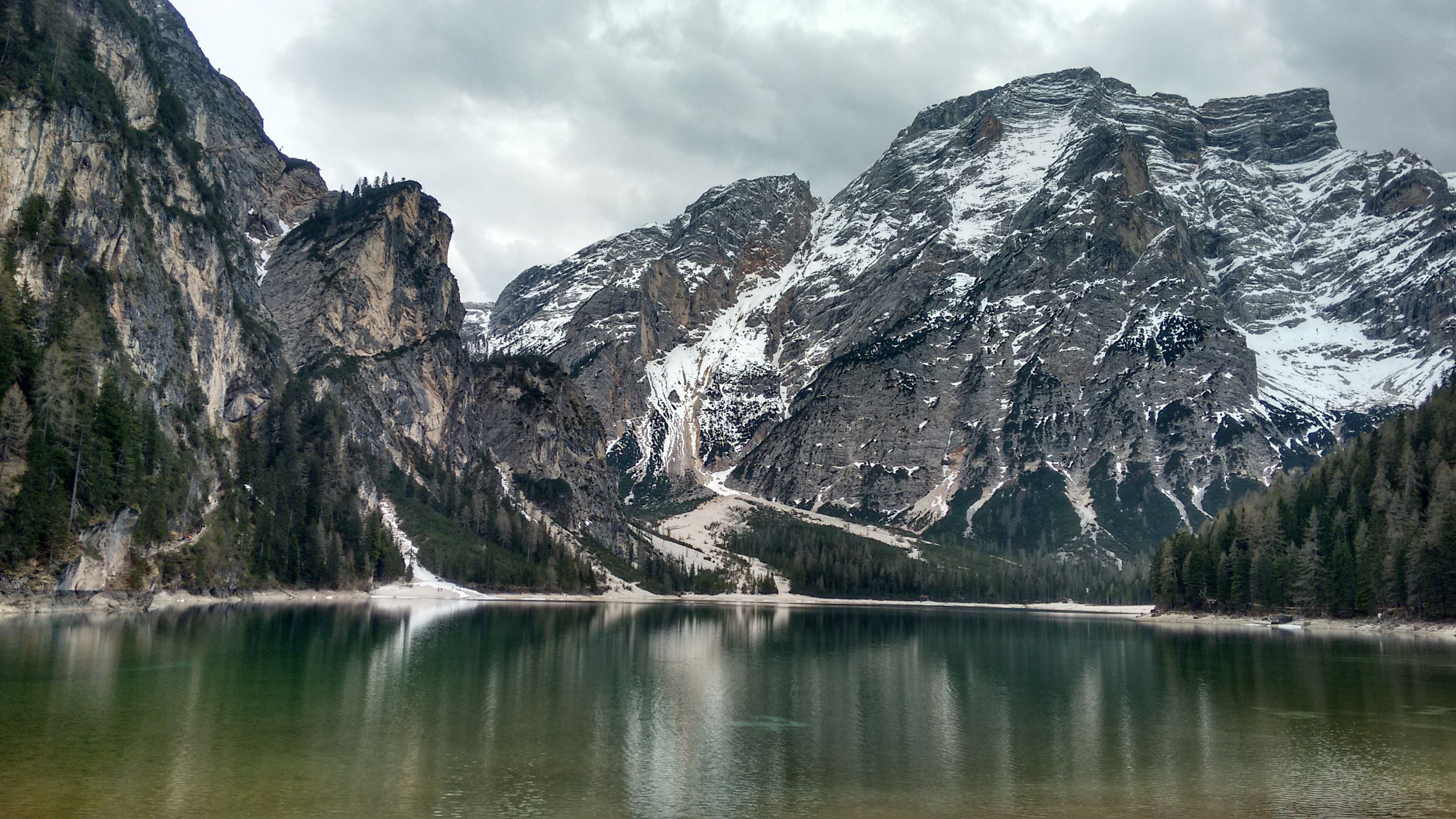
Lake Braies
Above the waterline, Braies becomes quiet again.
Lake Braies is often introduced by noise: shutters, oars, voices on the planks.
Step a little higher—onto the forest track—and the lake changes from a scene into a place.
It matters because it teaches a simple reset: distance, shade, and a few minutes of climbing can return your own pace.
The Overlook Where the Sound Drops Away
Most visitors meet Braies at water level, where the wooden boathouse and the shoreline path keep you moving with everyone else. What they miss is how quickly the lake becomes private again once you climb the forest track above the eastern shore. The shift isn’t dramatic; it’s gradual—larch needles underfoot, a thin ribbon of trail, and then the lake appearing between trunks like a piece of colored glass. From up here, the boats are no longer an invitation, just small shapes making slow lines across the surface. You begin to notice the lake’s edges instead of its center: the pale gravel shelves under the shallows, the darker band where depth begins, the way the far cliff throws a cool tone onto the water. Even the photographs people take at the shore don’t prepare you for this angle—Braies looks less like an icon and more like a basin of light held in the woods. It’s a quieter truth, and it’s close enough to reach without turning the day into a hike.
The Ten Minutes After the First Boats Leave the Dock
There’s a small transformation that happens when the day’s first movement touches the lake. Before the rental opens, the surface can feel sealed—too perfect, almost staged—especially on still mornings when the water is holding the mountain like a mirror. But once the first rowboats slip out, the lake loosens. From the forest track above the shoreline, you can watch the change without being part of the queue. The wake lines spread, thin and exact, then fade into the shaded coves. The reflections stop being a single image and become layered: tree trunks flickering on the near side, cliffs steady on the far side, sky broken into soft pieces. The crowd remains at the waterline, focused on access. Up here, you’re watching time move through the surface. If you arrive just as the dock wakes up—early, but not dawn—you get the best of both worlds: the lake still has morning calm, yet it’s no longer frozen into perfection. It becomes human-scaled again.
The Reflections
From above, reflections read as bands rather than a single mirror: dark forest near you, pale cliff across the basin. On windless mornings the cliff face holds steady in the water while the trees break into fine vertical lines.
The Water
The water sits between milky turquoise and deep jade, depending on depth and shadow. Its color comes from mineral-rich glacial sediment and the way the surrounding rock and forest filter light into the basin.
The Landscape
Steep Dolomite walls press close, and the lake feels tucked in rather than open. The forest track adds a second frame: trunks, needles, and shadow, making the bright water below seem even more concentrated.
Best Angles
Forest track overlook above the eastern shore
Climb a short way above the lake until you can see the boathouse roof and the full curve of the bay; frame down through the trees to keep the scene quiet. Face west toward the cliffs for steadier light in the morning.
Just past the boathouse on the shoreline path (then step off to the side)
Stand where the planks end and the path becomes gravel; shoot low across the near shallows so the turquoise band leads to the darker center. Best when the first ripples appear and reflections soften.
Shaded cove segments on the south-east side
Most people rush the front-of-lake view; linger where trees lean over the water and the color turns bottle-green. Frame the edge, not the postcard—surface texture and shoreline detail matter here.
A quiet bench or flat rock above the path
Turn your back to the lake for a minute, then look again; the view feels newly arranged. This is the angle for breathing and listening, not for proving you were there.
Crowd pattern — busiest from mid-morning to mid-afternoon, especially June through September; quietest early morning and in October weekdays.
Effort level — the forest track is a short, steady climb with a few rooty sections; you can reach a new perspective quickly without committing to a long hike.
Access note — parking and road access can be regulated in peak season; check current Pragser Tal access rules and arrive early if driving.
What to bring — a light layer for shaded viewpoints, grippy shoes for forest roots, and something to sit on if you plan to linger above the waterline.
Handpicked Stays & Tables
Places chosen for beauty and intention, not algorithms. Each one is worth your time.

Hotel Lago di Braies
On the lakeshore

Hotel Union
Dobbiaco (Toblach)

Restaurant at Hotel Lago di Braies
Lakeside

Hans Pizzeria Restaurant
Dobbiaco (Toblach)
A few meters above the shore, Braies stops being a destination and becomes a quiet surface of time.