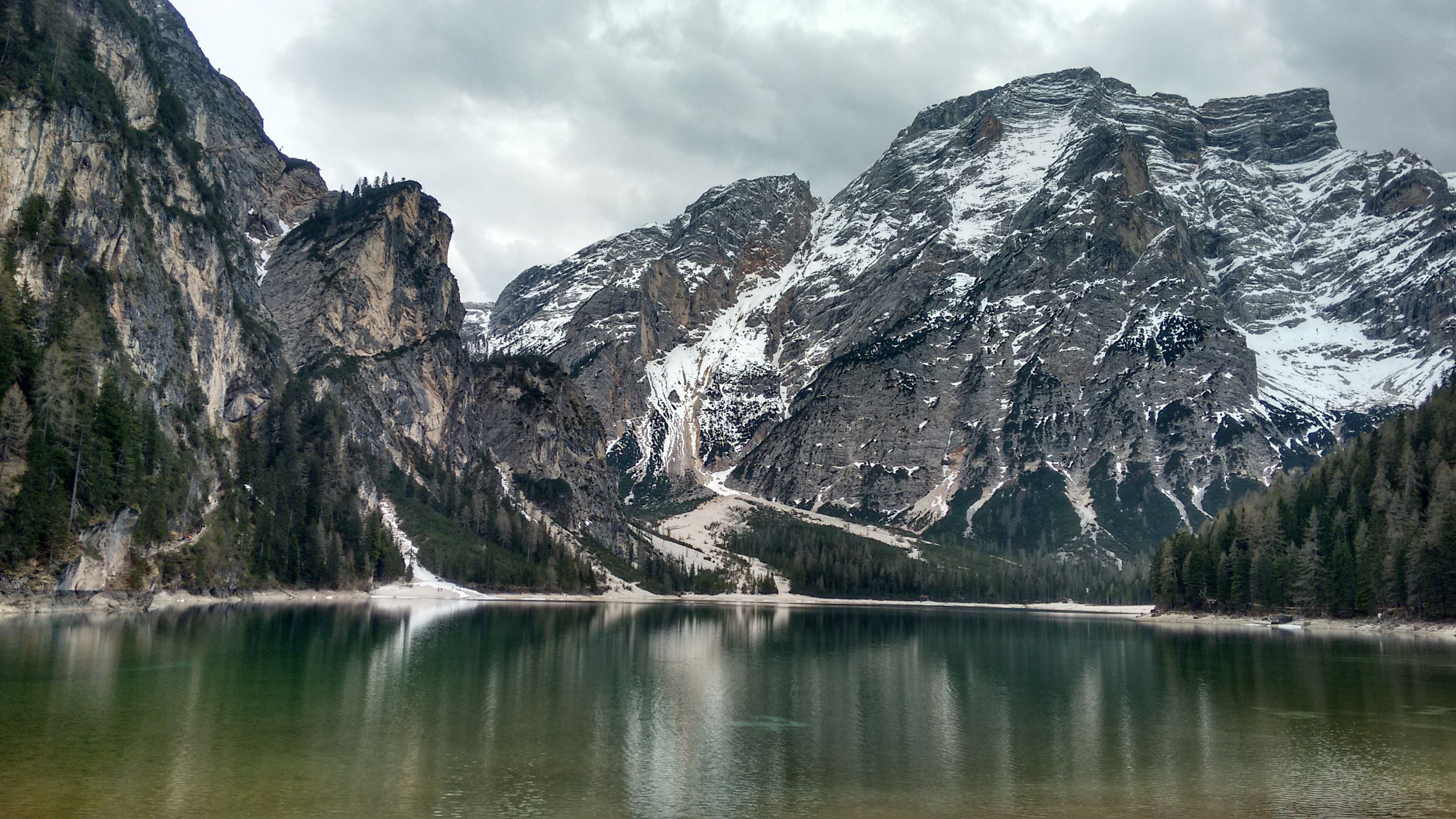
Lake Braies Sunset
When the last oar ripple fades and the mountains hold their breath.
Lake Braies is a small Dolomite bowl of water that holds light like a kept secret.
Unlike larger alpine lakes, its shoreline is close and intimate, so changes in wind and crowd sound register immediately.
At dusk, it offers a rare kind of quiet in a famous place: not emptiness, but a soft permission to slow down.
The North Bank After the Last Rental Return
Most visitors orbit the boathouse and the postcard view, then leave as the light turns cooler—right when the lake begins to sound different. On the north bank, the path sits slightly back from the water and the trees break the scene into smaller frames. You stop seeing “Lake Braies” and start seeing details: a pale pebble shelf under clear shallows, a floating leaf that barely advances, the thin line of darkening spruce reflected like ink. If you arrive late enough, the boats become part of the silence instead of the spectacle. They sit tethered and still, their hulls making small, deliberate creaks that travel cleanly across the water. The crowds thin in a way that feels physical: the air stops being stirred by footsteps and phone voices. The mountains across the lake don’t change shape, but they change temperature—first warm, then neutral, then suddenly blue. This side teaches you that the lake’s calm isn’t constant; it’s timed.
The Ten Minutes After the Sun Drops Behind the Rim
There’s a specific hinge at Lake Braies: the moment the sun slips behind the rocky rim and the surface stops trying to sparkle. It’s not the sunset people photograph from the parking side; it’s what comes immediately after. The water loses its bright distractions and becomes a single plane. Ripples that looked harmless a minute ago suddenly feel loud. On the north bank at this hour, the lake turns into a listening space. The color temperature drops fast—gold drains out, and the turquoise deepens toward jade. The boathouse area quiets as the last rentals are pulled in, and the human energy that kept the shoreline tense releases. If there’s any wind, it often pauses briefly as the valley cools, and you get a short, unreal stillness: reflections sharpen, the treeline doubles, and the mountain faces appear less like rock and more like shadowed fabric. Stay through that first thin layer of dusk. It’s when Braies stops performing and becomes itself.
The Reflections
At dusk the reflections tighten: spruce trunks become clean vertical strokes, and the pale scree slopes across the lake read as a soft mirror-gradient. When the surface calms, the peaks don’t just reflect—they seem to sit inside the water with their edges slightly blurred, like graphite lightly smudged.
The Water
The water shifts from bright, tourist-hour turquoise to a darker jade with a milky undertone, caused by glacial minerals suspended in the lake. In late light, the color looks thicker, less luminous—more like stone dust dissolved into green glass.
The Landscape
The lake is framed by dense fir and larch at the edges and steep Dolomite walls rising abruptly behind, giving the basin a contained, almost indoor feeling. As dusk arrives, the forest becomes a single dark band and the mountains lose detail, leaving only mass and contour.
Best Angles
North bank path, midway between the boathouse and the far end
Stand close to the waterline where the trees open; face south-southeast to layer forest silhouette over the pale mountain faces. Frame wide, but let a dark branch edge the scene to keep it quiet.
Far northwestern corner (near the shallow pebble shelf)
Turn back toward the boathouse for a calmer, less literal view; the boats become small and distant, and the lake reads as texture and tone rather than subject.
Opposite the boathouse, slightly elevated on the trail
Most creators shoot from the dock; from a step higher you catch the doubled treeline and a cleaner reflection plane, with fewer people intruding into the lower frame.
A bench or quiet pause point under the trees on the north bank
Sit and let the scene come to you; listen for the moment the water stops catching light. It’s the angle for staying, not proving you were there.
Crowd pattern — Late morning to mid-afternoon is busiest; evenings thin noticeably, and the north bank quiets first once day visitors leave.
Effort level — The shore is close to parking, and the loop is gentle; expect some uneven stones and narrow sections on parts of the trail.
Access note — Seasonal traffic management and parking restrictions can apply in summer; check local rules for Val di Braies before you go and plan for paid parking or shuttle requirements.
What to bring — A light jacket for sudden temperature drops at dusk, shoes with grip for shaded trail sections, and a small towel if you plan to sit near the damp shoreline.
Handpicked Stays & Tables
Places chosen for beauty and intention, not algorithms. Each one is worth your time.

Hotel Lago di Braies
On the lake’s edge

Hotel Trenker
Braies (Prags), in the valley

Ristorante dell’Hotel Lago di Braies
At the lake

Gasthof Huber
Val di Braies (Prags)
On the north bank at dusk, Lake Braies stops shining and starts listening.