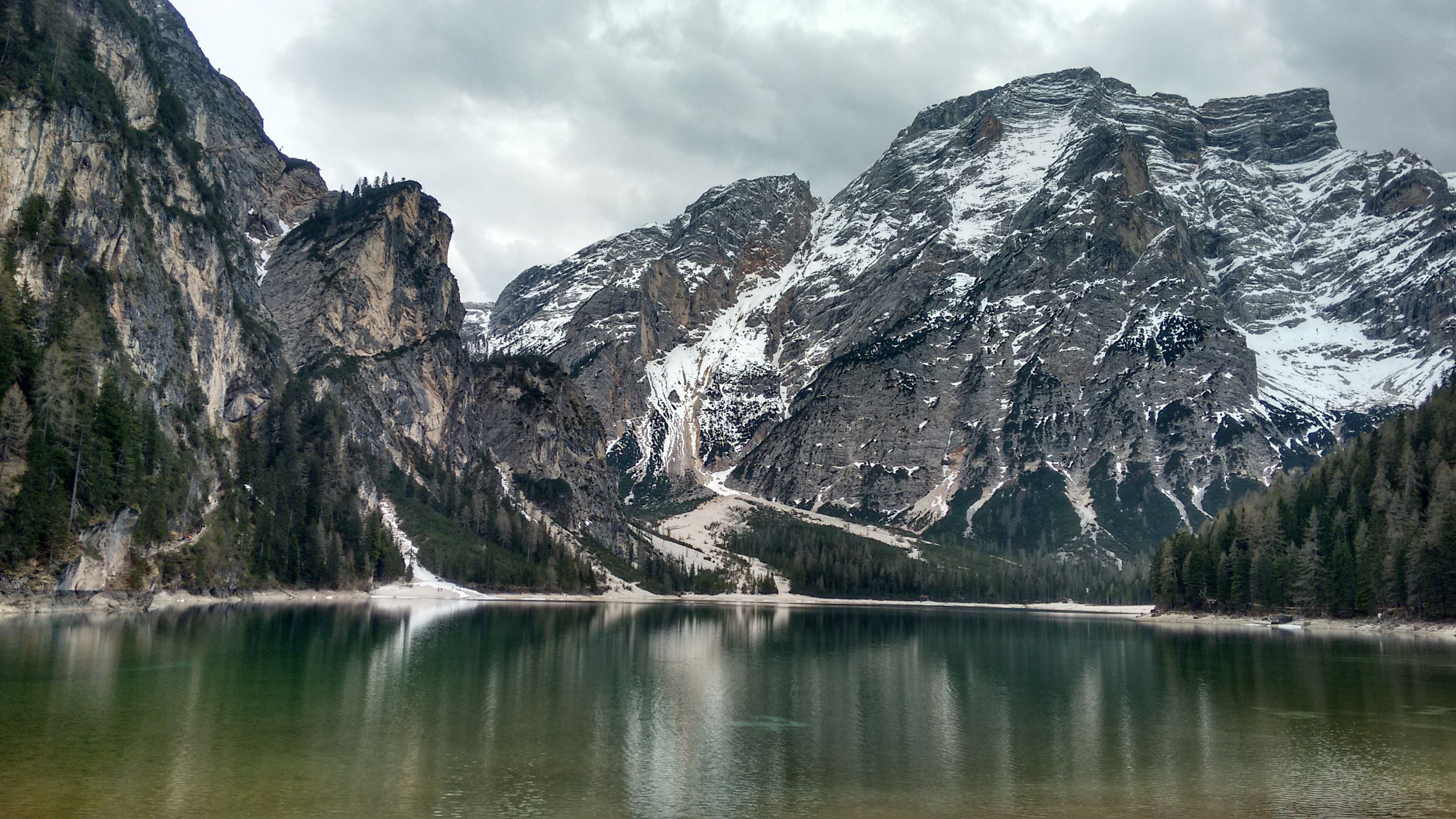
Lake Braies Sunset
Low light at the dock, when the day finally stops explaining itself.
Lake Braies is a small Dolomite basin that holds light like a still cup.
Its drama is famous, but its quieter shifts happen after the boardwalk empties.
It matters because it teaches patience: the lake changes most when you arrive late.
The Dock After the Rental Line Ends
Most visitors meet Lake Braies front-on, on the wooden boardwalk, at the hour when the water is busy with footsteps and the shoreline feels staged. What they miss is the approach that edits the noise out: the woodland trail that threads behind the boathouse and keeps you in shade long enough for your eyes to reset. Come from the trees instead of the planks. Your first view is narrower, framed by trunks and the low, matte green of moss. Then the dock appears like a simple interruption in the water, not an attraction. When the rental queue is gone, the dock stops being a set piece and becomes a listening point. You hear the small, internal sounds—oarlocks being put away, the last boards settling, a single camera click that feels too loud. In low light the lake’s famous color doesn’t disappear; it deepens and becomes more precise. The mountains look less like a postcard and more like weathered stone. The scene turns private without changing its shape.
The Ten Minutes When the Sun Leaves the Water First
Sunset at Lake Braies isn’t one event; it’s a sequence, and the most meaningful part often happens after the obvious glow has moved off the peaks. Watch for the minute the sun stops touching the lake’s surface while the upper rock still holds a pale warmth. The water darkens first—an early withdrawal—while the cliffs keep talking in soft, fading color. If you arrive at the dock from the woodland trail, you step out of shadow into a light that is already leaving. That’s the point. The lake becomes less decorative and more atmospheric. Reflections simplify: instead of every detail, you get larger shapes and a cleaner line where mountain meets water. This is when the dock feels like a quiet threshold. People who stayed for the “sunset photo” often pack up too soon, missing the gentle cooling that follows. In those ten minutes, the air settles, the surface steadies, and the lake shifts from spectacle to presence—calm, slightly solemn, and unusually clear.
The Reflections
When the wind drops, the water holds the Dolomite walls as a darkened mirror with a fine, trembling edge. In low light, reflections lose small texture and gain depth—more silhouette, less detail, more calm.
The Water
The water reads as deep teal shifting toward ink-green as the sun leaves the surface, colored by glacial minerals and the lake’s pale limestone basin. Near the shore it turns clearer and colder, showing stones and submerged logs like faint punctuation.
The Landscape
Steep rock faces and tight forest frame the lake so the horizon feels close and protected. In the last light, the treeline becomes a single dark band and the mountains flatten into layered planes, making the lake feel larger than it is.
Best Angles
The main dock by the boathouse
Stand near the far end, facing southwest toward the rock face; frame the dock as a line entering darker water as the sky cools.
Woodland-trail opening just before the lakeshore
Pause where the trees thin; shoot through trunks for a quieter, layered reveal—forest shadow in the foreground, teal water beyond.
Northern shore near the chapel area (away from the dock)
Turn back toward the boathouse at low light; creators often miss how the human structures look gentler when they’re no longer sunlit.
A bench or flat rock slightly off the path
Sit without framing anything; notice the sound of the water against wood and the way the cold arrives first at your hands.
Crowd pattern — late morning to mid-afternoon is loudest; the last hour of daylight thins out fast, especially outside July–August.
Effort level — short, gentle walking on well-made paths; expect some uneven ground and damp patches on the woodland trail.
Access note — parking can be regulated and may involve fees or timed access in peak season; check local rules before you go and plan for queues on summer weekends.
What to bring — a light jacket for the temperature drop at dusk, shoes with grip for shaded paths, and a small towel if you plan to sit on damp wood or rock.
Handpicked Stays & Tables
Places chosen for beauty and intention, not algorithms. Each one is worth your time.

Hotel Lago di Braies
On the lakeshore

Naturhotel Leitlhof
San Candido (Innichen)

Ristorante dell'Hotel Lago di Braies
At the lake

Ristorante Pizzeria Hans
San Candido (Innichen)
Leave the boardwalk behind, and the lake meets you the way it really is—quiet, darkening, and complete.