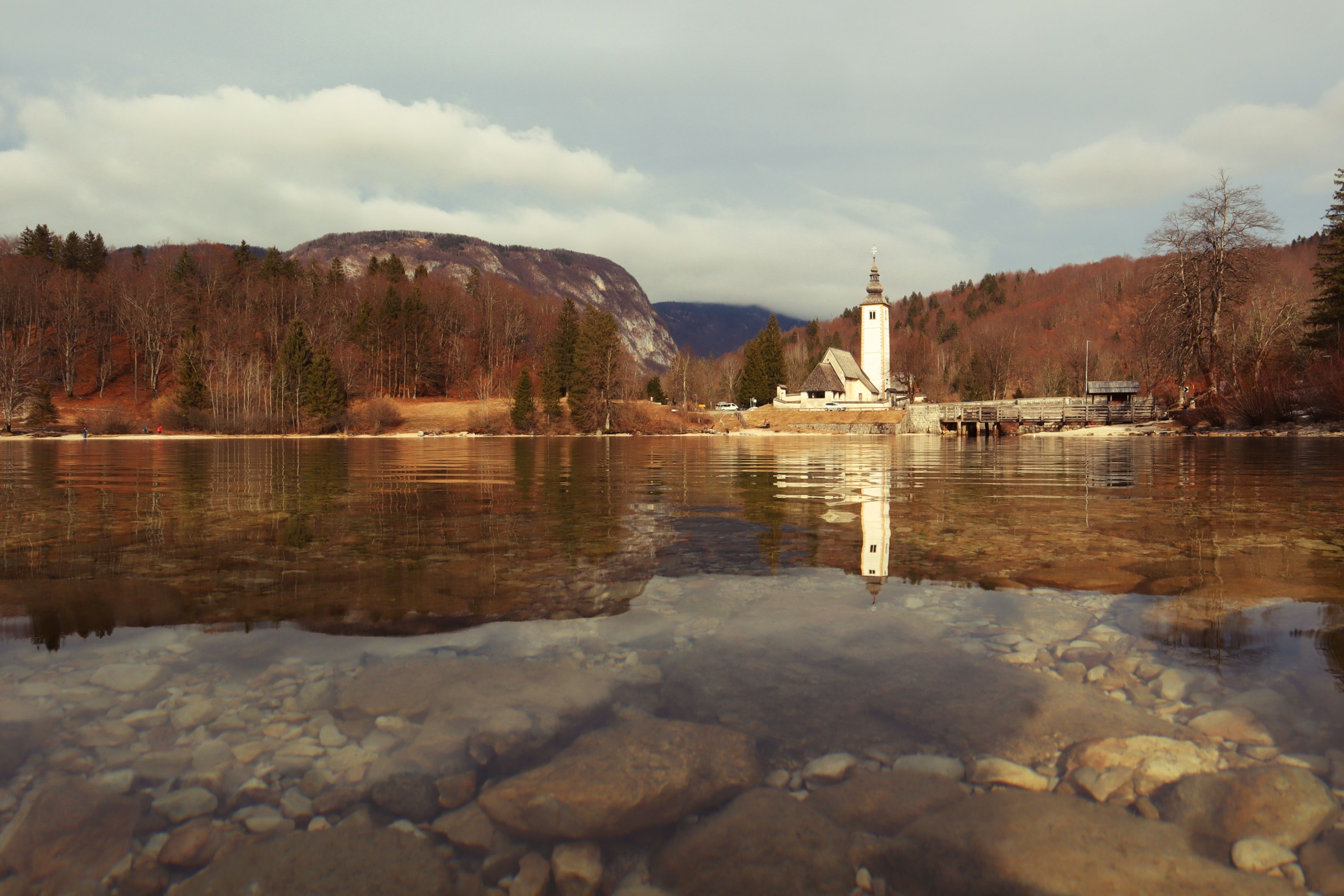
Lake Bohinj
Where the lake quiets down and the meadow begins to speak.
Lake Bohinj is Slovenia’s deeper, quieter water—wide enough to hold silence.
At the Ukanc end, the lake loosens into meadow and river, and the mood changes completely.
It matters because it offers a rare kind of calm: not staged, just patiently present.
Ukanc Isn’t the End of the Lake — It’s the Start of the Quiet
Most visitors arrive at Bohinj as if it were a single viewpoint: a sweep of water, a church on the shore, a quick loop. Ukanc asks for a different pace. Here, the lake doesn’t feel like a destination; it feels like it is exhaling into grass. The Savica’s outflow and the damp meadowland soften the edge—less promenade, more margin. If you stand near the waterline, you notice how sound thins out: the clink of cups from the villages fades, and what replaces it is small—flies in the reeds, a distant bell, the lake’s faint lap against stones. The mountains are still there, but they stop performing and start simply being weight in the background. Even on busy days, Ukanc can feel lightly inhabited, because people keep moving past it toward the waterfall or back to the busier shores. The missed detail is that the lake’s calm isn’t uniform—here it becomes almost pastoral, as if the water has decided to be ordinary for a while.
The First Windless Hour After Sunset
Ukanc changes fastest in the hour after the sun drops behind the ridgeline. The light doesn’t disappear so much as slide sideways, turning the meadow pale and the lake into a darker, steadier surface. If the air goes still, the water stops showing movement and begins to show structure: the line of the far shore, the slope of the forest, the long shadow of the mountains pooling into the basin. This is the time when the day’s activity detaches from the landscape. Paddle ripples flatten. Footsteps on the path become occasional. The temperature dips and the lake seems to thicken in color, from clear green to a restrained slate-green, like the water is holding onto the last warmth. If there’s a thin veil of mist rising from the meadow, it doesn’t announce itself; it just appears at ankle height and drifts. The transformation is subtle but complete: Ukanc stops being a place you pass through and becomes a place you can finally stay.
The Reflections
On calm evenings, Ukanc reflects in layers: meadow brightness near the shore, then a darker band of forest, then the mountain’s shadow above it. The reflection isn’t mirror-perfect everywhere—small currents crease it, so the mountains look gently folded rather than duplicated.
The Water
The water reads as deep alpine green with a cool, slightly opaque cast, shaped by depth and the mineral clarity coming from the surrounding limestone and glacial basin. After rain, it shifts toward a muted jade with soft brown tints near inlets where the meadow drains in.
The Landscape
Ukanc sits under the heavy geometry of the Julian Alps, but the immediate frame is softer: grass, reeds, and low, wet ground that absorbs sound. Mist, when it comes, tends to sit low and horizontal, making the lake feel wider and closer to the ground.
Best Angles
Ukanc shoreline near the Savica outflow (meadow edge)
Stand where grass meets stones and face back along the lake toward the east; frame the long water corridor with the darker treeline for a quieter, less iconic Bohinj.
Footpath along the southern shore toward Ukanc
Walk until the villages feel far behind, then turn slightly north; you’ll catch the lake opening with more sky and fewer buildings—cleaner lines, calmer mood.
Near Kamp Bohinj (edge of the meadow, not the camp center)
Creators often stay too close to the obvious access points; step a little away and frame low—reeds and shallow water in the foreground, mountains subdued in the back.
A quiet sit on the grass at water level, facing the darkening ridge
Forget the wide shot; look for the small changes—ripples slowing, insects skimming the surface, the first thin mist in the meadow air.
Crowd pattern — midday is busiest around Ribčev Laz and the main swimming areas; Ukanc is quieter early morning and especially after dinner when day-trippers leave.
Effort level — mostly flat walking on lakeside paths; the only effort is time and patience for the light to soften.
Access note — Lake Bohinj sits within Triglav National Park area; parking is managed and can be limited in summer, so arrive earlier or plan to use bus connections.
What to bring — a light layer for the temperature drop after sunset, insect repellent for meadow edges in warm months, and something dry to sit on if you plan to wait for still water.
Handpicked Stays & Tables
Places chosen for beauty and intention, not algorithms. Each one is worth your time.

Hotel Bohinj
Ribčev Laz (eastern end of Lake Bohinj)

Camp Bohinj
Ukanc

Štrudl (Ribčev Laz)
Ribčev Laz, near the lake

Gostilna Danica
Bohinjska Bistrica
At Ukanc, Bohinj doesn’t ask for your attention—only your stillness.