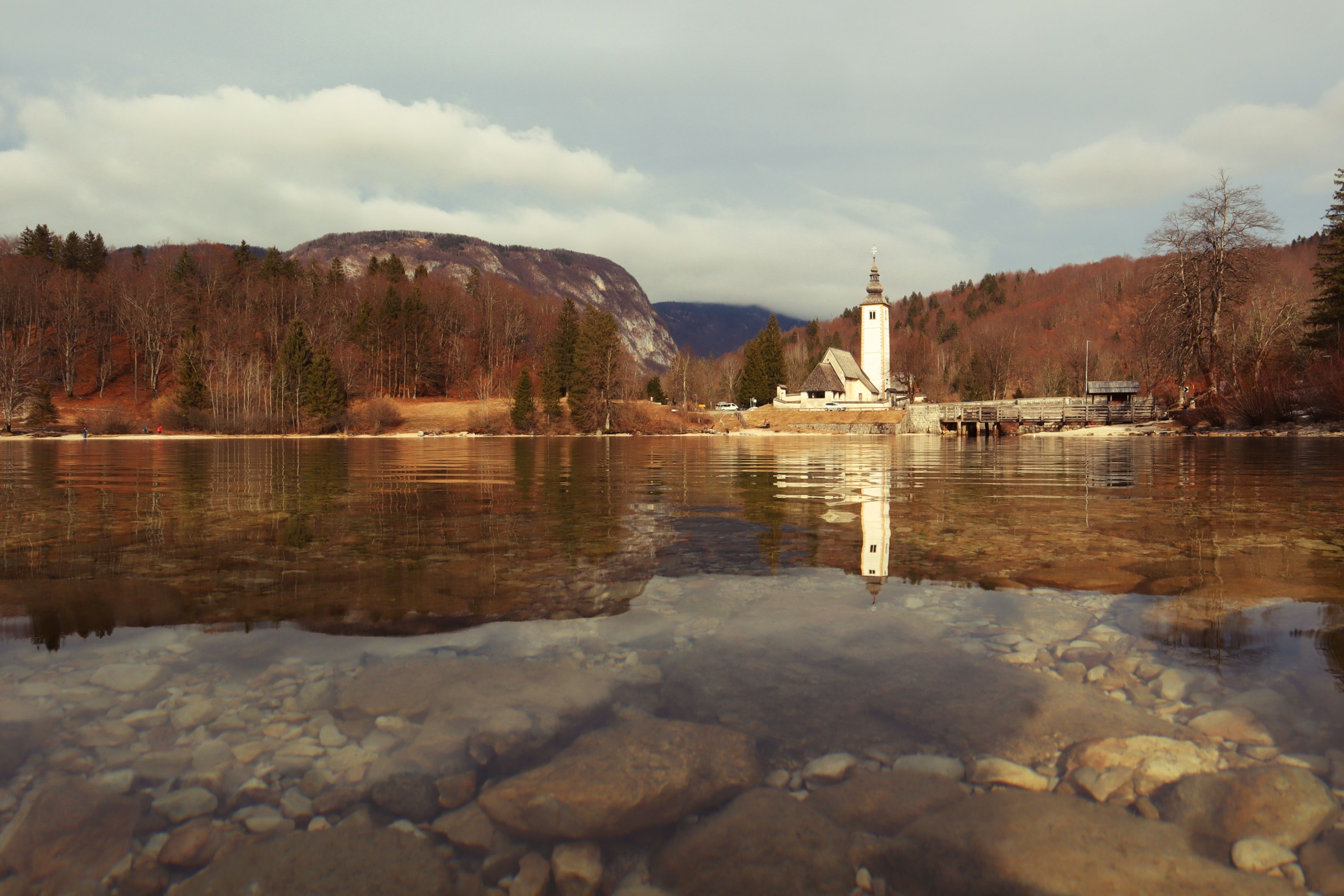
Lake Bohinj
Where the gorge’s cold shade releases you into open water.
Lake Bohinj holds its silence longer than most places in the Alps.
It isn’t staged by promenades; it feels lived-in, weathered, and honest under stone peaks.
Arriving on foot through Mostnica turns the lake into a reward you didn’t rush to claim.
The First Open Water After the Gorge’s Shade
Most visitors meet Lake Bohinj from the road, with the shoreline already explained by car parks and cafés. Entering on foot through the Mostnica Gorge changes the sequence. For a long time you are held in a narrow corridor of cold air: damp rock, dripping ledges, the steady sound of water doing its patient work. Then the trail relaxes, the trees thin, and light appears in patches rather than a sudden reveal. What people miss is the way the lake feels “larger” when you don’t see it at first. Your eyes have adjusted to shadow; your hearing is tuned to rushing water. When the lake finally opens up near Stara Fužina, the surface seems almost quiet by comparison—less a view than a release. Even on a busy day, that transition gives you a private moment: shoulders drop, breathing slows, and the lake arrives not as an attraction but as a change in temperature, brightness, and pace.
The Ten Minutes After You Step Out of the Trees
The transformation happens in a small window: the first ten minutes after you leave the gorge’s darker stretch and enter the wider valley. It’s not a clock time so much as a sensory reset. The air warms slightly. The sound of the Mostnica fades from a roar to a ribbon, and the larger silence of Bohinj begins to take over. In that brief period, the lake looks calmer than it will from the shore later. Your eyes, still trained to read wet stone and shadow, notice small things first: a tremor of wind on the surface, a pale strip of sky reflected between tree trunks, the way distant peaks feel closer because the valley has been tight for so long. If you arrive early, before paddles touch the water, Bohinj can feel like it is still deciding what kind of day it will be. Standing there, you understand the lake as a threshold—between enclosed shade and open light, between movement and stillness.
The Reflections
On windless mornings, the lake holds the Julian Alps as a soft double image, slightly blurred at the edges like a memory. Near the banks, reflections break into fine, quick fragments where reeds and stones disturb the surface.
The Water
The water is deep blue-green with a cold clarity, shifting toward jade where it thins over pale stones. After rain, it turns darker and more mineral, while the inflows can draw faint milky threads that slowly dissolve into the larger body.
The Landscape
Bohinj is framed by heavy, serious slopes and the high profile of the Julian Alps, with forests that look almost black in early shade. In calm conditions, a low mist can sit just above the waterline, making the far shore feel farther than it is.
Best Angles
Stone bridge area in Stara Fužina (near the Mostnica)
Stand slightly downstream and look back toward the valley opening; frame the watercourse leading your eye toward the first hint of the lake’s openness.
Ribčev Laz shoreline near the church of St. John the Baptist
Face west toward the lake’s length with early light behind you; keep the church and bridge as a small anchor, not the subject, and let the water carry the scene.
Northern shore footpath toward Ukanc
Walk until the road sounds fade, then shoot low across the surface; creators often miss how quickly the lake becomes quieter once you leave the central access points.
A seated pause on the stones where the forest meets the water
Turn away from the obvious view and watch the surface close to shore—tiny waves, insects, drifting leaves. This angle is for noticing, not collecting.
Crowd pattern — midday in summer concentrates around Ribčev Laz and the main swim areas; early mornings and the northern shore paths stay noticeably calmer.
Effort level — the gorge trail has uneven surfaces, steps, and damp footing; it’s not long-distance hard, but it asks for attention.
Access note — expect seasonal parking fees and occasional trail closures or reroutes after storms; check local notices in Bohinj before committing to the gorge section.
What to bring — shoes with grip for wet rock, a light layer for the gorge’s cooler air, and a small towel if you plan a brief, cold shoreline dip.
Handpicked Stays & Tables
Places chosen for beauty and intention, not algorithms. Each one is worth your time.

Hotel Bohinj
Ribčev Laz

Penzion Pibernik
Near Bohinjska Bistrica

Gostilna Danica
Bohinjska Bistrica

Štrudl
Ribčev Laz
If you enter Bohinj through Mostnica’s shade, the lake doesn’t appear—it opens.