Lake Bohinj
A stone on the shore that quietly measures the year.
Lake Bohinj holds its silence differently than the rest of the Julian Alps.
It isn’t arranged for looking; it’s a working lake with edges that change daily.
The small stone water-level marker turns that change into something you can feel underfoot.
The Stone Everyone Avoids (And What It’s Telling You)
Near the busy lakeside path, there’s a low stone water-level marker that people step around without reading. It looks like a small interruption in the shore: a block, a faint scale, a practical object that refuses to become scenery. Most visitors treat it like an obstacle between them and a cleaner photo. But it’s the lake speaking in numbers. When the water is high, the marker feels half-erased, the line between stone and lake softened, the shore narrowed to a thin strip where reeds and footsteps negotiate space. When the water drops, the marker stands taller than expected, exposing pale bands on nearby rocks—quiet evidence of weeks passing, not minutes. If you stop beside it, the lake becomes less “view” and more system: meltwater arriving, rain stored, outflow controlled. The marker makes the lake personal in a strange way. You realize you’re not just visiting a place—you’re catching it mid-sentence.
The Pause After the Last Paddle
Lake Bohinj changes when the rental boats come back in and the surface begins to forget the day’s small disturbances. It isn’t dramatic; it’s a gradual easing. The oar flicks stop, the ripples lose their purpose, and the water shifts from textured to plain. Stand near the stone marker in that half-hour before sunset—when the light thins and the air cools enough to quiet the shore. The mountains don’t suddenly appear; they simply stop moving in the water. The marker, which looked like a nuisance at midday, starts to feel like an instrument: the lake’s current level set beside a reflection that finally holds. In summer this happens later than you expect, after the day-trippers have decided they’ve seen enough. In early autumn it comes sooner, with a sharper edge to the air. Either way, the transformation is the same: the lake turns from active to attentive.
The Reflections
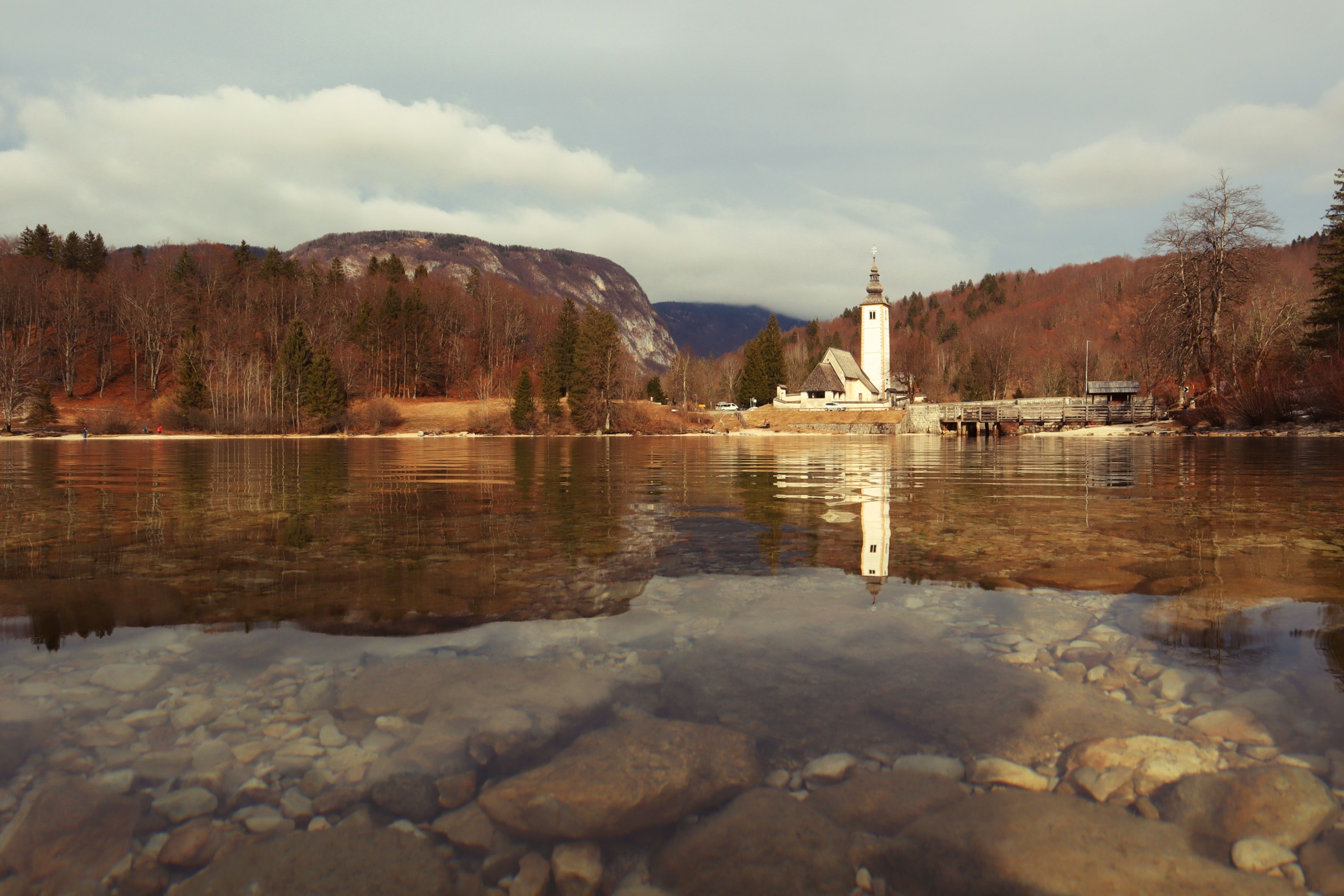
When the wind drops, Vogel and the dark tree line settle into the surface as a clean, slightly softened duplicate. The stone marker becomes a foreground anchor, letting the reflection read as depth instead of decoration.
The Water
Close to shore the water shows a clear, green-leaning teal, shaped by limestone and the lake’s clarity rather than tropical brightness. In deeper sections it darkens toward slate-blue, especially when clouds flatten the light.
The Landscape
Bohinj is framed by a wide, quiet bowl of forested slopes and heavier peaks behind them, so the lake feels held rather than displayed. Mist sometimes sits low over the water in the morning, not as foggy drama—more like a thin veil that delays the day.
Best Angles
Ribčev Laz shoreline near the marked stones
Stand low beside the water-level marker and face west toward the wider lake; keep the marker in the lower third and let the mountains sit quietly above it.
Ukanc end of the lake (western shore)
Face back east in late afternoon; the light comes in flatter and the water reads darker, with the valley feeling longer and more private.
South shore path between Ribčev Laz and Ukanc
Creators often skip the in-between: stop where reeds thicken and the shore narrows; frame through grasses for a layered, less postcard view.
A bench or flat stone just off the main footflow
Turn away from the obvious vista and watch the small movements—water touching stone, insects skating, the level line meeting the day.
Crowd pattern — Midday in July and August is busiest near Ribčev Laz; early morning and dinner time thin out fast, especially in September.
Effort level — Mostly flat walking on packed paths and short shore approaches; comfortable shoes help on wet stones near the edge.
Access note — Parking can fill in peak season; arrive early or later in the day. Respect shoreline vegetation and marked areas.
What to bring — A light layer for evenings (the air cools quickly), a small towel if you sit near the edge, and something to read the details with: patience.
Handpicked Stays & Tables
Places chosen for beauty and intention, not algorithms. Each one is worth your time.

Hotel Jezero
Ribčev Laz

Hotel Bohinj
Ribčev Laz

Štrudl Café
Ribčev Laz

Gostilna Danica
Bohinjska Bistrica
If you want to understand Bohinj, stand by the marker and watch the lake decide its own edge.