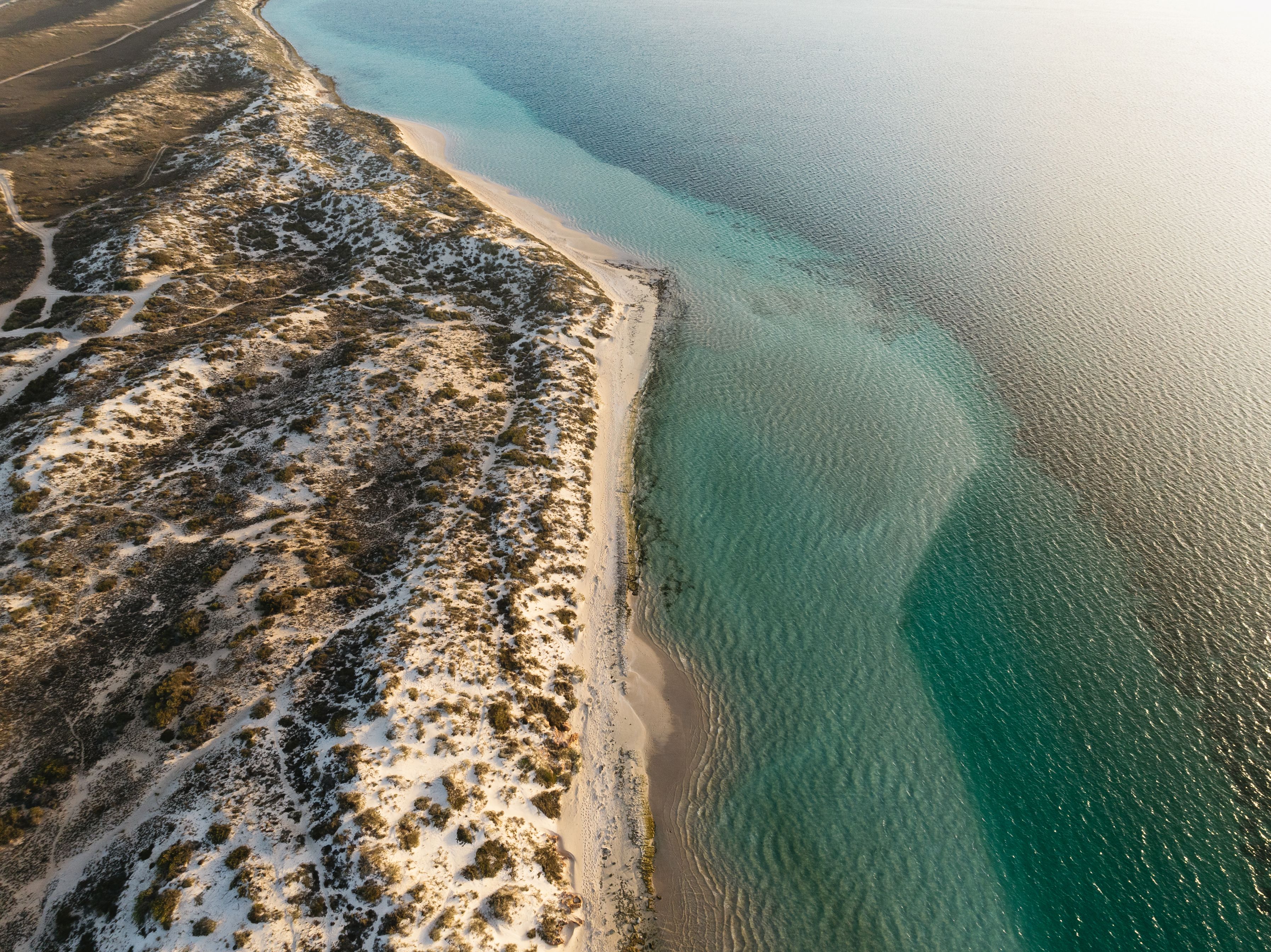
Turquoise Bay
At Ningaloo’s southern edge, the current writes the day’s rhythm in turquoise and white.
Turquoise Bay matters because it’s where Ningaloo stops performing and starts revealing itself—coral close enough to touch the shoreline, water clear enough to make distance feel optional, and a steady ocean pulse that keeps you attentive.
Most people arrive for the color and leave with the photos. What they miss is the bay’s choreography: a strong, reliable drift that turns a simple snorkel into a moving meditation, carrying you over coral gardens like a slow conveyor belt.
The payoff is quiet and physical. You step out of the water salt-pruned and calm, as if the current rinsed the noise from your body—then you look back and realize the place didn’t just show you beauty, it taught you how to move through it.
The Bay Isn’t Still—It’s a Slow, Elegant Exit
Turquoise Bay reads like a tranquil postcard, but it behaves like a river. The famous “drift snorkel” is not a gimmick here—it’s the natural logic of the place. The current tends to run along the beach, and when you work with it, the reef reveals itself in sequences: a patch of branching coral like frozen antlers… a sandy corridor where rays sometimes rest… a sudden congregation of fish hovering at the edge of a drop-off. You don’t chase sightings; you’re delivered to them. Most first-timers make the mistake of fighting the movement. They enter in the wrong spot, kick hard, and burn their best minutes in shallow glare. The better approach is to treat the bay like a one-way story. Start up-current, keep your energy for staying calm, and let the water do the traveling. Your attention shifts from navigation to observation—color gradations, the way sunlight stipples coral, the tiny drama of a cleaner wrasse working a larger fish. This is the quiet southern exit of Ningaloo in a literal sense too: you feel the reef thinning, the land opening, the Indian Ocean breathing wider. When you finish the drift and stand on sand again, it’s not triumph you feel. It’s relief—the rare sense that you’ve moved at the ocean’s pace, not your own.
You arrive on a pale strip of sand that looks sifted, almost powdered, and the first thing you hear is not surf but a soft, constant shushing—wind in coastal scrub, small waves folding onto the beach with barely any drama. The water starts as glass at your ankles, then shifts into bands: mint, then a brighter blue that feels lit from below. You wade in and the temperature surprises you—cooler than the air, clean as if it has been filtered through limestone. A few fin-kicks and the world drops away. Coral heads appear in clusters, honeycombed and bruised-purple at the edges, with parrotfish scraping like distant sandpaper. You stop trying to “go” anywhere and let the drift take you, body horizontal, breath steady, sun flickering across your forearms. Above you, the surface ripples like hammered metal. Somewhere down-current, someone laughs briefly, then the sound is carried off. When you finally stand up, the sand squeaks under your heels and the horizon looks newly sharpened.
The Water
The water is a layered spectrum—pale jade in the shallows, then a saturated turquoise that turns almost electric over sand channels. Over coral, it deepens to a cooler blue-green, with darker ink patches where the reef drops away.
The Cliffs
You’re on the western edge of Cape Range, where low, rust-tinged limestone meets a reef that sits improbably close to shore. Coastal scrub—silver-green and wind-shaped—frames the beach, keeping the scene spare and architectural.
The Light
Late morning is when the water looks most unreal, with the sun high enough to punch through the surface and light the sand from below. Golden hour softens everything—more champagne than turquoise—but it’s when textures emerge: coral contours, ripples, and the beach’s fine grain.
Best Angles
South Lookout above Turquoise Bay
A short climb gives you the full color-banding effect—the bay reads like a gradient chart, with reef shadows drawn in.
Drift start point (up-current entry)
You capture the narrative beginning: calm shallows, first coral heads, and the sense of being pulled gently onward.
Mid-drift sand channel
The unexpected angle is underwater looking up—sunlight flickers through clear water and the surface turns to liquid silver.
Northern end beach line
For photographers: shoot parallel to shore to show reef proximity—turquoise water, white sand, and coral shadows in one frame.
Waterline at the quiet edge near scrub
The intimate angle: low to the sand, where tiny shore breaks, footprints, and salt sheen make it feel human and lived-in.
Bring reef shoes or sturdy sandals—the sand is soft, but coral rubble can be sharp at the waterline.
Use a properly fitted snorkel mask and anti-fog; the experience depends on long, calm surface time without constant adjustments.
Check conditions and be honest about current strength—if you feel yourself being pulled faster than you can control, exit and reset.
Pack more water than you think you’ll need; Cape Range heat is dry and deceptively draining, even on mild days.
Apply reef-safe sunscreen well before you swim, or wear a long-sleeve rash vest to reduce both sun exposure and product in the water.
Handpicked Stays & Tables
Places chosen for beauty and intention, not algorithms. Each one is worth your time.

Sal Salis Ningaloo Reef
Cape Range National Park (near the Ningaloo coast)
Safari-style tents with a design-forward, low-impact feel—canvas, timber, and a soundtrack of wind and ocean. You fall asleep to the idea of reef just beyond the dunes, then wake for a coffee that tastes better simply because it’s remote.

Mantarays Ningaloo Beach Resort
Exmouth (Marina precinct)
A polished base with ocean-facing rooms and easy access to town logistics. It’s the kind of place where you rinse salt off properly, eat well, and still feel close to the waterline.

Whalers Restaurant
Exmouth (Mantarays Resort)
A seafood-leaning menu in a calm, coastal room where the light stays soft into evening. Ideal after a long day in the sun, when you want something clean, well-made, and unhurried.

Froth Craft Brewery
Exmouth
Casual, local, and satisfying—cold beer, straightforward meals, and the easy hum of people fresh off boats and beaches. Come in salty-haired and sun-warm, and you’ll fit right in.
When you leave Turquoise Bay, you don’t feel like you finished an activity—you feel like you stepped out of a moving, turquoise sentence.