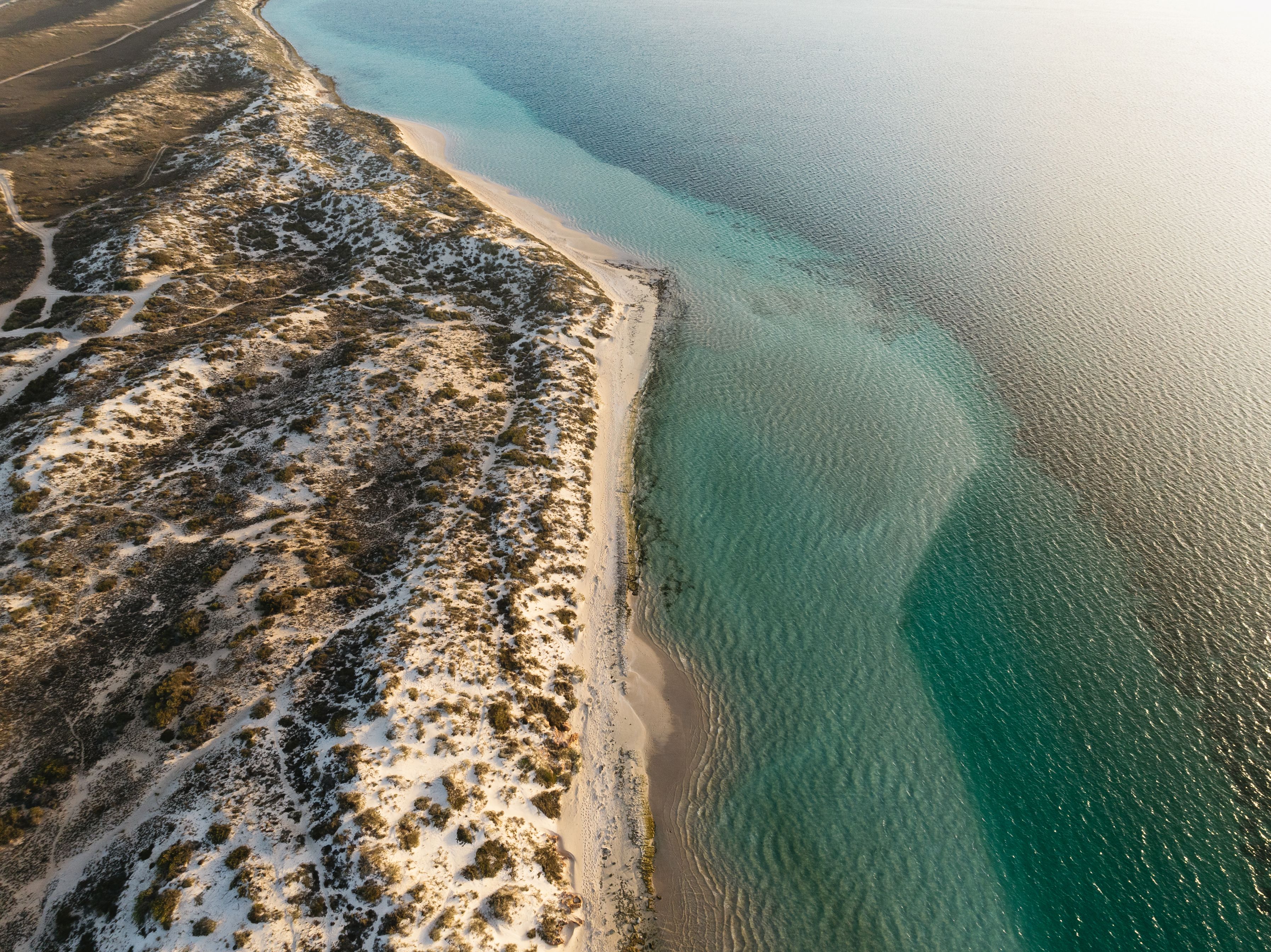
Turquoise Bay
On the right morning, Ningaloo turns to sheet-glass—and the reef reads like a map under your mask.
Turquoise Bay matters because it lets you meet Ningaloo on foot—no boat, no schedule, just a short walk from sand to coral city. When the trade winds pause, the lagoon settles and the reef shows its structure with an intimacy that feels almost private, even in daylight.
Most people arrive, wade in, and stay near the beach. They miss that this bay is a moving system: the current runs like a conveyor along the outer edge, and the best snorkeling is often not straight out, but set up to drift with intention.
Get it right and you stop trying to “see” the reef and start feeling it—your breath slowing, your ears filling with soft fizz, your mind emptying as fish traffic passes beneath you like street life in a small, perfect town.
The Bay Is a Drift, Not a Swim
Turquoise Bay is often described as a color, but it behaves more like a river. The shape of the reef and the opening of the lagoon create a steady lateral current along the outer edge—strong enough to carry you, subtle enough that you may not notice until the beach behind you has slid away. Most visitors fight it, kicking hard in place or turning back early, and they end up with the impression that Ningaloo is “nice” rather than astonishing. What changes everything is treating the bay as a drift snorkel. You start up-current, enter where the sand is forgiving, and aim to keep the reef on one side—close enough to see detail, far enough to avoid touching anything. The current becomes your silent guide. You spend less energy moving and more attention noticing: the way coral gardens switch species over a few meters, the clean line where sand meets bommie, the nervous geometry of baitfish when a shadow passes. The trade winds are the editor here. When they’re light, the water goes clear and the reef reads with crisp contrast. When they rise, chop and suspended sand soften the scene, and you feel the ocean’s restlessness. Either way, the lesson is the same: Turquoise Bay rewards surrender to its rhythm, not conquest. You leave not exhilarated by effort, but recalibrated by flow.
You step off the boardwalk and the sand is pale enough to look lit from within, fine-grained and cool where it’s shaded by coastal scrub. The bay holds a color that keeps changing its mind—milky aqua in the shallows, then a sudden pane of cobalt where the reef drops. On a calm morning the surface is so flat it reflects the sky in a thin glaze, and you can pick out coral heads like brushstrokes before you even wet your hair. You ease in until the water lifts you, salt tightening your skin. There’s a moment of quiet—only your breathing and the small click of sand shifting under a ripple. Then the reef begins: plates and knuckles of coral, a scribble of parrotfish, a flash of something silver that refuses to be identified. You let the gentle pull take you along the reef line, drifting past lagoons of seagrass and pockets of sunlight that strobe over the coral like a slow camera shutter. When you stand again, the wind returns as a soft pressure on your shoulders, and you feel pleasantly rinsed of urgency.
The Water
The water shifts from opaline mint in ankle-deep shallows to a clean, saturated turquoise that looks almost enamelled. Over the reef edge it deepens quickly into ultramarine, a hard line that makes the lagoon’s clarity feel even more surreal.
The Cliffs
This is the Ningaloo coast at its most legible—dune-backed beach, low scrub, and a reef so close to shore you can watch waves feather over coral from dry sand. The seabed alternates between bright sand channels and coral platforms, creating a patterned, aerial-map effect when the surface is calm.
The Light
Late morning to early afternoon brings the most legible reef detail—the sun high enough to punch through the water and light the coral texture. If you want softer color and long shadows on sand ripples, come in the last two hours before sunset when the bay turns slightly pearled and the dunes warm to honey.
Best Angles
Boardwalk lookout at Turquoise Bay
You get the full gradient—from pale shallows to reef-edge blue—plus the geometry of sand channels before footprints arrive.
South end entry (drift start point)
The reef sits closest to shore here, so your frames fill with coral detail and fish density without needing a long swim.
Mid-beach shallows
Knee-deep water and white sand make the water color look almost backlit—ideal for minimal, graphic compositions.
Reef edge from the waterline
Shoot low across the surface when it’s calm to catch the “glassed” effect—sky reflection on top, reef texture underneath.
Dune fringe behind the beach
Turn inland for a quieter intimacy: scrub textures, wind-shaped sand, and the soundscape of the bay without the visual noise.
Plan a drift snorkel rather than an out-and-back swim—enter up-current and exit where the beach access makes it easy to walk back.
Wear reef shoes or sturdy sandals for hot sand and occasional sharp coral rubble near the waterline; avoid stepping on any living reef.
Bring a mask you trust and defog it properly; the payoff here is detail, and a fogged lens wastes the best minutes.
Pack water, sun protection, and something windproof; conditions can shift fast and there’s limited shade on the beach.
Check park conditions and respect closures or signage—currents, wildlife considerations, and safety advisories are part of traveling well on Ningaloo.
Handpicked Stays & Tables
Places chosen for beauty and intention, not algorithms. Each one is worth your time.

Sal Salis Ningaloo Reef
Cape Range National Park (Ningaloo coast)
Safari-style tents set in the dunes with the reef as your front yard. It’s quiet luxury—canvas, timber, and candlelit dinners—built around being outside from first light to stars.

Mantarays Ningaloo Beach Resort
Exmouth Marina area
A polished base with marina views and easy logistics for reef days. Rooms feel contemporary and calm, and the location makes early starts toward Cape Range straightforward.

Whalebone Brewing Company
Exmouth
Relaxed, sun-warmed dining with house brews and a menu built for post-salt appetite. Come for an unhurried afternoon when your skin still tastes like the sea.

Froth Craft Brewery
Exmouth
Casual and community-minded, with solid pizzas and cold drinks that land perfectly after a windy beach day. It’s the kind of place where reef talk becomes the evening’s main language.
When the wind eases, Turquoise Bay doesn’t perform—it simply clarifies, and you drift through Ningaloo as if the ocean has decided to speak slowly.