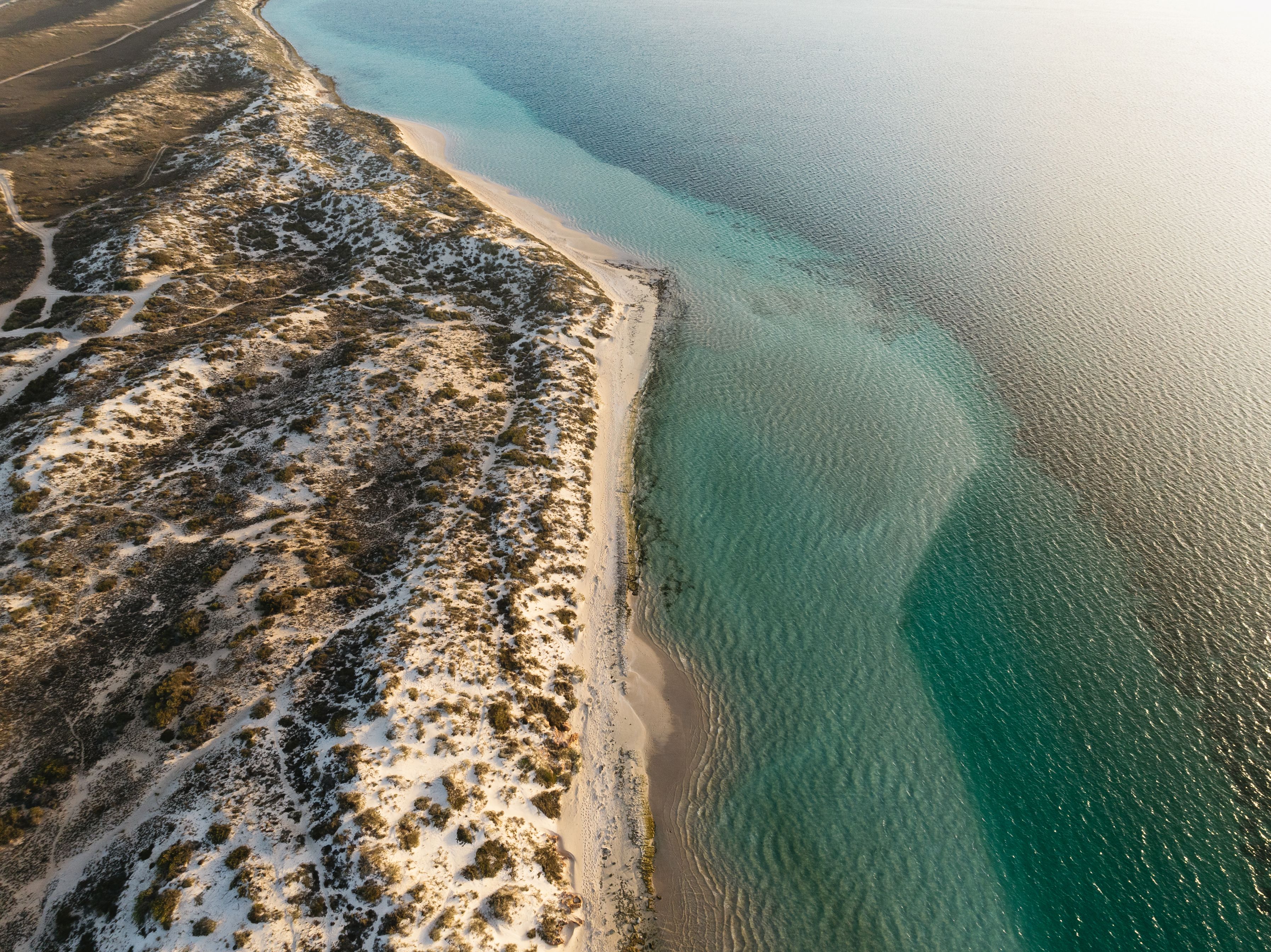
Turquoise Bay
At Turquoise Bay, a pale sandbar bends the sea into a moving, snorkel-ready river.
Turquoise Bay isn’t just beautiful—it’s engineered by reef and tide. On the edge of Ningaloo Reef, the ocean arranges itself into layers: glassy shallows, a deeper teal channel, then a dark seam where coral begins. You feel the place working as much as you see it.
Most people focus on the color and miss the sandbar’s quiet trick. It pinches the flow, creating a consistent lateral current that turns a snorkel into a drift—less effort, more reef, and a strange sense of being carried with intention.
The payoff is calm exhilaration. You surrender to motion while parrotfish click and surgeonfish flash like coins in blue light… and you come out of the water reset, as if the sea has rinsed the static from your body.
The Drift Line: Where the Bay Becomes a Conveyor Belt
Turquoise Bay’s signature moment isn’t the first look from the dune—it’s the realization that the shoreline and reef create a built-in route. The pale sandbar and the reef’s shape funnel water along the bay, so the sea moves sideways with a steady, readable intention. If you enter at the southern end and let yourself go, you’re not just snorkeling… you’re being transported. That’s why the reef here feels unusually generous: it comes to you. Most visitors either swim straight out from the main entry (working against the flow) or they stay ankle-deep, taking photos of the color and leaving the real spectacle untouched. The smarter approach is to treat the current like a moving walkway. Start up-current, keep your body long and relaxed, and let the reef pass beneath in chapters—shallow coral gardens, then deeper patches where the blues intensify and the fish count rises. This also changes how safe and enjoyable the bay feels. You plan your exit before you enter, because the drift will deliver you toward the northern end. You conserve energy for looking, not fighting. And you come away with that rare travel sensation: nature doing the heavy lifting while you pay attention—proper attention—to texture, sound, and the small dramas on the reef.
You step off the boardwalk and the sand is so white it seems to hold light rather than reflect it. The air smells of salt and warmed spinifex; behind you, low dunes hush the road. In front, the bay grades from clear-to-aquarium to an impossible turquoise that looks poured, not natural. You wade in at the southern end and the water meets your shins with a cool, clean firmness. Then it happens—the current takes your ankles like a gentle hand and begins to slide you along the reef line. You float, face down, watching coral heads rise and fall beneath you like a slow city: bommies patterned with honeycomb, plates stacked like dinnerware, anemones breathing in place. Sunlight ripples across everything in moving lace. A green sea turtle appears without drama, paddling with patient authority, then vanishes into darker blue. Every few minutes you lift your head, taste salt on your lip, and see the shore drifting past—proof you’re not swimming hard, you’re traveling.
The Water
The shallows are near-colorless—like polished glass over sugar-white sand—then the water shifts into a saturated cyan that reads almost milky in bright sun. Over the reef edge it turns cobalt, a darker ink line that makes the turquoise glow even harder.
The Cliffs
This is Ningaloo’s accessible grandeur: a fringing reef close enough to swim to, paired with low dunes and scrub that keep the horizon clean. The beach curves in a way that frames the water like a bowl, while offshore the reef structure draws a visible boundary between calm and depth.
The Light
Late morning to early afternoon gives you the full color spectrum, when the sun is high enough to light the sandbar through the water. On clear days, the reef detail sharpens after midday as the glare settles and the blues deepen. Avoid heavy cloud if you want the famous “electric” turquoise—flat light mutes the gradient.
Best Angles
Dune boardwalk lookout
You see the full gradient—clear shallows to deep reef blue—in a single, graphic sweep.
Southern entry point (up-current start)
The reef begins almost immediately; shots here capture snorkelers in luminous shallows with coral texture.
Mid-drift over the reef edge
The unexpected angle is downward—photograph the transition line where turquoise drops into cobalt.
Northern end exit area
For photographers, this is where the curve of the bay reads best; use people for scale against the color bands.
Waterline at knee depth
The intimate angle: ripples over white sand, small wavelets, and the first hints of blue pooling around your ankles.
Use the drift properly: enter at the southern end and plan to exit at the northern end rather than swimming back against the current.
Wear reef-safe sunscreen and consider a rash vest—sun reflection off white sand and water is intense even when the air feels mild.
Bring water and snacks; facilities are limited and the heat can be deceptively draining.
Fins make the drift calmer and more controlled, especially when you need to angle toward your exit point.
Check local conditions and signage on the day; currents and wind can change the feel of the bay quickly.
Handpicked Stays & Tables
Places chosen for beauty and intention, not algorithms. Each one is worth your time.

Sal Salis Ningaloo Reef
Cape Range National Park (near the coast)
A safari-style luxury camp where canvas walls still let you hear the wind move through scrub. You fall asleep to ocean hush and wake close to the reef, with guided experiences that make the landscape feel legible.

Mantarays Ningaloo Beach Resort
Exmouth Marina
Polished, contemporary comfort with an easy resort rhythm—sunset views over the water and a base that makes early starts painless. Ideal if you want day adventures with a predictable, well-appointed return.

Whalers Restaurant
Exmouth (Mantarays Ningaloo Beach Resort)
A relaxed, sea-facing dining room that suits post-snorkel hunger—clean flavors, local seafood, and a sunset that slows the pace of conversation. Book ahead in peak season.

Froth Craft Brewery
Exmouth
Casual, lively, and genuinely useful after a day in salt and sun. Good beer, hearty plates, and the kind of atmosphere where you can replay the day’s sightings without performing them.
You come for the color, then you realize the sandbar is the author—writing your route in moving water.