Turquoise Bay
At Turquoise Bay, you don’t just snorkel the reef—you read it, lane by lane, on the move.
Turquoise Bay matters because it turns the Ningaloo Reef into something legible—an open book of currents, coral, and fish traffic you can follow with your own body. This is a shore-entry snorkel with the clarity and biodiversity people fly halfway around the world to chase, yet it unfolds a few fin-kicks from sand so pale it almost whistles in the sun.
Most people treat it like a single “swim area.” But the bay is really a sequence: a launch point, a conveyor-belt drift, and a natural exit. The reef here has structure—fish lanes, coral patches, and a surface drift line—and once you notice it, you stop fighting the water and start traveling with it.
The payoff is quiet mastery. You feel the moment your breathing syncs with the current, the reef sliding beneath you like a slow film reel. You come out of the water not just dazzled, but oriented—like you’ve learned the bay’s grammar and it has briefly let you speak it.
The Drift Is the Map: Follow the Foam, Not the Crowd
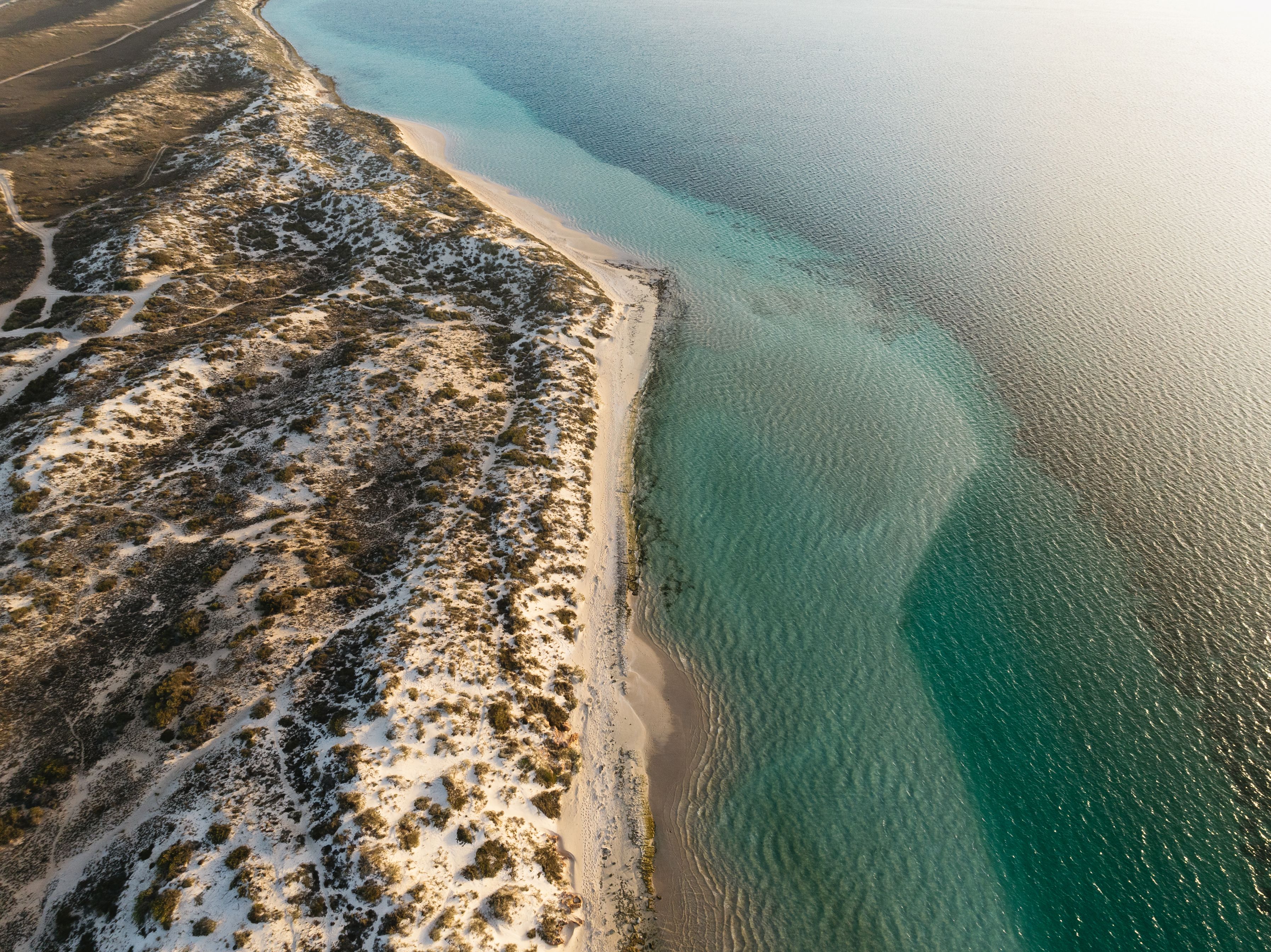
Turquoise Bay’s signature experience isn’t “snorkeling a reef,” it’s being carried across one—safely and spectacularly—if you read the signs. The bay is engineered by water movement. On calm days you can see it from the beach: a faint, curving seam where tiny bubbles and surface glitter collect. That’s the drift line, and it usually mirrors the strongest flow. Most people enter wherever there’s space on the sand, kick hard to reach “the good coral,” then get tired, lose direction, and stand up too early. Instead, you watch the lanes. Close to shore, pale sand and scattered coral heads create a slow zone where fish feed and visibility stays bright. A little farther out, the water darkens over denser coral patches—this is where color concentrates: electric-blue chromis, mustard tangs, the occasional cruising trevally like a blade. Then there’s the fish traffic: narrow channels between coral clusters where movement is constant. You’ll notice it as a rhythm—fish coming at you in small groups, then a pause. If you align your drift with these lanes, you see more without chasing it. The practical magic is the exit. The current often wants to deliver you down-bay; fighting it turns the swim into a workout. Work with it, and you get a long, cinematic drift with a clean finish—standing up in shallower water, looking back, and realizing the reef just gave you a guided tour.
You step off sand that squeaks underfoot, the air dry and salt-clean, and the first touch of water is cool enough to sharpen your attention. The lagoon is a sheet of glass broken by a low, restless line where the ocean leans in. You wade until the sound changes—shore hush to underwater crackle—then float, face-down, watching the reef assemble itself: cream sand scallops, then a bruised-blue coral garden, then a darker seam where the current begins to pull. A pair of snorkelers ahead of you drifts like slow punctuation. Parrotfish rasp at the coral with an audible scrape; damselfish hold their tiny territories like nervous guards. You let the water do the work. The reef moves past in panels—branching coral, a patch of rubble, a sudden meadow of bommies—while above you the surface gathers a faint slick of foam and glitter, the drift line marking the bay’s invisible highway. When you finally stand, the sun feels louder, and your legs remember you’ve been traveling.
The Water
The water is a layered spectrum: nearshore it’s milky-aqua over white sand, then it shifts to a clearer, colder turquoise with a green edge where depth gathers. Over coral, it turns inky and saturated, the kind of blue that makes shadows look intentional.
The Cliffs
This is Cape Range country—low limestone and scrub meeting a beach that feels almost too refined, like it’s been sifted. Offshore, Ningaloo’s reef structure creates the bay’s calm interior and that subtle, moving boundary where lagoon becomes ocean.
The Light
Late morning into early afternoon gives you the cleanest read of the reef—sun high enough to cut through the surface texture and light the coral patches. If there’s wind, aim for earlier in the day when the lagoon stays flatter and the drift line is easier to spot.
Best Angles
Turquoise Bay Lookout (Cape Range National Park road pull-off)
You see the bay’s choreography from above—the pale sand shelf, the darker reef band, and the drift seam that explains everything.
Main beach entry (southern end of the bay)
Best for setting up the classic drift: you enter with calm footing and let the current carry you across coral patches in sequence.
Shoreline walk to the quieter sand pockets
A few minutes on foot changes the entire feel—less chatter, more space, and clearer water when the main entry is busy.
Knee-deep shallows at the exit zone
For photographers, this is where the water turns to liquid glass—ripples over white sand, snorkelers silhouetted, reef color behind them.
Edge-of-coral boundary (where sand meets bommies)
The intimate angle: hover at the transition and watch the micro-drama—juvenile fish, feeding patterns, and the way coral texture catches light.
Check local conditions and warnings before you enter—Turquoise Bay’s current is the feature, but it’s also the variable that decides your route.
Use a proper snorkel set that seals well; a small leak becomes exhausting on a drift swim.
Wear reef shoes or sturdy sandals for entry and exit over occasional coral rubble and hot sand.
Bring water, shade, and a basic first-aid kit—facilities are limited and the sun here is precise and unforgiving.
Choose reef-safe sunscreen and apply it well before you swim; better yet, wear a long-sleeve rashie to reduce sunscreen use on the reef.
Handpicked Stays & Tables
Places chosen for beauty and intention, not algorithms. Each one is worth your time.

Sal Salis Ningaloo Reef
Cape Range, near Ningaloo Coast
A refined tented camp that keeps you close to the elemental soundtrack—wind in scrub, distant surf—without giving up comfort. Days here feel shaped by light and tide, and the reef is the reason you set your watch.

Mantarays Ningaloo Beach Resort
Exmouth Marina area
Polished, easy, and well-placed for early starts into Cape Range. It’s the kind of base where you can rinse gear, reset in air-conditioning, then head back out before the bay gets loud.

Whalers Restaurant
Exmouth
A reliable post-water landing spot with generous plates and a traveler’s hum. You come here for an unforced dinner when your skin still tastes faintly of salt.

Potshot Bistro
Exmouth
Casual and social, good for a quick meal before you drive back into the park. The easygoing energy suits the day’s rhythm—snorkel, rinse, eat, repeat.
At Turquoise Bay, the reef isn’t a backdrop—it’s a moving coastline under your chest, and the current is the sentence that carries you through it.