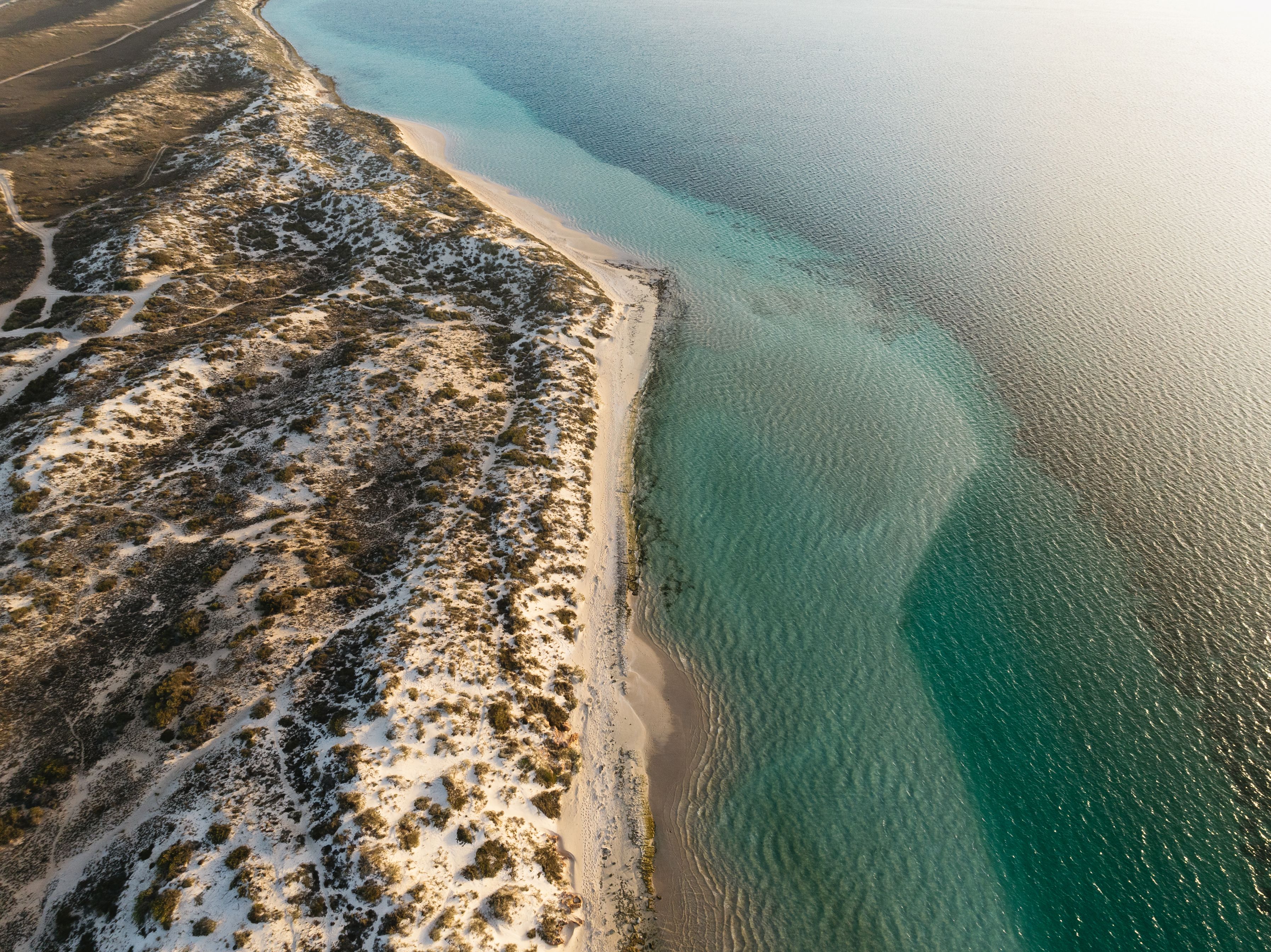
Turquoise Bay
Skip the main steps—arrive at Turquoise Bay the way the tide intended: quietly, from the south.
Turquoise Bay isn’t just a beautiful strip of sand on the Ningaloo Coast—it’s one of the rare places where a world-class reef brushes the shoreline so closely you can watch it breathe from dry land. The bay matters because it compresses the scale of the Indian Ocean into something intimate: dune grass, pale sand, and a living aquarium within a few fin-kicks.
Most people funnel in via the main steps, then stop where the signage and the crowd tell them to. Entering from the southern track changes the entire rhythm—wind direction feels clearer, the water reads truer, and you understand why the drift snorkel here works like a moving walkway.
The payoff is subtle and immediate. You arrive with your shoulders already lowered, you choose your own pace, and the first turquoise you see belongs to you—not to the viewpoint everyone else is photographing.
The bay is a conveyor belt—and the south track lets you step on gently
Turquoise Bay’s beauty is obvious; its choreography is not. The reef sits close enough to shore that the ocean’s movement becomes legible from the sand—especially from the southern approach, where you arrive parallel to the drift instead of straight into the busiest staging area. You’ll notice the current before you feel it: a faint diagonal pull on the surface, a line of tiny ripples moving with purpose, snorkelers gradually reappearing down-bay like commas in a sentence. Most visitors descend the main steps, enter where it’s convenient, then fight the water or cling to the shallows, assuming the bay is “swim anywhere.” The southern track positions you to do what the place is designed for: start up-current, let the reef deliver the show, and exit without turning it into a workout. It also gives you a calmer first five minutes—time to watch wave sets, pick your entry, and read where sand gives way to coral. There’s an emotional difference, too. Entering from the south feels like arriving by invitation rather than announcement. You meet the bay at its quieter edge—less chatter, fewer elbows, more room to float and listen. The reef becomes less of an attraction and more of a presence… and you leave with that rare sensation of having moved with the landscape instead of through it.
You leave the car with the heat already shimmering off the bitumen, then the southern track pulls you into a quieter register—sand softens your footfalls, spinifex ticks lightly in the breeze, and the air smells faintly saline, like sun-warmed seaweed drying somewhere out of sight. The dune rises just enough to hide the bay until the last few steps… then the water appears in bands, as if someone has poured different blues into the same bowl. The shallow edge is glassy and pale; further out, it turns enamel-bright; beyond that, the reef darkens the surface like ink under silk. You hear small sounds first—reef fizz, distant gulls, the hush of wind combing grass—before the larger ones: a set rolling in, the scrape of sand under your towel, a zipper of a wetsuit somewhere behind you. You wade in and the temperature slips cool around your ankles. In the clear shallows, light fractures into moving mosaics on your skin, and you understand why people say this bay is a swim that carries you.
The Water
The water reads in layers: near-shore gin-clear over white sand, then a saturated turquoise that looks almost backlit. Over the reef, it deepens to cobalt and ink, with flickers of electric green where sunlight hits coral heads.
The Cliffs
This is the Ningaloo Coast in miniature—wind-shaped dunes, tough coastal scrub, and a fringing reef that sits improbably close to land. The shoreline’s pale sand acts like a reflector, bouncing light up into the water and making the blues feel luminous rather than simply bright.
The Light
Late morning to early afternoon gives you the clearest water color—sun high enough to punch through surface texture and reveal the reef’s dark geometry. If the wind rises, aim for the calmer window just after sunrise, when the bay often lies flatter and the water reads like glass.
Best Angles
Southern dune crest (before the beach)
You get the first full reveal—layered color bands and the reef line—before footprints and towels enter the frame.
Waterline at the southern entry
Shooting low here turns tiny wavelets into texture and keeps the palette clean: sand, turquoise, sky.
Mid-beach looking back toward the south
Most photos point north; turning back gives you fewer people, stronger dune shapes, and a calmer narrative.
Shallow reef edge (mask-level perspective)
For photographers with a waterproof setup, half-above/half-below frames show the contrast between pastel shallows and dark coral structure.
Exit point down-bay (end of drift)
The intimate angle—wet hair, salt on skin, and the sense of being carried—captures what the bay feels like, not just how it looks.
Plan the drift snorkel: enter up-current, float with the reef, and exit down-bay rather than swimming back against the pull.
Wear reef-safe sun protection and bring a rashie; the reflected light off the sand and water is stronger than it looks.
Use sturdy water shoes—coral rubble and hot sand can surprise you, especially near transitions from sand to reef.
Bring your own water and a small shade option; facilities are limited and the sun is uncompromising.
Check conditions and signage on arrival; if winds are up or visibility drops, enjoy the southern entry as a beach walk and save the snorkel for a calmer day.
Handpicked Stays & Tables
Places chosen for beauty and intention, not algorithms. Each one is worth your time.

Sal Salis Ningaloo Reef
Cape Range National Park (near Ningaloo Coast)
Luxury safari-style tents set behind dunes, where you fall asleep to wind in scrub and wake to reef light. It’s immersive and deliberately quiet—built for people who want the coast to feel close, not curated.

Mantarays Ningaloo Beach Resort
Exmouth (Marina)
Polished, comfortable, and well-positioned for early departures into Cape Range. Rooms lean contemporary coastal, and the marina setting makes sunset drinks feel effortless after a day in salt and sun.

Whalers Restaurant
Exmouth (Ningaloo Centre)
A reliable Exmouth staple when you want something warm and grounding after a day of swimming. Expect seafood, classics, and a relaxed dining room that suits sandy shoulders and sun-flushed faces.

The Social Society
Exmouth (Town centre)
Good coffee, fresh breakfasts, and the kind of casual-luxe ease that helps you reset before driving back into the national park. Ideal for stocking up on calm energy and something cold to drink.
Come in from the south, and Turquoise Bay stops being a spectacle you visit and becomes a tide you learn to move with.