Reynisfjara
At Reynisfjara, the loudest beauty is under your feet—if you stop long enough to look down.
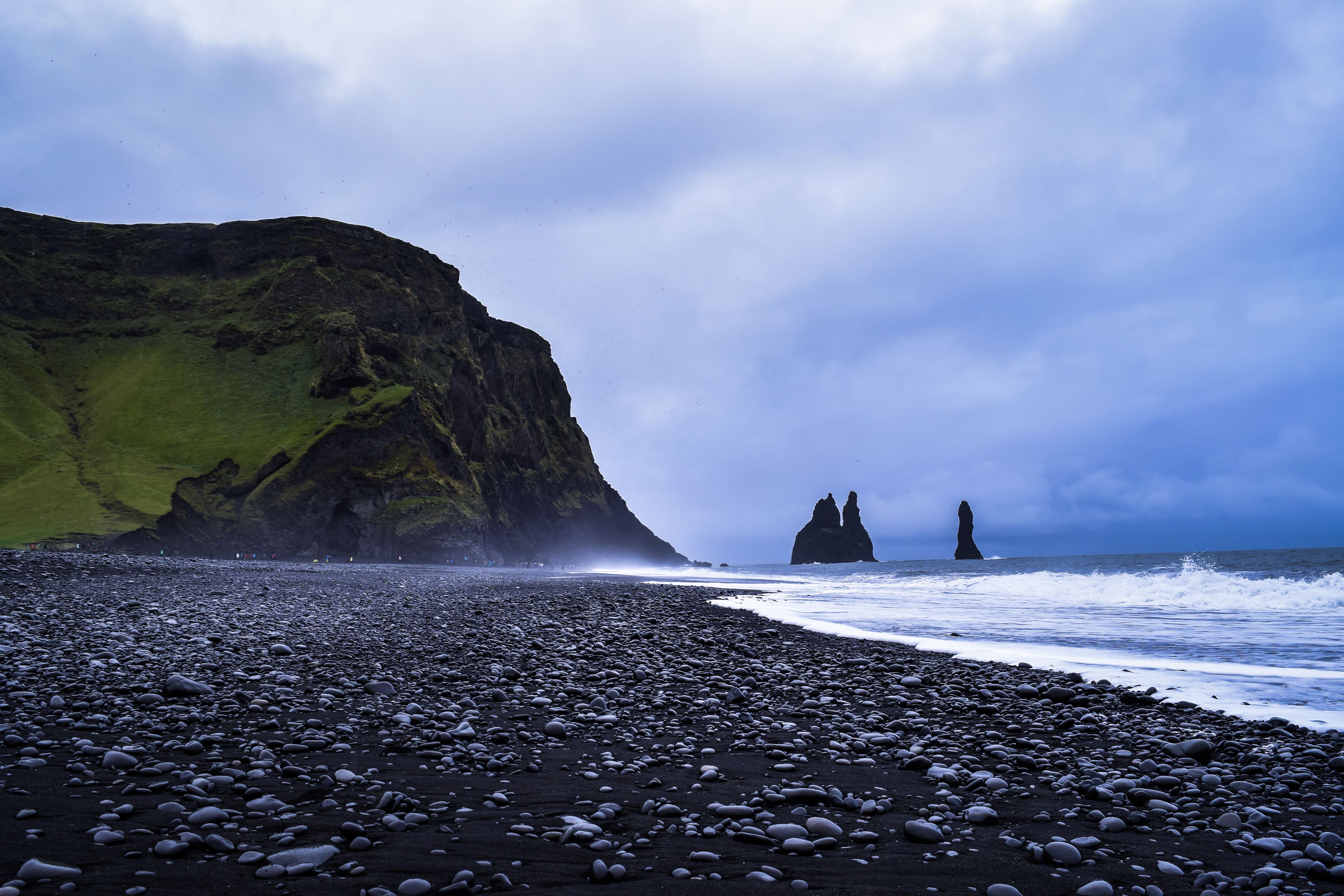
Reynisfjara matters because it refuses to behave like a beach. The Atlantic doesn’t lap—it lunges, dragging foam back over black sand that looks inked into the coastline, while sea stacks stand offshore like dark punctuation.
Most people come for the basalt columns as a backdrop, then rush on to the cave and the stacks. They miss the organ pipes that aren’t vertical at all—the sections that have collapsed into the surf line and become a patterned floor you’re literally walking across.
When you finally slow down, the place changes from spectacle to intimacy. The geometry under your boots makes the beach feel engineered, and for a minute the noise of the wind and waves becomes less threatening…almost musical.
The Fallen Keyboard: Reynisfjara’s Organ Pipes as a Floor
Most visitors photograph Reynisfjara vertically. They aim their lenses at the cliff as if the basalt columns only matter when they stand upright, marching toward the sky beside Hálsanefshellir cave. But the beach tells a more interesting story at ground level—where the organ pipes have failed. Look down near the base of the columned wall and along the edges where the sea has room to reach: sections of hexagonal basalt have collapsed and rotated, turning the famous pattern into a pavement. The shapes are cleaner than you expect, like cut stone, yet the edges are chipped and salt-worn. You can read the physics in it. These columns formed as lava cooled and contracted into fractures; time and frost widened those fractures; gravity and storms finished the job. What remains is not a ruin but a rearrangement. The payoff is that Reynisfjara becomes tactile. You feel the geometry through the soles of your boots, and you start composing the scene differently—less postcard, more close study. The light glances off the facets in small flashes, especially when the stones are damp. You’ll notice tiny pools in the joints, a smear of green algae where the tide lingers, and sand collecting in the seams like shadow. It’s the same landmark everyone comes for…only experienced the way the ocean experiences it: from the ground, relentlessly, one precise surface at a time.
You step off the path and the sound thickens—the steady roar of the North Atlantic, wind skimming sand at ankle height, the occasional crack of a wave collapsing hard enough to feel in your ribs. The beach is black, not just in color but in mood: matte where it’s dry, glossy where the tide has just passed. Ahead, the familiar basalt wall rises in tight, hexagonal columns, but your eyes keep getting pulled to movement—people edging toward the water, then retreating fast as a sneaker wave rewrites the shoreline. You walk closer to the base of the cliff and the texture changes. The sand gives way to broken basalt “keys” laid flat, as if a giant instrument has been knocked over and the notes scattered across the beach. Sea spray salts your lips. The stone is cold and faintly slick, each facet catching a thin, silver light. You pause, look down, and suddenly the famous view is no longer the point. The point is the pattern you’re standing on—ancient lava made precise, made tender by erosion, and still sharp enough to command your attention.
The Water
The water is steel-blue to slate-gray, often topped with white, torn foam that looks like shredded paper in strong wind. On calmer moments, you’ll catch a green-black translucence in the breaking waves, like bottle glass held up to cloudy light.
The Cliffs
Reynisfjara is a volcanic shoreline rendered in hard angles: basalt columns, black sand, and offshore stacks (Reynisdrangar) rising from deep water. The cliffs feel close and heavy, and the beach narrows and widens with the tide, making the whole scene feel in motion.
The Light
Overcast is not a compromise here—it’s a feature, turning the sand velvety and the basalt graphically crisp. For drama, come when low sun slips under a cloud ceiling, briefly gilding the column facets while the sea stays dark.
Best Angles
Basalt wall base (east end near the columned cliff)
You can frame the fallen pipes as a geometric foreground with the upright columns rising behind—Reynisfjara in one layered shot.
Hálsanefshellir cave edge
Stand just outside the cave and let the column curvature guide the eye toward the open beach, balancing shelter and exposure.
Tide line looking back toward the cliffs
This reverses the usual composition—wet sand reflections, receding foam, and the cliff face as a dark, textured wall.
Reynisfjara viewing platform (upper path near the parking area)
For photographers, it’s your clean establishing shot—scale, surf patterns, and the stacks without people dominating the frame.
Among the fallen basalt “keys” (close to your feet)
The intimate angle: shoot downward or at knee height to turn the organ pipes into abstract pattern, with spray and sand as atmosphere.
Treat sneaker waves as non-negotiable: keep a wide buffer from the waterline and never turn your back on the sea.
Wear waterproof boots with grip—the fallen basalt can be slick with spray and algae, and the sand is heavy when wet.
Check the forecast and wind speed; Reynisfjara feels significantly colder and louder when the wind funnels along the cliffs.
Give yourself 30 minutes beyond the “quick stop” mentality—your best discoveries happen when you stop photographing the horizon and start studying the ground.
If you’re traveling in winter, confirm road conditions on road.is before you commit; the South Coast can change quickly.
Handpicked Stays & Tables
Places chosen for beauty and intention, not algorithms. Each one is worth your time.

Black Sand Suites
Vík í Mýrdal
Minimalist suites with big windows that make the changing weather feel like part of the design. It’s quiet, polished, and perfectly placed for dawn visits to Reynisfjara before the day-trippers arrive.

Hótel Kría
Vík í Mýrdal
A modern, comfortable base with a warm, understated restaurant and easy parking. You’re close enough to slip out for late light, then return to something that feels calm and considered.

Smiðjan Brugghús
Vík í Mýrdal
A relaxed brewpub with hearty plates that make sense after wind and sea spray. Sit with a local beer and let your body come back to normal temperature while you replay the surf in your mind.

The Soup Company (Súpufélagið)
Vík í Mýrdal
Simple, warming soups and bread that feel tailor-made for South Coast weather. It’s the kind of meal that restores your hands and face after you’ve been sandblasted by the wind.
If you let Reynisfjara slow you down, the beach stops being a view and becomes a surface—cold, precise, and unforgettable beneath your steps.