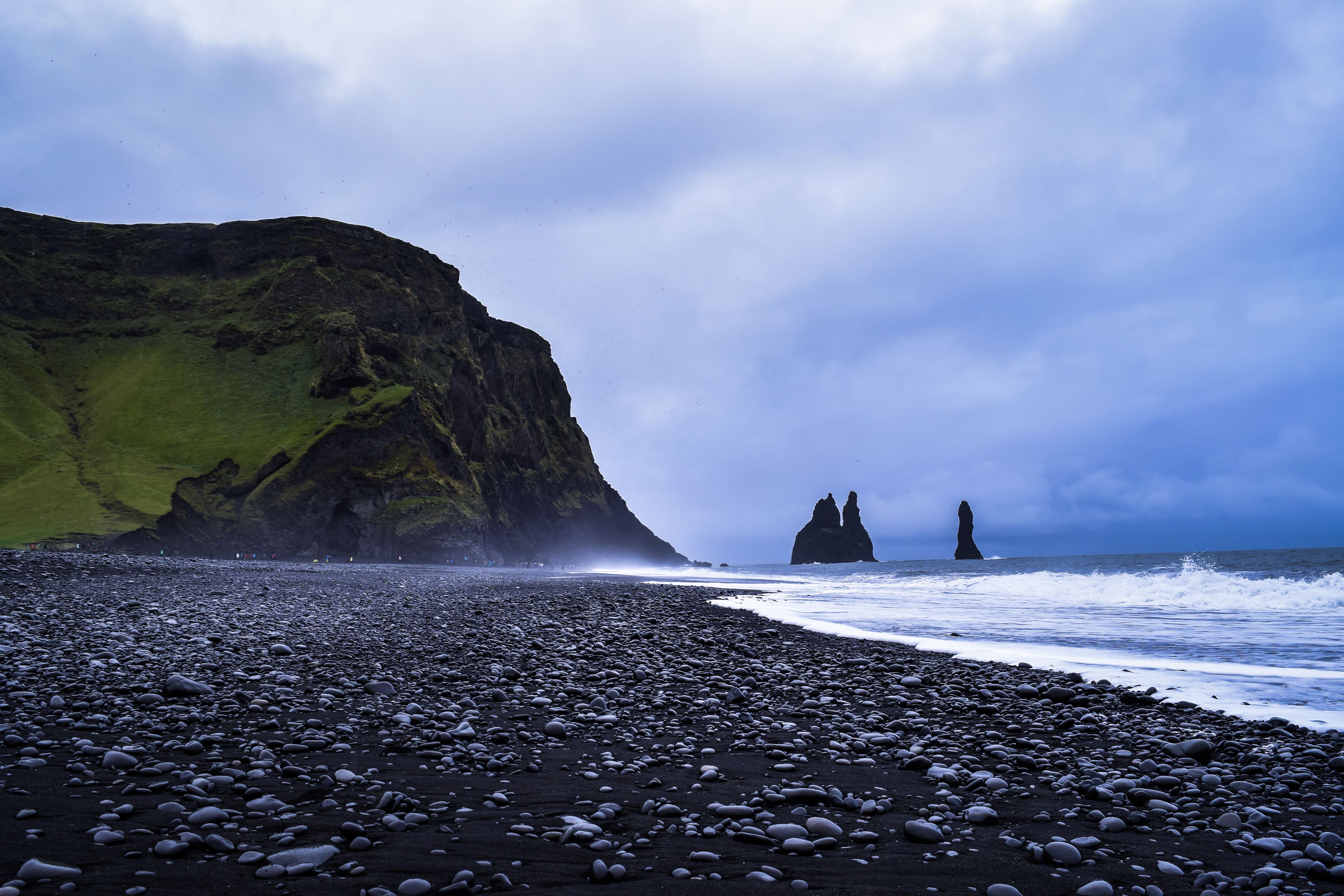
Reynisfjara
In sideways squalls, Reynisfjara stops being a beach and becomes a black mirror.
Reynisfjara matters because it shows Iceland at its most honest—raw basalt, Atlantic force, and weather that edits the landscape minute by minute.
Most visitors chase sun breaks and postcard calm, but the real character arrives in horizontal rain, when the sand compacts, darkens, and starts reflecting the world back at you.
You leave feeling slightly rewired—humbled by the surf’s authority, steadied by the geometry of basalt, and oddly grateful for the storm that made you slow down.
The Storm’s Mirror: How Rain Rewrites the Black Sand
In fair weather, Reynisfjara reads as drama: black sand, roaring surf, a cinematic cliff. In horizontal rain, it becomes something more precise—an instrument. The storm compacts the sand into a dense, sealed surface, and the beach stops absorbing light. It starts returning it. That’s the trick most people miss because they arrive, take a quick look, and retreat to the car when the weather turns. But the weather is the point. Watch your surroundings the way you would in a gallery. The basalt columns—those hexagonal stacks—look less like rock and more like polished graphite when wet. The cliff face darkens into clean planes; the cave mouths read deeper, almost inked. The sand, now saturated, becomes a low, black mirror that doubles everything: the columns, the sky, the thin white seams of foam. This mirror is not calm. It’s a surface constantly being erased and redrawn by the next set. Stand back from the waterline and you can see the “breathing” of the beach—each wave glazing the sand, each retreat pulling reflections into long, trembling streaks. You come away with a new respect for scale and risk: beauty here is inseparable from power, and the most photogenic moments happen exactly where you should not linger.
You step off the boardwalk and the wind takes the words right out of your mouth. Rain comes in flat sheets, not falling so much as traveling—stitching across your jacket and beading on your eyelashes. Under your boots the black sand turns firm, almost lacquered, and every footfall lands with a quiet, satisfying drag. Ahead, the Atlantic keeps its own schedule: waves rise, fold, and detonate with a sound like heavy fabric snapped tight. The sea spray tastes metallic and cold. To your left, Reynisdrangar stands offshore like dark teeth, half-erased by mist; to your right, the basalt columns stack into the cliff as if an architect tried to tame lava with a ruler. A sudden lull opens a window of clarity—wet sand becomes glass, reflecting the columns, the gray sky, the quick silhouette of a person braced against the wind. You realize you’re not here to “see” Reynisfjara. You’re here to feel how it moves.
The Water
The water is steel-gray with a green undertone, edged by foam so white it looks cut from paper. In squalls, spray lifts off the breakers and turns the horizon into a soft, moving blur.
The Cliffs
This is a volcanic shoreline where basalt cooled into columns and the Atlantic keeps chiseling the edges. Offshore, Reynisdrangar rises as jagged stacks—darker than the sea—while the cliffs hold striations and caves that feel almost architectural.
The Light
The beach looks most alive under heavy cloud after a fresh burst of rain, when everything turns glossy and contrast spikes. Late afternoon in winter can be extraordinary—low light skims the wet sand and makes reflections feel endless.
Best Angles
Basalt Column Wall (Hálsanefshellir side)
Stand obliquely to the columns so their hexagons catch wet highlights and the lines pull your eye into the cliff.
Upper Beach Line near the Rope Boundary
From a safe distance, you get the widest read of surf patterns—foam arcs, retreating sheen, and scale against Reynisdrangar.
Cave Mouth Threshold
Frame outward from the shelter of the cave; rain turns the outside world into a silver-gray screen with dramatic contrast.
Reynisdrangar Alignment Point
Move laterally until the stacks separate cleanly; in mist, that spacing gives the scene depth instead of a single dark mass.
Wet-Sand Reflection Strip
Look down more than you think—low angles make the sand behave like glass, doubling columns and sky in a minimal composition.
Treat the surf like a boundary, not an attraction—sneaker waves here are real; keep a wide buffer and never turn your back to the ocean.
Wear waterproof layers and gloves; horizontal rain finds every cuff, and your hands go numb faster than you expect when shooting photos.
Bring a lens cloth and keep it accessible—spray and rain will soften every image unless you wipe constantly.
Expect strong gusts near the cave and cliff; keep hats and loose items secured, and hold phones with two hands.
Check road and weather conditions (vedur.is and road.is) before driving—South Coast winds can change the trip from simple to serious.
Handpicked Stays & Tables
Places chosen for beauty and intention, not algorithms. Each one is worth your time.

The Barn
Vík
A design-forward base that feels crisp and calm after a harsh coastline. Rooms are simple but considered, and the communal spaces suit slow evenings with weather on the windows.

Hótel Kría
Vík
Modern, reliable comfort with a clean Scandinavian edge—good beds, good breakfast, and an easy walkability in town. Ideal if you want to be close enough to return to Reynisfjara as the light changes.

Súður-Vík
Vík
A relaxed dining room where local lamb and seafood land with warmth after wind and spray. It’s the kind of place that understands you’ve earned your meal.

Black Crust Pizzeria
Vík
Casual, satisfying, and perfectly timed for travelers who come in damp and hungry. The crust has a deep char that echoes the landscape without trying too hard.
When the rain comes sideways, Reynisfjara doesn’t soften—it clarifies, and you see the coast the way the Atlantic intends.