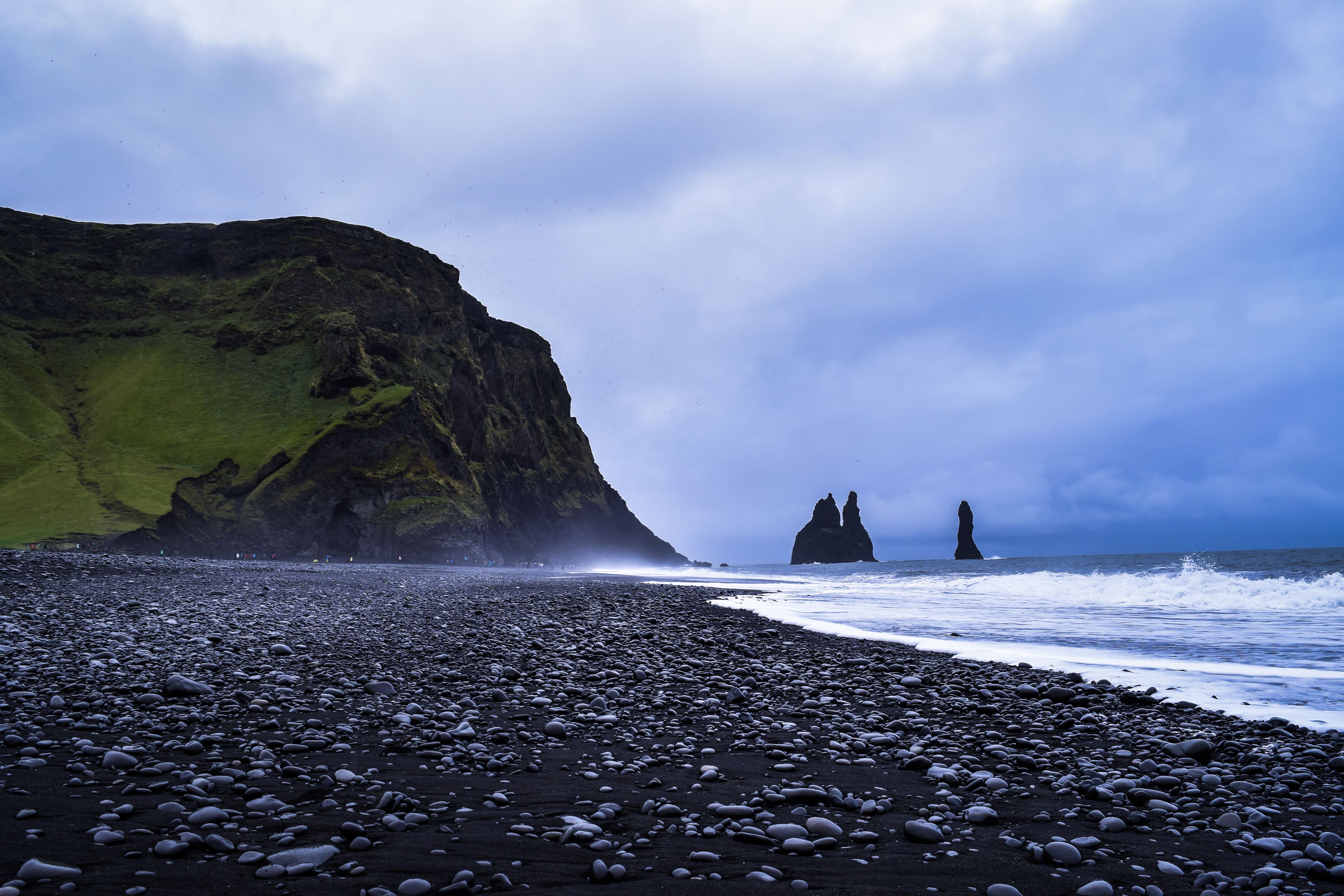
Reynisfjara
Reynisfjara isn’t just dramatic—step into its calmer pocket and you feel the coast exhale.
You come to Reynisfjara for the headline: black sand that drinks light, surf that hits like a drum, and basalt that looks engineered rather than made. It matters because it’s one of the few places where Iceland’s geology feels loud enough to drown out your thoughts—until you notice there are quieter rooms inside the same scene.
Most people stop at the obvious frame: the cave, the columns, the sea stacks. They miss how the beach changes the moment you slip behind Reynisdrangar, where the stacks interrupt the wind and the sound drops from roar to a lower, steadier pulse.
That shift is the payoff. You go from spectacle to intimacy in a few minutes—your shoulders unclench, your breathing finds a rhythm, and the coastline stops performing for you and starts existing beside you.
The Lee Side: Where Reynisfjara Stops Shouting
Reynisfjara’s reputation is built on drama, and the beach delivers it on arrival—the kind of wind that forces your body to lean, the kind of surf that seems to arrive with intent. But the beach has an architecture most visitors never use. Reynisdrangar isn’t only a photo subject; it’s a physical barrier that changes how the coastline behaves. As you walk with purpose toward the stacks, you begin to feel the microclimate shift. The gusts break. The sound spreads out instead of hitting you head-on. Even the smell changes—less raw salt spray, more mineral dampness from the basalt and the wet sand. This is where you understand the beach as a set of rooms: the loud entry hall near the cave, the gallery of basalt columns where texture takes over, and then the sheltered pocket behind the stacks where you can actually stand still without bracing. In that calmer pocket, details surface. The sand is not powder—it’s volcanic grains that cling to wet fabric. The water near shore turns glassy for seconds between sets, reflecting the stacks as a broken, dark signature. You stop chasing the “big shot” and start noticing timing, distance, and the discipline of the sea. The irony is that the calmer pocket sharpens your respect for the danger. When the wind drops, you can hear the sea better—and you keep the line you shouldn’t cross.
You step off the gravel path and the sand immediately feels different—coarser than it looks, like peppercorns underfoot. The Atlantic is slate-blue and restless, pushing white lines toward shore with a confidence that makes you instinctively read the water like weather. Ahead, Reynisdrangar rises out of the sea like dark teeth, and the beach sounds metallic—wind threading through your hood, stones ticking as waves pull them back. You pass the basalt columns at Hálsanefshellir, their faces cool and damp, and for a moment the cave amplifies everything: the hiss of spray, the low thud of a set landing. Then you keep walking, angling toward the lee of the stacks. The air softens. The wind that was pushing at your ribs loosens its grip. You can hear smaller things now—your boots scuffing, a kittiwake’s single note, the seam of water sliding over sand. The place doesn’t become safe, but it becomes readable… and that’s when it feels personal.
The Water
The water reads as gunmetal and ink, often with a green undertone that appears only when a wave thins over the black sand. In overcast light, the foam is a clean white cutout—graphic, almost stark—against the dark shore.
The Cliffs
Basalt here isn’t a backdrop; it’s structure. Hexagonal columns stack like a fractured organ pipe, while Reynisdrangar punctures the horizon offshore, turning open ocean into a composed stage. Everything feels volcanic, heavy, and precise—until the sea starts moving and the whole scene becomes kinetic.
The Light
Soft, low light makes Reynisfjara look like a monochrome print—midnight sand, silver water, matte-black stone. When the sun briefly breaks through after rain, the columns glaze and the beach gains depth: wet sand turns mirror-black and reflections become part of the composition.
Best Angles
Hálsanefshellir (basalt cave) entrance
The curve of the cave frames the surf and columns, compressing scale so the beach feels cinematic rather than wide.
Basalt column wall along the cliff
Shoot parallel to the columns to emphasize geometry and repetition—texture becomes the story, not the sea.
Walk toward the lee of Reynisdrangar (down-beach perspective)
As the wind drops, the scene steadies; you can capture cleaner reflections and a calmer foreground against the stacks.
Upper path viewpoint above the beach (near the parking area)
A higher angle shows wave patterns and the dangerous reach of sneaker waves—useful for storytelling and scale.
Close to the wet-sand margin (well back from the surge line)
Low angles make the sand look like black glass; foam lines become leading lines toward the stacks without needing a wide sweep.
Respect the sneaker-wave signage and keep a wide buffer from the waterline; the surge can travel far beyond what looks “safe.”
Wear waterproof outer layers and shoes with grip—the sand is heavy and the approach can be slick in rain or ice.
Bring a lens cloth; wind-driven spray and fine volcanic grit can film your glass quickly.
If you’re photographing, use a strap and be mindful of gusts near the cave and cliff wall—wind here grabs gear.
Pair the visit with Vík (coffee, supplies) or a stop at Dyrhólaey for a higher vantage, but check road closures and wind warnings first.
Handpicked Stays & Tables
Places chosen for beauty and intention, not algorithms. Each one is worth your time.

The Barn
Vík / South Coast
Design-forward and social, with clean Nordic lines and a strong sense of place. It’s ideal if you want comfort and a warm communal space after the beach’s cold edge.

Hótel Kría
Vík í Mýrdal
Modern, understated rooms with a calm palette that feels like a visual reset after black sand and basalt. Convenient for early starts to Reynisfjara and dinner in town without a long drive.

Smiðjan Brugghús
Vík
A relaxed brewpub with burgers and house beers—exactly what you want when you’re windburned and hungry. The atmosphere is casual, but the timing is practical: it’s an easy decompression stop after Reynisfjara.

Suður-Vík
Vík
A more polished dining room with Icelandic ingredients treated simply and well. Go for a slower meal and a glass of something warm-toned while the weather rearranges itself outside.
You leave with sand in your cuffs and salt on your lips, but what stays is the moment the wind breaks and the coast becomes legible.