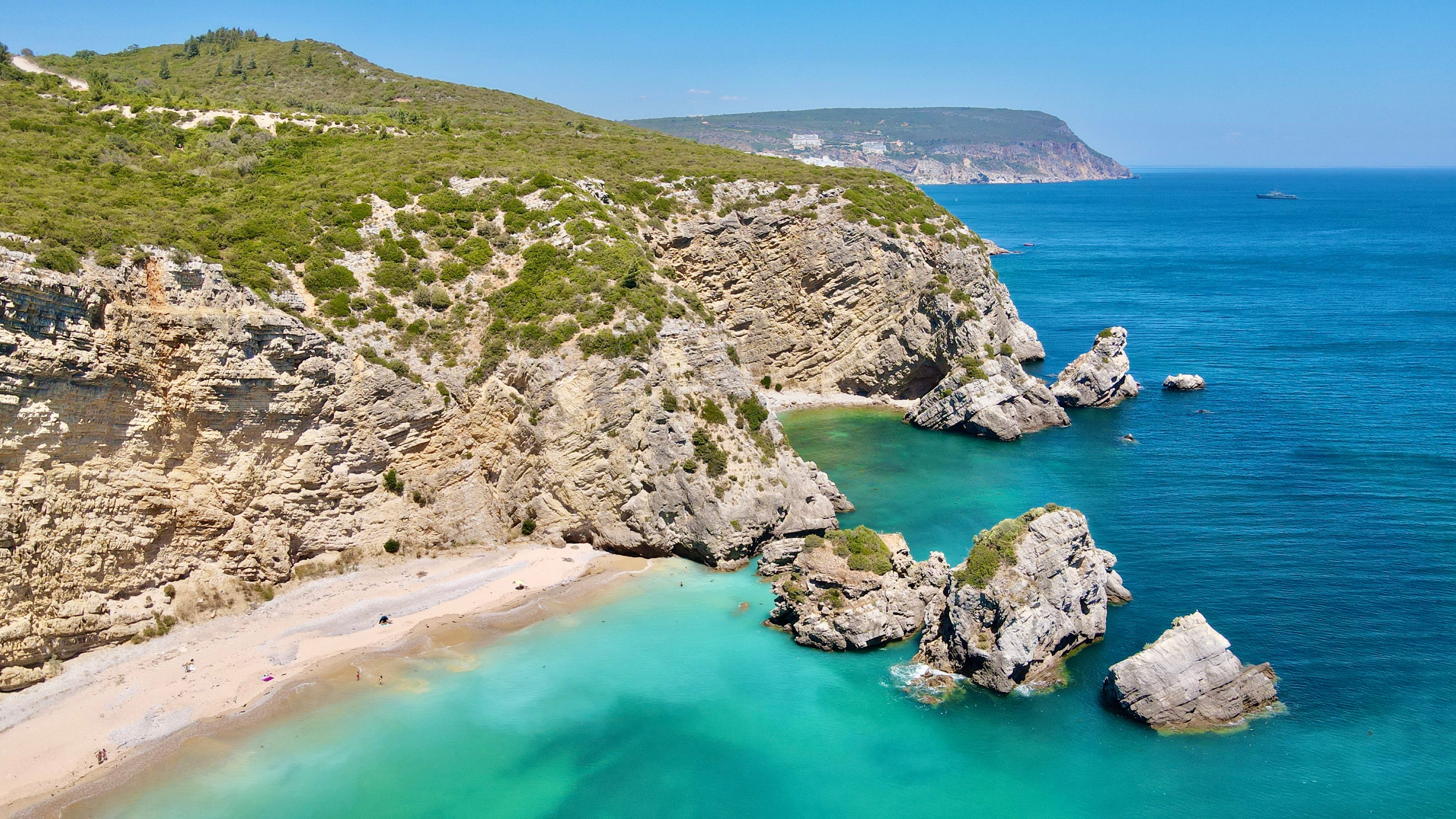
Praia do Amado
At Amado, the real forecast isn’t on your phone—it’s written in the headland’s shadows.
Praia do Amado matters because it’s one of the few Algarve beaches where the Atlantic feels undecorated—raw wind, blunt cliffs, and swell lines that arrive with intention. You don’t come for a postcard; you come to watch water organize itself.
Most people stand on the sand and judge the sea by noise. Up on the headland, the sets become legible: a moving map of peaks, channels, and sections, with the wind drawing texture across the face like brushed steel.
When you learn to read it from above, the beach stops being a place you visit and becomes a place you understand. You feel calmer—less at the mercy of the ocean’s mood, more in conversation with it.
The Bay Has Two Moods—And You Can See Both From One Step
On the sand, Praia do Amado can feel like a single, loud spectacle: whitewater, boards, lessons, kites of spray. The mistake is thinking it’s all one condition. Walk ten minutes to the headland and the bay splits into readable zones—like a diagram you didn’t know you needed. From up there, you notice how the swell refracts as it wraps into the curve of the beach. One bank starts to feather earlier, offering a smoother, more forgiving face; another section stays backed-off, then stands up abruptly and closes out with a different kind of energy. Even the wind changes character across the bay: it might be ruffling the inside into chop while the outside lines stay cleaner, darker, more polished. You also spot the quiet infrastructure of the sea—channels that drain, darker seams that signal deeper water, the way surfers drift toward a takeoff spot without ever looking rushed. It’s not mystical; it’s pattern recognition. And that’s the payoff: instead of arriving and reacting, you arrive informed. You choose where to spread your towel away from the lessons, where the current is less grabby, where your swim will feel like swimming rather than wrestling. Praia do Amado becomes less about braving the Atlantic and more about meeting it on better terms.
You park above the bay and step into that unmistakable Costa Vicentina air—salt, sun-warmed rock, and a faint vegetal tang from low scrub. Below, Praia do Amado opens like a wide, sandy page bordered by dark cliffs, with surfers scattered as small punctuation marks. The wind has a voice here, steady and insistent, and it combs the surface into ripples that catch light and then let it go. You take the path toward the headland instead of the beach, shoes crunching on gravel, and the view tightens into clarity: lines of swell marching in, bending subtly as they meet the contours of the bay. From above, you see the pauses between sets, the way a clean shoulder forms on one side while the other turns restless and fast. The ocean looks less like chaos and more like choreography. By the time you walk down to the sand, you’re not guessing where to sit, where to swim, where to surf. You already know.
The Water
The water is a cool Atlantic palette—deep slate-blue in the troughs, then translucent green where the face thins over sand. On windy days it turns matte and stippled; between gusts, it briefly smooths into a darker, glassier sheet.
The Cliffs
The beach sits inside the Costa Vicentina’s blunt geology: dark, folded cliffs, low scrub, and a wide sandy bay shaped to catch swell. The headlands act like a frame, compressing the horizon and making the lines of surf feel closer, more graphic.
The Light
Late afternoon brings the most dimension—the cliffs warm to rust and umber while the water stays cold-toned, a clean color contrast. On clear mornings, the light is whiter and more clinical, perfect for reading the sets from above.
Best Angles
Amado Headland Trail (southwest viewpoint)
You get the full bay in one sweep—ideal for reading set direction, where waves stand up, and where the crowd clusters.
Top of the main beach access path
A balanced angle that shows both the surf school zone and the open sand, useful for deciding where to land before you commit.
North end rocks at low tide
The unexpected angle: closer to the waterline but still elevated enough to see peaks forming without the head-on glare.
Clifftop above the center of the bay
For photographers: you can compress the scene—surfers, lines, and spray—into layered bands with strong leading lines.
Dune edge behind the mid-beach
The intimate angle: wind-sheltered, close to the sound of the break, with a softer view through grasses and footprints.
Bring a wind layer even on sunny days—the headland amplifies the breeze and it can feel 5–8°C cooler once you stop moving.
Wear shoes with grip for the clifftop paths; loose gravel and sand can be slippery, especially if you’re carrying a camera.
If you’re swimming, watch the water for 10 minutes first from above; note where the current pulls and where the shorebreak is punching.
Pack water and a snack—services are seasonal and limited; the beach day here can run longer than you expect once you settle in.
For photos, a polarizer helps cut surface glare, but be ready to remove it when the wind-driven spray starts ghosting the frame.
Handpicked Stays & Tables
Places chosen for beauty and intention, not algorithms. Each one is worth your time.

Azenhas do Mar Guest House
Carrapateira
A small, design-forward stay that keeps you close to the coast without feeling beach-rental generic. Expect quiet mornings, a sense of space, and an easy drive to Amado before the day’s wind fully wakes up.

Memmo Baleeira
Sagres
A polished base with a maritime feel—clean lines, ocean-facing views, and the kind of comfort that makes salty afternoons feel intentional. It’s a longer drive to Amado, but the route along the west is part of the point.

Micro Bar
Carrapateira
Small, relaxed, and tuned to surf-town rhythms—good for a post-beach drink when you’re still sandy and sun-softened. The mood is easy, the crowd local-leaning, and the conversations tend to drift toward swell and wind.

O Sitio do Rio
Bordeira area
A grounded, regional stop when you want real food and a slower pace after the Atlantic. Go for simple Algarve flavors done with care, and linger long enough to feel the temperature drop outside.
From the headland, you don’t just watch waves arrive—you watch the whole bay decide who gets what.