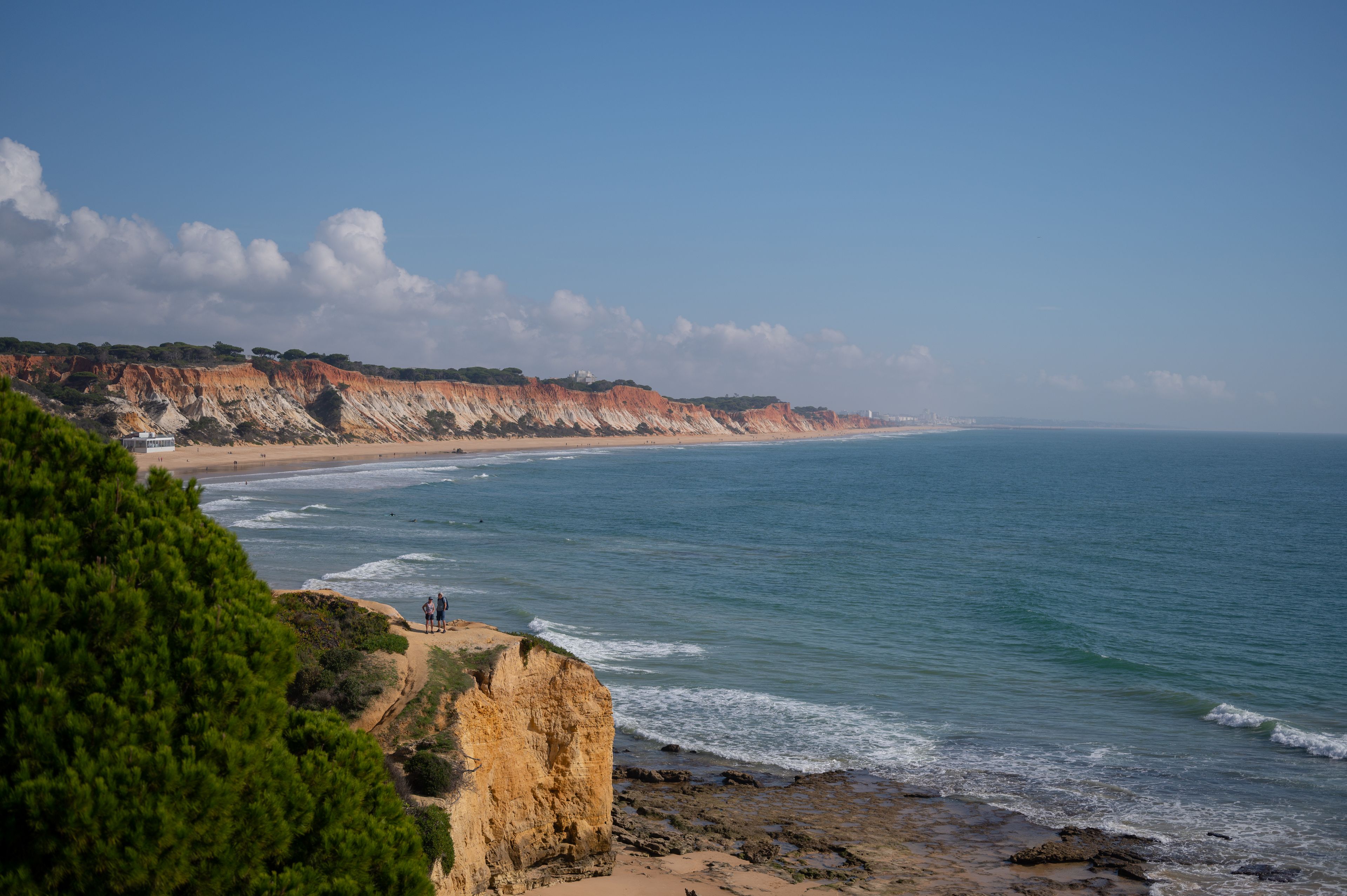
Praia da Falesia
When the west wind blows, Falésia turns elemental—salt-washed sand, fire-red cliffs, and breathing space.
Praia da Falésia matters because it is the Algarve with its makeup removed—raw Atlantic air, iron-red cliffs, and a beach long enough to reset your breathing.
Most people come for the color, then leave without noticing what the west wind does: it combs the shoreline clean, scours footprints flat, and sharpens every edge of light on the cliff face.
You walk out feeling rinsed—skin salted, head quieter—like the day has been edited down to only what’s essential.
The Beach Is Being Rewritten in Real Time
Falésia is sold as a color story—those striped cliffs against blue water—but its real drama is motion. In a west wind, you don’t just watch the Atlantic; you watch it edit the beach. The tide line becomes a working edge where foam lifts, retreats, and drags small stones into new arrangements. Wind-sculpted ripples form overnight on the upper sand, then soften by midday as the sun warms the grains and your footsteps begin the day’s mess. And then, almost politely, the next gust erases you. Look closer at the cliff base and you’ll see the beach’s quiet negotiations: little fans of sand that spill out from the wall, fresh collapses where rain has undercut a seam, and darker streaks where moisture holds the color deeper—like watercolor left to dry. The cliffs are not just a backdrop; they are a weather instrument, catching light differently every minute. When cloud passes, the reds go velvety; when sun strikes, the ochres flare. This is why a blustery day can feel more luxurious than a calm one. The wind gives you privacy without emptiness, intensity without noise. You’re not here to collect a perfect still image—you’re here to be scrubbed awake, to leave with a cleaner mind than you arrived with.
You arrive to a sky that can’t decide—blue plates sliding behind fast cloud—and the first thing you hear is the wind working. It comes from the west with a clean, herbal bite, bending the dune grasses above the access path and pushing the sea into neat, hissing lines. On the sand, the cliff wall rises in bands of rust, apricot, and chalk—soft enough to look painted, steep enough to feel like a border. You start walking and the beach length reveals itself slowly, cinematic in its pacing: one headland after another, each curve opening to a new stretch of emptiness. The Atlantic looks deceptively calm from the promenade, but down here it is muscular… a constant pull, a constant rearranging. Shells click under your soles near the waterline; the sand higher up is pale and dry, like sifted flour. Every so often the wind drops, and you catch the sea’s deeper sound—an inhalation, then the release—before it rises again and the beach becomes clean, bright, and unsentimental.
The Water
In a west wind, the water reads in layers: deep steel-blue offshore, then a band of green-glass closer in where waves steepen. Near the shore it turns milky and pale—sand suspended in the churn, sunlight catching the foam like crushed quartz.
The Cliffs
Falésia’s cliffs are a stacked palette of sands and clays, iron-rich bands staining the face in reds and burnt oranges. The top edge is softened by pines and scrub, but the base is all geometry—vertical lines, scalloped recesses, fresh crumble where the sea and rain keep taking their share.
The Light
Late afternoon makes the cliff colors feel lit from within, especially when broken clouds send spotlights racing along the wall. After a passing shower, the saturated reds deepen and the beach gleams, while the sea turns darker and more cinematic.
Best Angles
Miradouro da Falésia (near the promenade at Açoteias)
You get the full cliff-and-curve composition—bands of color running into the distance, with scale you can actually feel.
Clifftop boardwalk near Praia dos Olhos de Água direction
From above, the dunes and pines frame the cliff edge, and the wind’s movement becomes visible in the grasses.
Waterline looking back toward the tallest cliff sections
The perspective exaggerates height; wet sand becomes a mirror that doubles the reds and makes the scene feel larger.
Mid-beach between the main access points (walk 20–30 minutes away from entrances)
For photographers: fewer umbrellas, cleaner horizons, and more uninterrupted cliff face—ideal for long-lens compression.
Base of the cliff where small sand fans spill out (keep distance from the wall)
The intimate angle: textures—crumbly grains, tiny stones, darker damp streaks—turn the geology into a close-up story.
Treat the cliff base as a no-linger zone—give it space, especially after rain or in strong wind when small falls are more likely.
Bring a light wind layer even in summer; the west wind can make 24°C feel surprisingly cool once you’re wet or shaded.
If you want the beach to yourself, commit to the walk—20 minutes from the nearest access point changes the entire crowd dynamic.
Wear sandals with some grip for the boardwalk stairs and the damp, compact sand near the waterline.
Check the flag conditions before swimming; the Atlantic can look gentle while the undertow is doing serious work.
Handpicked Stays & Tables
Places chosen for beauty and intention, not algorithms. Each one is worth your time.

Pine Cliffs, a Luxury Collection Resort, Algarve
Açoteias (clifftop above Falésia)
You wake to pine scent and Atlantic air, with direct access to the beach via long stairs and paths. It’s polished and self-contained—ideal when you want Falésia on repeat without logistical friction.

EPIC SANA Algarve
Falésia area (between Albufeira and Vilamoura)
Modern, quiet luxury with a strong sense of space—pools and gardens that feel designed for decompression. You’re close enough to walk down to the sand, then return to calm rather than nightlife.

O Pescador
Olhos de Água
A straightforward, seafood-first room where the flavors stay clean—grilled fish, clams, simple sides. Go after a long walk on Falésia when you want salt and smoke without fuss.

Maré at Pine Cliffs
Açoteias (on/near the beach access)
Beachfront dining with the right soundtrack—wind, cutlery, surf—plus seafood and cold drinks that suit the post-swim lull. Time it for late afternoon so the cliff light does part of the work.
In a west wind, Falésia isn’t just beautiful—it’s freshly made, and you leave feeling the same.