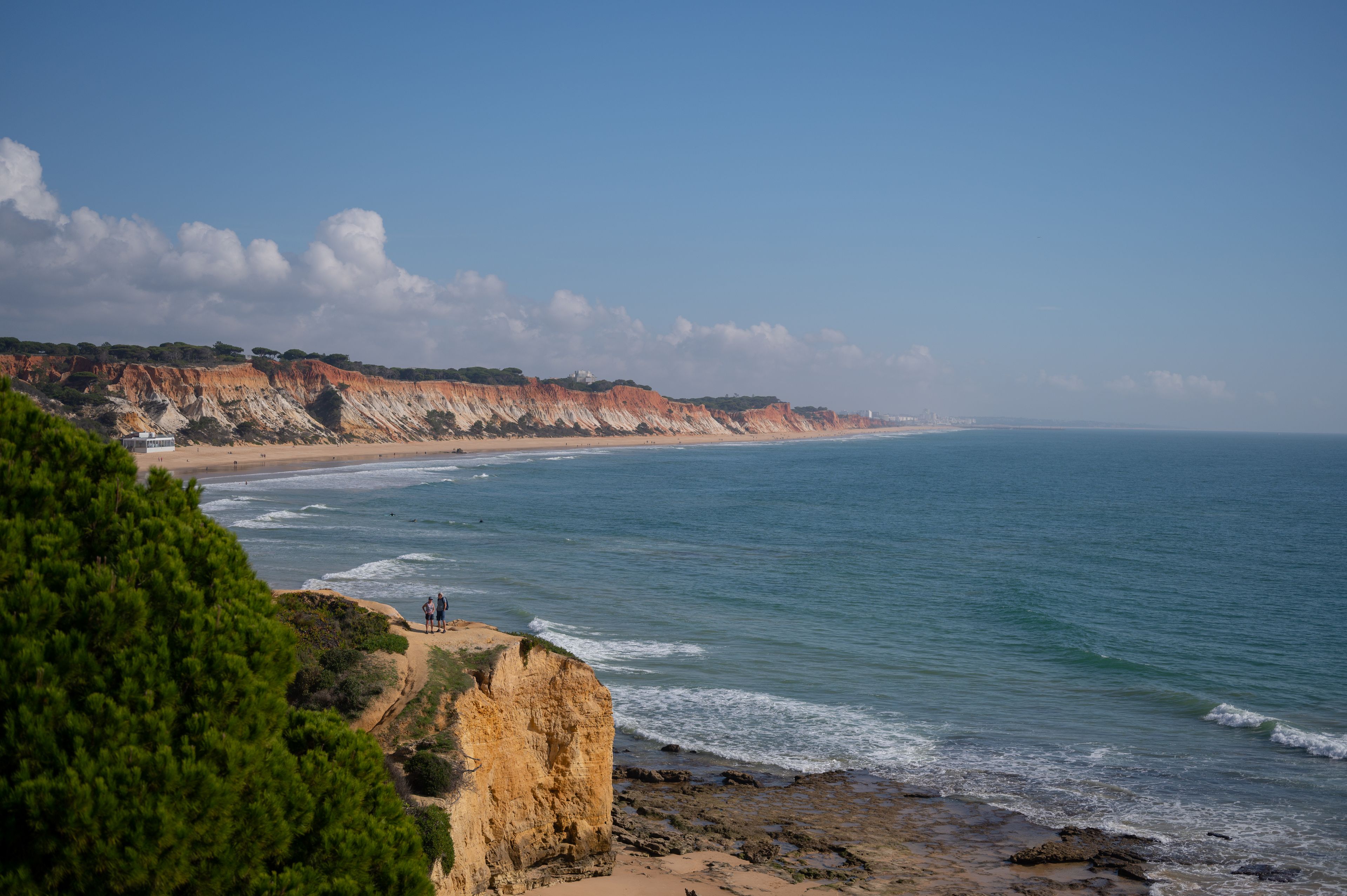
Praia da Falesia
On Praia da Falésia, the cliffs are a timeline—if you know how to read their colors.
You come to Praia da Falésia for the scale first: a long, clean sweep of Atlantic sand pinned beneath cliffs that look painted—rust, ochre, and chalky cream stacked above a teal horizon. It is one of the Algarve’s most photographed beaches, but the real drama is not the beach. It is the wall behind you… and the quiet sense that the land is speaking in layers.
Most people treat the cliffs like a backdrop. They don’t notice the way the colors change with each bend of the shoreline, or how the cliff face is not one surface but a collage of textures—crumbly sand, compacted bands, and seams that run like handwriting. Those details are not decoration. They are evidence.
When you start reading Falésia like a geological map, the beach becomes more than a beautiful place to lie down. You feel time under your feet. You walk slower. You look up more. And the Algarve stops being a postcard and becomes a story you can follow, step by step, along the tide line.
The Cliff Isn’t One Color—It’s a Cross-Section of Time
Falésia’s cliffs look like a single dramatic red wall from a distance, but up close they behave like a book left open to the wind. The oranges and ochres you photograph are mostly sands and sandstones—sediments laid down long before the current shoreline existed, then lifted and cut by erosion into the vertical face you see today. That is why the cliff reads in bands: different layers, different grain sizes, different moments of deposition. Look for the pale, almost creamy sections: they often feel softer to the eye, with a powdery surface that catches light rather than reflecting it. Then find the darker seams—rust-red or brown lines that run horizontally, sometimes interrupted, sometimes continuous for tens of meters. These are the “markers” that make the cliff legible. They tell you where conditions changed: a shift in sediment supply, a different chemistry, a new rhythm of water and wind. You don’t need to name the epoch to feel the change. You also notice what the cliff is doing right now. Small scallops, undercut edges, fresh collapses that leave a brighter patch of exposed sand… this coastline is actively rewriting itself. When you read it that way, the beach becomes less about claiming a perfect spot and more about witnessing a living boundary—land negotiating with the Atlantic in real time.
You arrive from the pines with salt already in the air, the sound of the surf rising before the sea appears. Then the beach opens—wide sand, low winter light, and a cliff face so tall it makes people look like punctuation marks. You walk with the water on your left and the rock on your right, close enough to hear grains release and skitter down in tiny slides. The Atlantic is cool-toned and restless, folding into itself in clean, glassy lines; when it breaks, it throws white noise across the shore. Above you, the cliff is banded like a cake cut straight through—deep orange, pale beige, a bruised red seam, then another wash of sand. In places the wind has carved shallow alcoves; in others, rain has drawn thin gullies like veins. You smell sunscreen and resin from the umbrella pines at the top, and something metallic from wet stone near the base. The longer you walk, the more the colors shift with the angle of the sun—what looked uniformly red becomes a whole spectrum you can almost feel on your skin.
The Water
The water here is a cool Atlantic palette—blue-green with a steel edge, turning translucent jade in the shallows on calm days. In sun, the surface flashes silver; in overcast light, it becomes inkier and more cinematic, with white breakers drawn in hard lines.
The Cliffs
Falésia is defined by contrast: soft sand underfoot, a strict vertical cliff at your shoulder, and a clean horizon that makes the coast feel longer than it is. The cliff face shows active erosion—gullies, alcoves, and occasional fresh scars—while umbrella pines and scrub sit above like a thin, green boundary line.
The Light
Late afternoon into golden hour is when the cliffs stop reading as “red” and start revealing their full spectrum—burnt sienna, apricot, dusty rose, and pale cream. After rain, the colors deepen and the textures sharpen, especially when side light hits the gullies. At sunrise the beach is quieter, but the cliff is cooler-toned and more subtle—beautiful if you like restraint.
Best Angles
Miradouro da Praia da Falésia (near the main access at Açoteias)
You get the classic top-down read of the cliff bands with the sea as a clean, minimal backdrop—best for understanding the scale.
Rocha Baixinha beach access (stairs/boardwalk area)
From here, the shoreline curves in a way that layers cliff, sand, and water into one frame—strong leading lines at low tide.
Base-of-cliff walk (stay well clear of unstable sections)
The unexpected angle is looking upward from the tide line—textures, seams, and fresh erosion become the subject rather than the panorama.
Clifftop trail between Vilamoura side and Açoteias
For photographers, this gives long, lateral compositions where the cliff bands run like brushstrokes—especially in side light.
Pine-edge transitions above the cliff
The intimate angle is the meeting of resinous green and iron-rich red—frame a single pine against the cliff face for a quieter story.
Treat the base of the cliffs with respect—don’t sit directly under overhangs or fresh-looking scars, especially after rain or windy days.
Go at low tide if you want the longest uninterrupted walk and the best chance to photograph curves and leading lines without footprints.
Bring water and a light layer: the clifftop can feel warm, but the beach can turn breezy and cool once the sun drops.
Wear sandals you can rinse or shoes you don’t mind wet—shore break can surge higher than it looks, and the sand is fine and clingy.
If you want the geology to “pop,” slow down and look for horizontal seams, texture shifts, and small erosion channels rather than only the big panorama.
Handpicked Stays & Tables
Places chosen for beauty and intention, not algorithms. Each one is worth your time.

Pine Cliffs, a Luxury Collection Resort
Açoteias (above Praia da Falésia)
You stay on the cliff edge with direct access paths down to the beach, plus the kind of calm service that makes long beach days feel effortless. The setting—pines, red earth, Atlantic air—matches the landscape you came for.

EPIC SANA Algarve Hotel
Between Falésia and Olhos de Água
A polished, contemporary base with pools and a strong spa focus, close enough for sunrise walks and late swims. It suits you if you want design-forward comfort without losing proximity to the coast.

Maré at Pine Cliffs
Açoteias (clifftop)
Come for seafood with a clean view line over the Atlantic, when the light starts warming the cliff face. It’s a good place to transition from beach salt to evening pace without leaving the landscape.

Rocha Baixinha Bar (seasonal)
Rocha Baixinha beach level
Casual and right on the sand—useful when you want a cold drink and a pause mid-walk. The soundtrack is mostly surf, and the view keeps you anchored in the scale of the cliffs.
Once you stop treating Falésia as scenery and start reading its bands, you leave with sand on your ankles and time in your eyes.