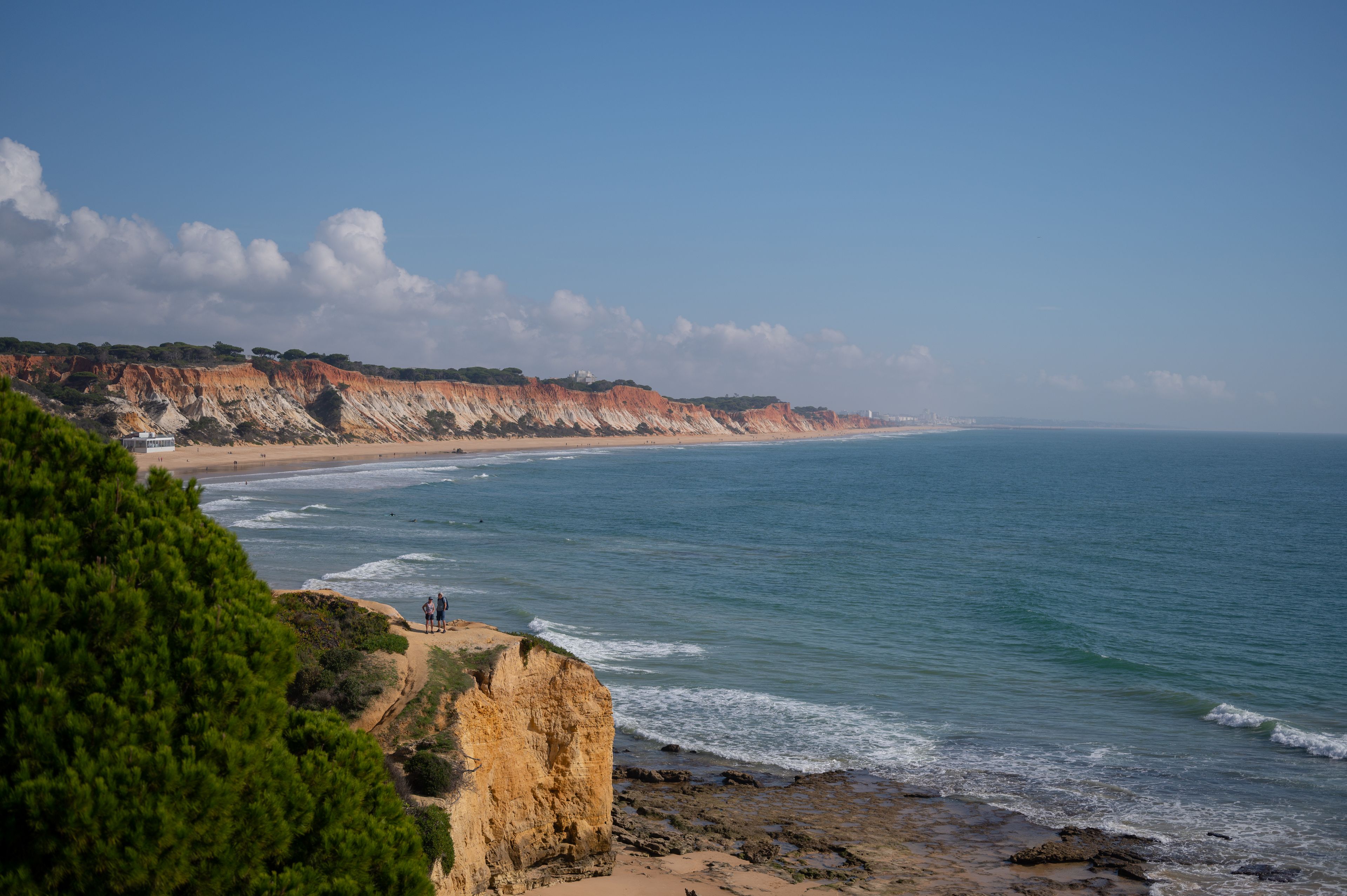
Praia da Falesia
Skip the boardwalk—arrive through pine shade, then watch the cliffs ignite as you step onto the sand.
Praia da Falésia matters because it’s not one beach—it’s a moving coastline of color, where rust-red cliffs stretch for kilometers and the Atlantic keeps rearranging the shoreline overnight.
Most people enter through the busy resort accesses and assume the drama is the cliffs alone. What they miss is the approach: the pinewoods above, the dry-sweet scent of needles, and the quiet dirt track locals use to arrive without the fanfare.
When you come in this way, the beach doesn’t feel like an attraction. It feels like a reveal—your body decompresses in the shade, then the world opens into wind, salt, and wide horizon.
The pinewood entrance that edits out the resort
Praia da Falésia’s headline is obvious from any postcard: the cliffs, the length, the saturated reds against Atlantic blue. But the beach’s real luxury is control—specifically, controlling your first five minutes. If you arrive via the main accesses at Vilamoura or Olhos de Água, you’re dropped straight into umbrellas, kiosks, and the social noise of peak Algarve. It can feel like the beach is performing. The dirt track above the cliffs changes the narrative. You begin in silence, with filtered light flickering across your arms as the wind moves the pine crowns. The air up here is drier, spiced with resin and warm bark. By the time you see the ocean, your pace has already slowed. Your eyes are adjusted to shade—so when the cliffs appear, their color lands harder, more cinematic. There’s another detail the locals understand: the cliffs are most impressive when you’re not looking at them from a single viewpoint. Entering through the pinewoods tends to put you on the sand a little away from the densest clusters, which invites movement. Walk ten minutes and you’ll notice the layers change—brick red to honey to pale, almost lavender-tinted sand where the face has weathered. You stop taking “the” photo and start reading the coastline like a text. That’s the payoff: not just seeing Falésia, but feeling it unfold.
You turn off the paved road and the sound changes first—tires on packed dirt, then the soft percussion of pinecones under the wheels. The pinewoods sit warm and resinous, casting a greenish shade that cools your skin even on a bright Algarve day. A few cars are tucked between trunks like they belong here. You step out and the air smells of sap and sun-baked sand. The track narrows into a footpath, and your shoes pick up fine grit as the forest thins… then the cliff edge arrives. In front of you, Falésia drops in a long, clean line—ochre, sienna, and chalk bands stacked like a cut cake, with small scars where rain has carved it. You take the wooden steps down, one hand on the railing, wind pressing at your shirt. At the bottom, the sand is dense and cool near the waterline. The Atlantic is loud, steady, and metallic-blue. You start walking and the cliffs seem to travel with you, changing color every few minutes as the light shifts.
The Water
The water reads as deep teal from above, then turns glassy jade in the shallows where sand lightens it from beneath. On windy days it shifts to steel-blue with white seams of surf, the foam bright against the darker Atlantic.
The Cliffs
Falésia is a long sedimentary escarpment—bands of iron-rich reds and ochres layered with paler sand and clay, constantly undercut by waves. Above it, the pinewoods sit like a soft green roof, holding back the heat and framing the cliff edge in shade.
The Light
Late afternoon is when the cliff face glows—reds deepen, shadows carve out texture, and the beach looks longer than it is. Early morning gives you cleaner air and quieter colors, with a flatter, more graphic look to the layers.
Best Angles
Clifftop edge by the pinewoods (local dirt track access)
You get the full color banding with the pine canopy framing the top of the cliffs, a contrast most viewpoints miss.
Bottom of the wooden staircase (looking back up)
The scale hits here—vertical cliff, tiny figures on the steps, and the texture of erosion lines visible.
Waterline walk toward Vilamoura side
The cliffs read as a continuous mural; shooting parallel to the shoreline emphasizes length and layered color shifts.
Mid-beach, low angle at the foam edge
For photographers: kneel near the wash and use the surf as a leading line toward the cliffs; it adds movement and depth.
Base of a recessed cliff notch (well away from marked falls)
The intimate angle—wind quiets, colors feel closer, and you can isolate a single band of ochre and shadow for detail shots.
Avoid standing directly under overhangs or fresh-looking scar lines on the cliffs—small collapses happen, especially after rain.
Bring water and a light layer; the clifftop can feel hot and still, while the beach below is windier and cooler.
Wear shoes with grip for the sandy track and steps; flip-flops are fine on the beach but annoying on the approach.
Check tide times if you plan a long waterline walk; at high tide some sections narrow and force you closer to the cliff base.
Pack out everything—there are fewer bins on this quieter access, and the pinewoods area stays pleasant because people keep it that way.
Handpicked Stays & Tables
Places chosen for beauty and intention, not algorithms. Each one is worth your time.

Pine Cliffs Hotel, a Luxury Collection Resort
Açoteias / Falésia clifftop
Set directly above the cliffs with pathways through pines and direct access down to the sand. It’s polished and expansive—best if you want the beach on repeat with spa time and sunset viewpoints built in.

Tivoli Marina Vilamoura Algarve Resort
Vilamoura marina
A sleek base with marina energy and easy access to the quieter stretches if you’re willing to walk. Ideal for pairing beach hours with cocktails, boat plans, and a more cosmopolitan evening scene.

Maré at Pine Cliffs
Pine Cliffs Resort (Falésia)
Beachfront dining that leans into seafood, salt air, and long lunches when the light turns honey. Go later in the day when the cliffs above start to warm in color and the beach noise softens.

O Pescador
Olhos de Água
A straightforward, well-loved seafood address where the grilling smells hit you before the menu does. Best for resetting after the beach with clams, fresh fish, and the simple satisfaction of eating close to the ocean.
You leave the beach the way you came—up through warm pine shade, carrying the cliff colors behind your eyes like a slow-burning afterimage.