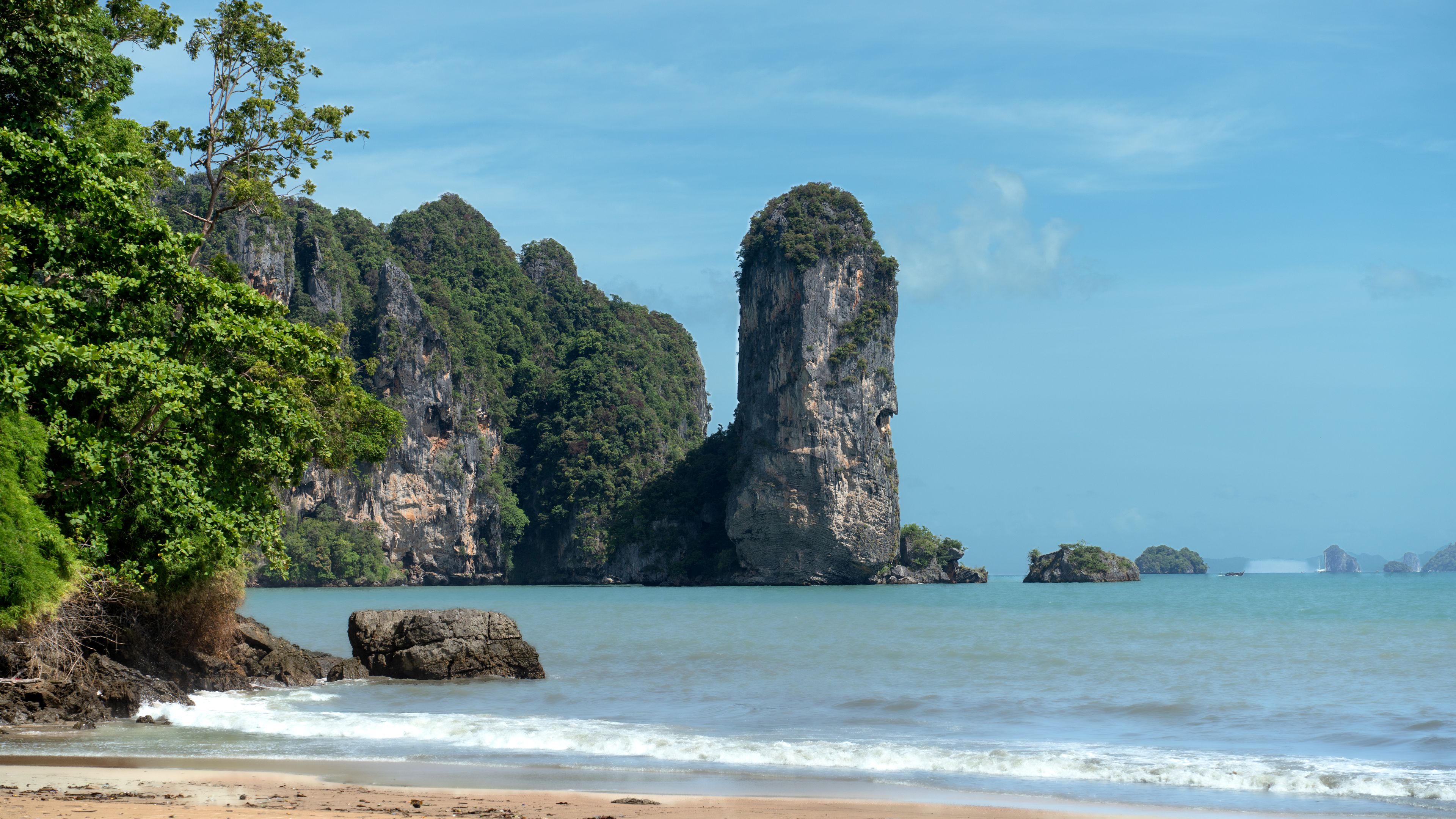
Phra Nang Beach
At Phra Nang, the real story lives under the limestone—where salt, birds, and boats redraw the beach daily.
Phra Nang Beach matters because it shows you Thailand’s Andaman coast in its most elemental form—limestone rising like a wall, water shifting shades by the minute, and human life arriving by longtail and leaving by tide.
Most people stop at the postcard: pale sand, turquoise shallows, a photogenic cave. They miss the working textures—the salt stains on the cliff, the swallow nests stitched into overhangs, the way the beach is literally rebuilt each day by boats, anchors, and waves.
When you notice those details, the place stops performing for you. It feels lived-in, powerful, and oddly intimate… like you are standing inside a coastline that is still being made.
The Cliff Is a Calendar, Not a Backdrop
Phra Nang’s limestone looks fixed from the water—an immovable stage set for your arrival. Up close, it reads like a calendar. The pale bands and dark drips are not “character”… they are records. Salt blooms where spray reaches, rainwater draws vertical calligraphy, and the rock sweats minerals that tint the stone a muted rust. Stand under the overhang for a minute and you hear it: not just waves, but the steady tick of water falling from seams above, as if the cliff is still draining last night’s weather. Then there are the birds. The swallows (and swiftlets) aren’t scenery; they are the reason some of these cavities exist in local imagination at all. Their nests—sometimes harvested elsewhere in the region—turn a sheer wall into a living economy, a contested resource, and a symbol of the coast’s vulnerability. You may not see the nests clearly, but you see the choreography: sudden darts into shadowed pockets, a flash of wing, a flicker of sound. When you pay attention to these layers, Phra Nang becomes less about “perfect” water and more about time—how tide lines, boat ropes, and monsoon residue quietly rename the beach every day you visit.
You step off a longtail with your feet already wet, the engine’s rattle fading as the boat swings away on a rope that creaks against the bow. The sand is fine but not powder—slightly coarse where the tide has combed it—and it squeaks under your steps toward the limestone that throws a cool shadow across the bright edge of the day. The sea is glassy near shore, then bruises into deeper teal where the bottom drops, and every few seconds the surface fractures with the slap of another boat arriving. Under the cliff, the air changes: warmer, mineral, threaded with the smell of sunscreen and outboard fuel, then suddenly clean again as a breeze funnels through the karst. You look up and see dark streaks of salt and rain etched down the rock like old ink. Above, swallows cut tight circles, vanishing into pockets you would never notice unless you stop. In the cave, offerings glint in the dim—wood, ribbon, lacquer—while outside the water keeps rehearsing its color shifts, indifferent to your schedule.
The Water
The water starts as clear, almost invisible shallows where you can read ripples in the sand, then turns milky aquamarine over stirred-up limestone silt. Farther out it deepens into teal with a green undertone—especially when clouds soften the glare.
The Cliffs
The beach is cradled by karst limestone—vertical, pocketed, and stained—where the cliff face creates sudden temperature shifts between sun and shade. Offshore, small islets and rock spires sit low on the horizon, making the bay feel like a natural amphitheater.
The Light
Late afternoon gives the cliff its richest texture—the stains and ridges stop looking flat and start looking sculpted. Morning light is cleaner and more reflective on the water, but it can bleach the rock into a uniform gray if the sun is high.
Best Angles
Left-hand cliff shadow line (facing the sea)
You get the contrast of cool shade and bright water, plus the cliff’s salt streaks reading clearly in side light.
Waterline looking back toward the cave
This angle frames human ritual against geology—boats, offerings, and limestone in one honest composition.
Chest-deep in the shallows, mid-bay
From the water, the beach feels quieter; the longtails become graphic elements and the cliff looks more monumental.
Edge of Phra Nang Cave at the threshold
For photographers: you can use the cave as a natural vignette, controlling glare while keeping detail in the cliff.
Far right end near the rocks at low tide
The beach turns intimate here—fewer feet, more texture, and tide pools that mirror the limestone like dark glass.
Bring reef-safe sunscreen and a light cover-up; the cliff shade feels cool, but the reflected glare off the water is relentless.
Wear water shoes if you plan to explore the rockier ends at low tide—there can be sharp limestone and broken shell.
Carry cash for boats and small purchases; connectivity can be inconsistent and not every operator takes cards.
If the sea is choppy, choose a larger boat transfer or delay your trip; longtail rides can be wet and uncomfortable in wind.
Treat the cave area with respect—keep your voice low, don’t climb on offerings, and be mindful of where you step in dim light.
Handpicked Stays & Tables
Places chosen for beauty and intention, not algorithms. Each one is worth your time.

Rayavadee
Railay / Phra Nang area
Set within tropical gardens at the edge of the limestone, it gives you rare access to Phra Nang’s quieter hours. You move between pavilions and the beach like the landscape is part of the architecture—soft light, thick shade, and a sense of privacy even in high season.

Bhu Nga Thani Resort & Villas Railay
Railay East
A polished, comfortable base with an easy walk across the peninsula to Railay West and onward to Phra Nang. It’s a practical choice when you want space, air-conditioning, and a calmer nightly rhythm away from the day-tripper surge.

The Grotto
Phra Nang Beach (Rayavadee)
You sit under the limestone overhang with the sea in front of you and the cliff at your shoulder, which changes the way food tastes—saltier, brighter, more present. Come for late afternoon when the rock turns warm and the beach noise drops into a murmur.

Krua Phranang (Railay)
Railay East
A straightforward Thai menu that’s useful when you want something real between swims—spice, smoke, and chilled drinks without ceremony. Go earlier in the evening to avoid the busiest wave and to catch the last clean light on the mangrove edge.
If you stay long enough to watch the tide erase the morning’s footprints, Phra Nang stops being a view and becomes a living shoreline you can finally hear.