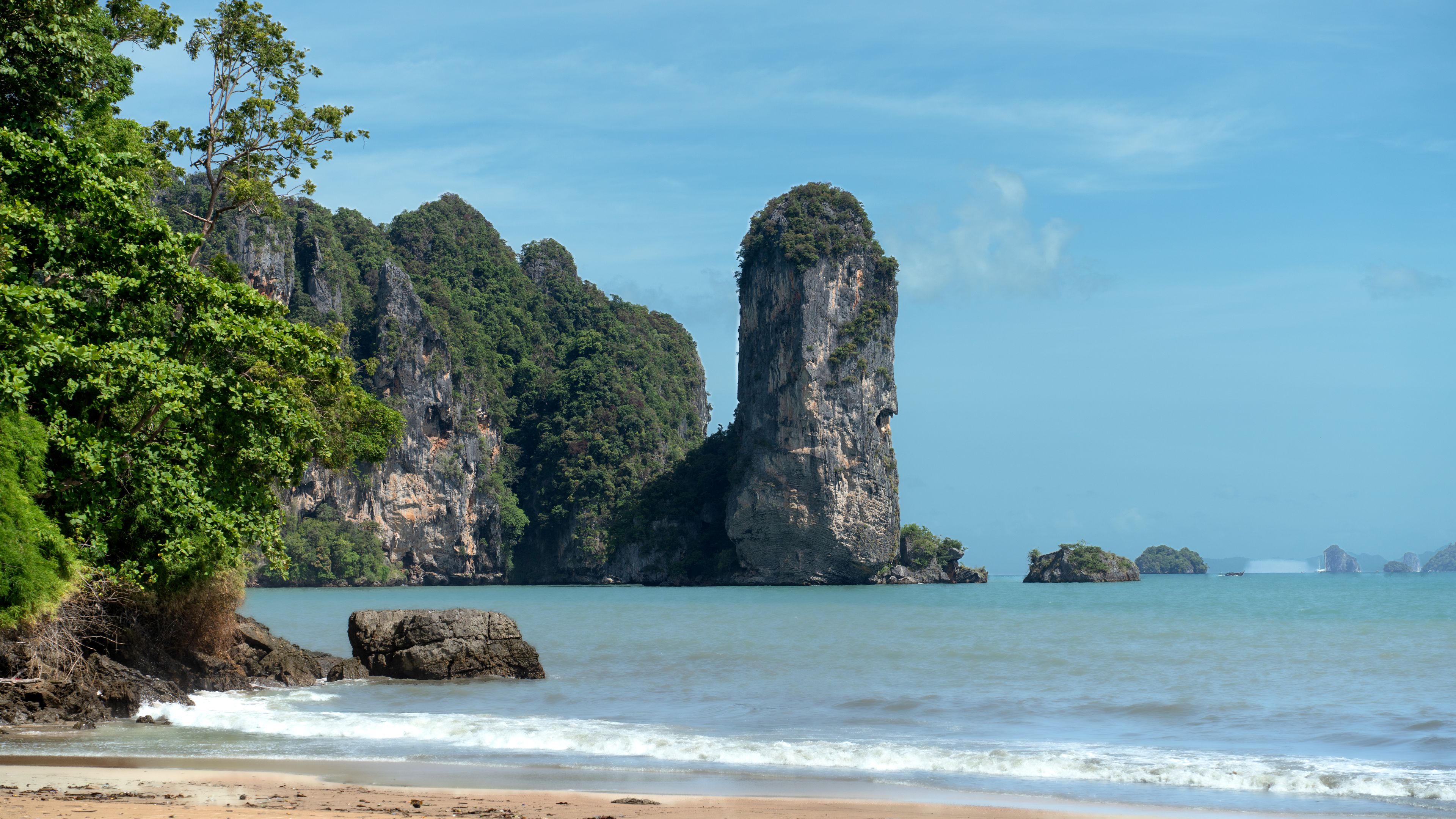
Phra Nang Beach
At Phra Nang Beach, a cave of offerings turns a postcard shoreline into a living promise.
Phra Nang Beach matters because it compresses Krabi’s drama into one cove—limestone walls, tide-soft sand, and longtail boats idling like brushstrokes on aquamarine.
Most people come for the swim and miss the quieter gravity of the place: a shrine-cave where offerings accumulate, not as decoration, but as a conversation with the sea.
You leave with more than photos—the feeling that this shoreline is watched over, negotiated with, and still emotionally inhabited.
The Cave Is Not a Photo Stop—It’s a Contract
Princess Cave—Tham Phra Nang Nok—gets reduced to a curiosity: a quick glance, a quick shot, then back to the sun. But if you slow down, you notice how carefully the space is arranged. Offerings are not tossed; they are placed. They cluster where the rock forms shelves, where drip-lines keep things damp, where daylight lands in narrow strips like stage lighting. The cave holds a kind of etiquette. The phallic wooden carvings (often called “lingam” offerings) can feel jarring at first, especially when you’ve arrived in swimsuit mode. Look longer and the mood shifts. These objects are about fertility, luck, safe passage—practical hopes in a landscape that has always been negotiated with weather and water. Fishermen once came here to ask for protection; boatmen still acknowledge the spirit of Phra Nang before the sea decides to turn. What most people miss is the tension between the cove’s beauty and its vulnerability. The tide rearranges the beach daily, and tourism rearranges it seasonally. Inside the cave, however, the intention stays steady. It’s not “local color.” It’s living belief, sitting in plain sight. When you step back into the glare, the bay looks the same… but you feel the place has weight, like you’ve walked through someone’s private doorway.
You arrive by longtail, the engine lowering to a cough as the bow noses into shallows the color of green glass. The sand underfoot is pale and cool where the tide has just pulled back, then warmer—almost flour-soft—higher up. Above you, limestone rises in vertical sweeps stained with rust and charcoal, the rock face scalloped like it has been chewed by centuries of salt wind. The beach sounds layered: water tapping the hulls, muffled laughter, a distant clink of bottles from a floating vendor, and the soft scrape of sandals as people drift toward shade. You follow the curve of the bay to the right where the cliff folds inward and the light changes abruptly—bright glare outside, then a dim, amber hush. The cave breathes damp air, smelling faintly of seaweed and incense. Offerings crowd the ledges, glossy with humidity, their shapes catching stray slats of daylight. For a moment, the tide feels secondary. This is the shoreline’s inner room—intimate, awkward, oddly tender—and you stand there listening to water echo against stone.
The Water
The water shifts from milky jade in the shallows to a clear turquoise-blue farther out, with darker ink patches where rock and sea grass deepen the tone. On calm days it looks almost lacquered, reflecting the cliff’s warm gray and rust streaks in soft ripples.
The Cliffs
Phra Nang is framed by sheer karst limestone—vertical walls that make the beach feel like a natural amphitheater. The scale is the point: small human figures, big stone, and a shoreline that seems gently borrowed from the cliff.
The Light
Late afternoon is when the limestone warms into copper and the cave’s interior glows amber rather than flat gray. Early morning brings cleaner, quieter color—less glare on the water and fewer boats cluttering the horizon.
Best Angles
Princess Cave entrance (Tham Phra Nang Nok)
You get the contrast shot—bright beach to dim cave—plus the sense of the cliff folding inward like a curtain.
Far-left end of Phra Nang Beach (looking back toward the cave)
This angle compresses the longtails, the curve of sand, and the limestone wall into one cinematic sweep.
Waterline at mid-beach during a falling tide
The wet sand becomes a mirror; you can catch reflections of boats and cliff textures with minimal effort.
Just offshore in waist-deep water, facing the karst wall
For photographers: the cliff reads as a towering backdrop and the water color looks most saturated away from the footprints and churn.
Inside the cave, looking outward toward the bay
The intimate angle—offerings in the foreground, the sea framed by shadow—shows the beach as something held, not just visited.
Bring cash for longtail boats and small purchases; card payments are inconsistent along the beaches.
Wear grippy sandals or water shoes—the rocks near the cave and along the edges can be slick at high tide.
Pack a dry bag for your phone and camera on the boat ride; spray is common even on calm crossings.
Be respectful in the cave: keep voices low, don’t touch or rearrange offerings, and avoid flash in tight spaces.
Time your cave visit with the tide if you want space—at higher tide, the area near the entrance can feel compressed and crowded.
Handpicked Stays & Tables
Places chosen for beauty and intention, not algorithms. Each one is worth your time.

Rayavadee
Railay / Phra Nang area
A classic for a reason—pavilions tucked into lush grounds where the limestone feels like part of the architecture. You’re close enough to visit Phra Nang early, before the day boats rewrite the beach.

Banyan Tree Krabi
Tubkaek Beach, Krabi
A calmer base with a more retreat-like mood—wide views, composed design, and an easy rhythm away from Ao Nang’s bustle. You day-trip to Phra Nang when you want the spectacle, then return to quiet.

Raya Dining
Rayavadee, Railay
Dinner here feels tuned to the landscape—sea air, candlelight, and a menu built for lingering rather than rushing. Ideal if you want to stay close and avoid the logistics of leaving Railay after dark.

Jungle Kitchen
Near Ao Nang, Krabi
A more local-feeling stop with bold southern Thai flavors and a setting that’s casual but memorable. Go hungry and let the heat and herbs reset your palate after a salt-heavy day.
On Phra Nang, the water is only half the story—the rest is whispered from a cave where people still ask the sea for permission.