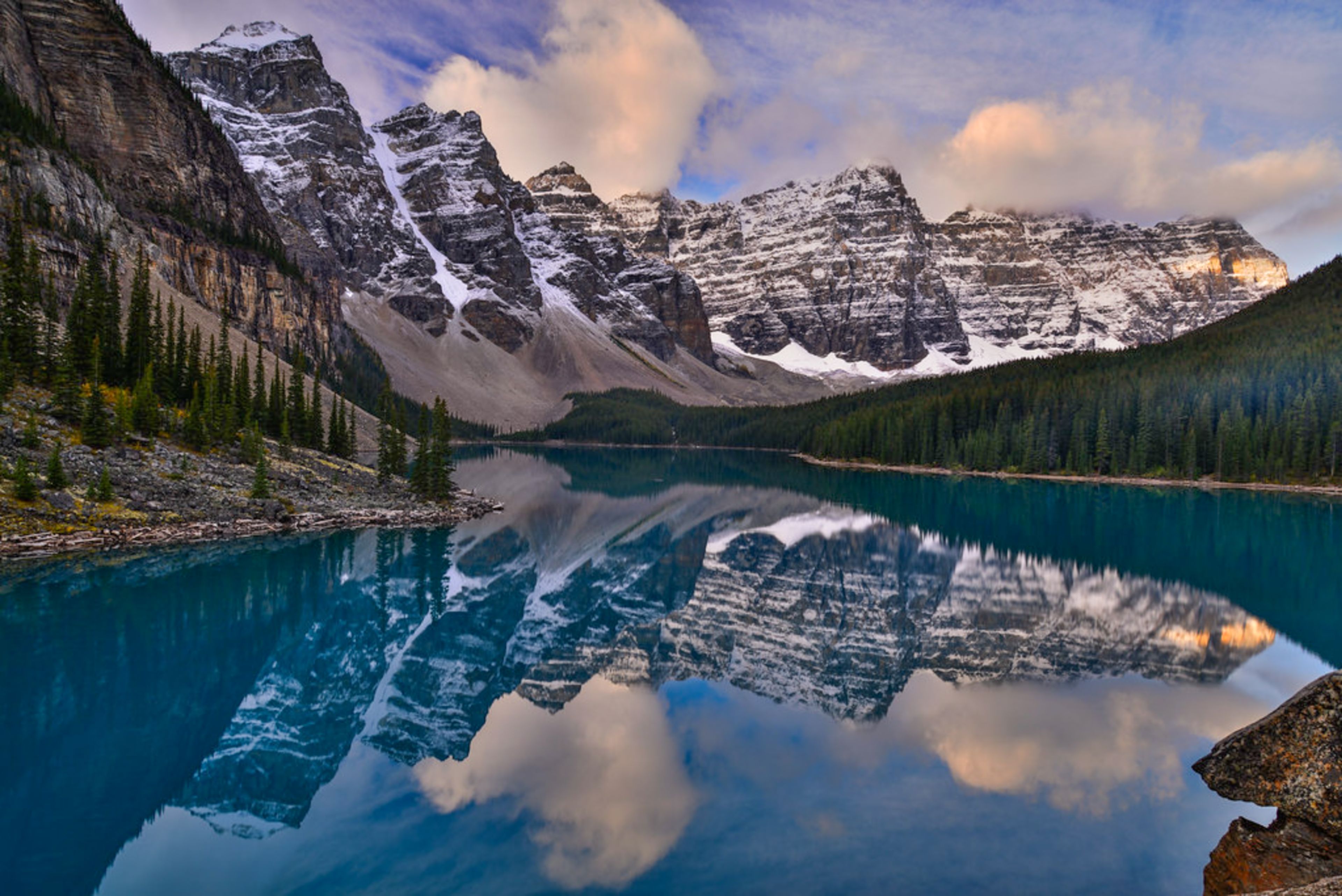
Moraine Lake
Before the first footstep, the lake holds its own breath.
Moraine Lake is a bowl of quiet beneath the Ten Peaks, waiting for light to arrive.
Its famous color is only half the story; the other half is what happens before anyone speaks.
It matters because it teaches timing: the same view, and a completely different feeling.
The Shoreline Before the Water Turns Blue
Most visitors arrive for the turquoise and the postcard, and they arrive when the lake is already performing. Before sunrise, Moraine Lake is something else: a dark surface with a thin, metallic sheen, like slate that hasn’t decided to become water. The mountains don’t look grand yet—just present, stacked in quiet silhouettes. The air carries that cold, mineral smell from rock and snowmelt, and the only movement is the occasional ripple traveling out from the shore as the lake resettles itself. People miss how slowly the place wakes. The first color doesn’t appear in the water; it appears in the talus slope to the right of the lake, where pale stones begin to separate from shadow. Even the famous “Rockpile” viewpoint feels different then—less like a lookout and more like a small, respectful platform. In that early dimness, you notice the sound of your clothing, the crunch of gravel, and how far those small noises travel.
The Five Minutes When the Peaks Catch Fire and the Lake Stays Dark
There is a short window just before the sun clears the ridge behind the Valley of the Ten Peaks. The sky is already lighter, but the lake is still in shade—dark, glassy, almost unwilling. Then the highest points begin to take on alpenglow, not all at once, but in patches: a warm tint on one summit, then a thin line along another. It reads less like sunrise and more like a quiet signal passing from peak to peak. In that moment the water becomes a mirror without color. You can watch the brightening peaks float on the surface while the real shoreline remains subdued, as if the lake is holding the scene in reserve. If the air is still, the reflection is clean enough to feel slightly unreal. If there’s the faintest wind, the reflection breaks into soft brushstrokes and the whole place turns painterly. It lasts only until direct sun touches the water. Once that happens, the turquoise arrives and the spell loosens.
The Reflections
Before sunrise, reflections are sharper because the air is colder and the wind often hasn’t started. The Ten Peaks appear as dark cutouts first, then gain a thin band of warmth that doubles on the water.
The Water
In pre-dawn shade the lake reads deep blue-black to graphite, not turquoise. The famous milky blue-green arrives later as sunlight hits glacial rock flour suspended in the water and the lake begins scattering light.
The Landscape
The Valley of the Ten Peaks forms a steep, enclosing amphitheater—stone, snow traces, and tight lines. The shoreline is a mix of fir forest edges and pale talus, which catches first light sooner than the water does.
Best Angles
Rockpile viewpoint (above the lodge area)
Stand near the upper edge and frame straight into the Valley of the Ten Peaks; arrive in the dark so you can watch the silhouettes lift. Best looking west-southwest over the lake.
Right-hand shoreline trail (toward the Consolation Lakes trailhead)
Walk a few minutes away from the main platform and use the curve of the shore as a leading line; the talus slope picks up early light while the water stays shaded.
Near the canoe dock area (when accessible, pre-operations)
Creators often miss the low, level perspective: keep the horizon low and let the peaks dominate the reflection while the lake remains dark and minimal.
A quiet bench of shoreline stones away from headlamps
Sit close to the water and look for the first thin color on the peak edges; it’s less about framing and more about noticing the lake’s temperature and hush.
Crowd pattern — The main rush builds quickly after sunrise; the quietest time is the first shuttle arrivals and the dark-to-dawn window before the viewpoints fill.
Effort level — Physically easy but logistically early; expect cold fingers, damp ground, and standing still for long periods.
Access note — Moraine Lake Road is seasonal and access rules change; plan shuttles well in advance and check Parks Canada updates for closures, reservations, and start times.
What to bring — Headlamp, warm layer even in summer, thermos, and something to sit on if you want to wait in place without shifting around.
Handpicked Stays & Tables
Places chosen for beauty and intention, not algorithms. Each one is worth your time.

Fairmont Chateau Lake Louise
Lake Louise

Baker Creek by Basecamp
Between Lake Louise and Banff (Bow Valley Parkway area)

The Lakeview Lounge (Fairmont Chateau Lake Louise)
Lake Louise

Laggan's Bakery
Lake Louise village
If you meet Moraine Lake before sunrise, you’ll remember the silence as clearly as the color.