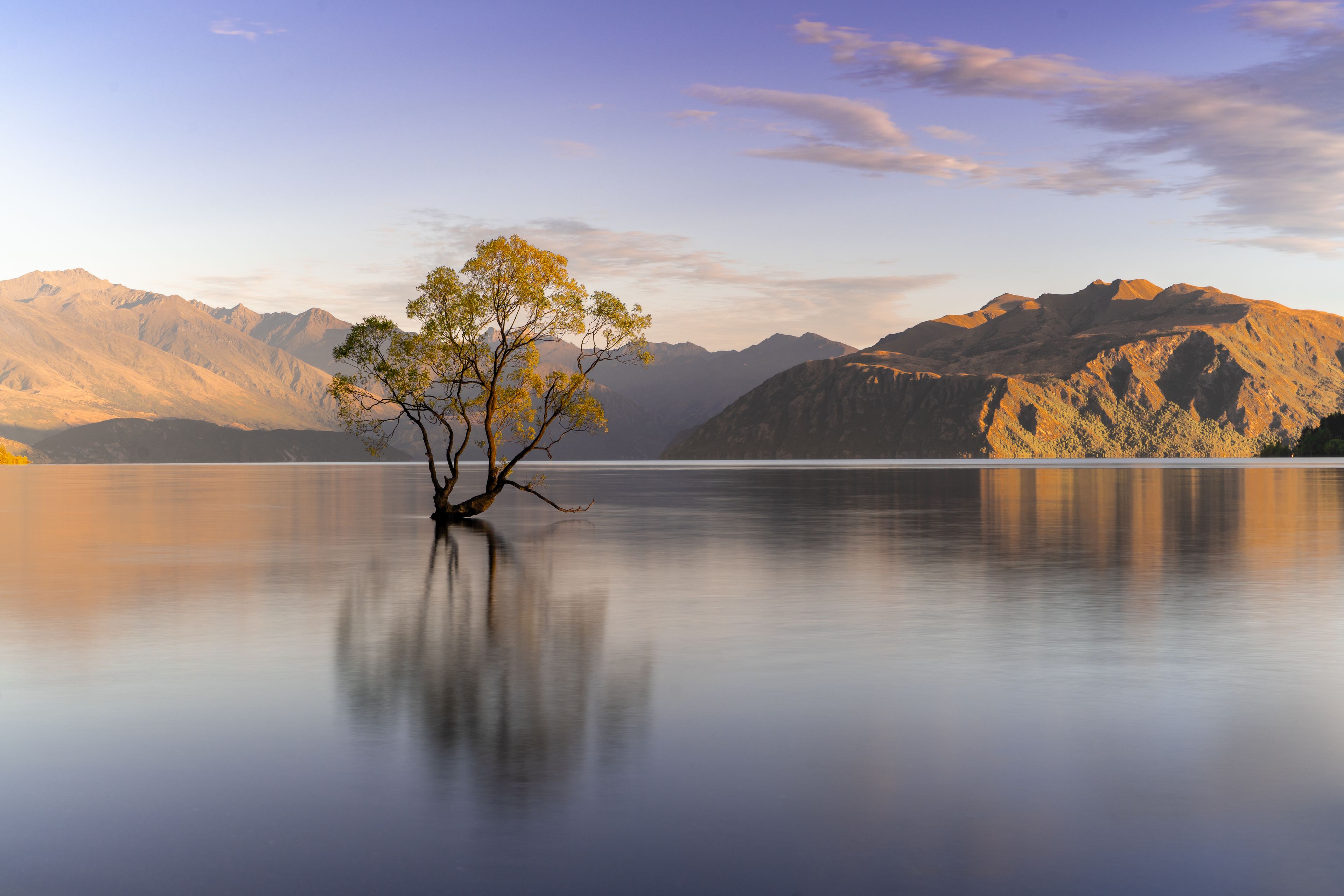
Lake Wanaka
When Wanaka holds its breath and the mountains double.
Lake Wānaka sits wide and quiet at the foot of the Southern Alps, close enough to town to feel familiar.
It changes character faster than most lakes here—one hour it’s textured with wind, the next it’s a clean sheet of glass.
When it goes still, it doesn’t just look different; it makes you slow down without being asked.
The Lakefront After the Last Dog Walker
Most people meet Lake Wānaka in motion—coffee in hand, scooters passing, small chop on the surface, a quick look and onward. What gets missed is the thin, quiet pocket of time after the last evening walkers drift away and before the night fully settles. The lakefront doesn’t become dramatic; it becomes private. Along the Roys Bay shoreline, the soundscape narrows to soft water at the stones and the occasional rope creak from a moored boat. Streetlights in town begin to glow, and their reflections don’t shimmer if the air stays calm—they draw straight, pale lines across the water like pencil marks. If you stand a little away from the main benches, near the darker patches of gravel and willow shadow, you’ll notice how the lake makes the town feel smaller. Wānaka isn’t gone; it’s simply muted. The lake feels less like a viewpoint and more like a pause you can step into.
The First Windless Hour After Sunrise
Lake Wānaka transforms on the mornings when the air wakes up late. It happens most clearly in the first hour after sunrise, when the sun is still low enough to skim the ridgelines and the valley hasn’t started trading warmth for breeze. The surface stops behaving like water and starts behaving like a mirror that still remembers last night’s cold. Roys Peak and the darker folds behind it settle into the lake with surprising precision, and the shoreline stones appear twice—real and reflected—so your eyes hesitate for a second, deciding what’s solid. Boats sit in their own duplicates, hull and mast aligned, as if anchored to the sky. If a duck cuts through, the wake doesn’t ruin the scene; it briefly proves it’s real, then smooths back out. This is the hour when the lake feels edited down to essentials: light, shape, silence, and a sense that time is moving more slowly than it should.
The Reflections
On a true calm morning, the reflections are not painterly—they’re exact. The mountains and clouds appear with clean edges, and the boats in Roys Bay look pinned in place, mirrored mast-for-mast.
The Water
The water shifts between deep slate and cold blue, depending on whether the lake is holding sky or shadow. After clear nights, it can take on a steely tone near shore, with a faint green-blue where the shallows thin over stones.
The Landscape
The lake is framed by a long, quiet sweep of shoreline, with Roys Peak rising like a dark wedge and the higher Southern Alps sitting farther back in paler layers. When there’s low mist, it doesn’t roll in thick—it hovers in strips that soften the far shore without hiding it.
Best Angles
Eely Point (Roys Bay)
Stand near the low rocks and face southwest across the bay; frame Roys Peak with anchored boats for symmetry when the surface is glassy.
Glendhu Bay shoreline
Walk a little away from the main beach and face east in the early morning; the mood is quieter here, with longer, cleaner reflections and fewer town lights.
That Wānaka Tree (Ruby Island track access)
Go at first light, not midday; stand slightly off the main photo line so the tree sits in open water with its reflection intact, and keep the horizon perfectly level.
Rippon Vineyard edge (public road viewpoints nearby)
Not for the camera first—pause facing the lake as the sun lifts; the combination of still water and vineyard hush makes the town feel far away.
Crowd pattern — Sunrise is quiet even near town; late morning to afternoon brings steady foot traffic along the lakefront, especially in summer and school holidays.
Effort level — Mostly flat paths and short shoreline walks; the effort is in timing and waiting for still air, not in distance.
Access note — Public access is straightforward; no permits for the lakefront. Check local notices for occasional works, event closures, or track updates around the waterfront.
What to bring — A warm layer even in summer (the calm mornings can be cold), a lens cloth for condensation, and something to sit on if you plan to wait for the surface to settle.
Handpicked Stays & Tables
Places chosen for beauty and intention, not algorithms. Each one is worth your time.

Edgewater Hotel
Lakeside, near the Wānaka waterfront

Tin Tub Luxury Lodge
Near Albert Town, a short drive from the lake

Big Fig
Wānaka town centre

Kika
Wānaka lakefront area
When the wind doesn’t arrive, Lake Wānaka becomes a second sky you can stand beside.