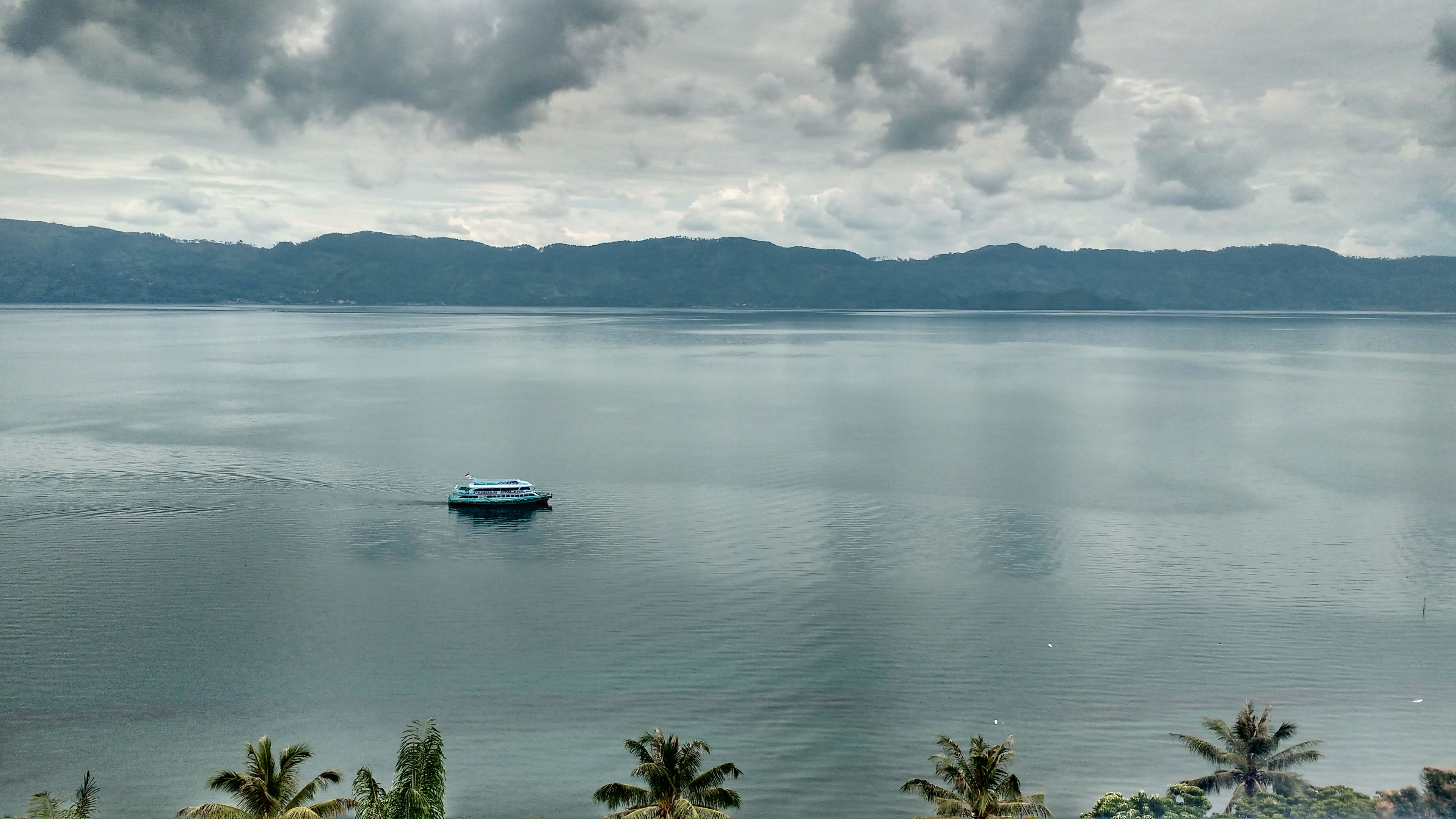
Lake Sentani
When the veranda boards start to cool, the lake begins to listen.
Lake Sentani sits wide and quiet beneath the Cyclops Mountains, close to the noise of Jayapura but never fully joining it.
It is a lake of lived-in edges—villages on stilts, working boats, and long water that changes expression with every small wind.
It pulls you in not with spectacle, but with the feeling of being briefly allowed into someone else’s daily calm.
The Verandas Behind the Tour Boats
Most day-trippers see Lake Sentani from the middle of it—engine sound, quick photos, the shoreline sliding by like a backdrop. What they rarely step onto are the stilt-house verandas in the lake villages, where the water is not scenery but floor-level company. Out here, the lake has a domestic scale. You hear wood flex under bare feet. You notice the thin line where algae gathers at the posts, marking yesterday’s height. A hand-washed shirt drips back into the same water that holds the village up. From a veranda, Sentani’s surface is not “smooth” or “rippling”; it is constantly rewritten by small things: a canoe’s wake, a child’s splash, a breeze threading between houses. The lake feels slower because your body is still—sitting, waiting, watching someone untie a rope. The view becomes less panoramic and more intimate: reflections caught between posts, mountains framed by laundry lines, light moving across planks.
The Twenty Minutes After the Last Afternoon Boat
Lake Sentani changes character in the gap after the last afternoon tour boats turn back toward the road. It is not sunset itself that does it—it is the pause when the motor noise drains away and the lake reclaims its own small sounds. Around 5:10 to 5:30 pm, the water begins to settle, and you can feel the air cool as if someone opened a door. From the stilt-house edges, this is when the surface becomes legible. Wakes soften into long, slow lines; the lake stops glittering and starts holding shapes. Smoke from cooking fires lifts and spreads low, turning the far shore slightly matte. The Cyclops Mountains lose contrast and become a single dark presence, and the villages feel closer together, linked by quiet channels. If you stay on a veranda through this window, you stop watching “a view” and start watching transitions: light sliding off tin roofs, a canoe disappearing without drama, the lake returning to its own pace.
The Reflections
In calmer minutes, the stilt posts draw thin, vertical reflections that look inked onto the surface. When the wind drops, the mountains appear as a dark band, interrupted only by the soft geometry of roofs and the occasional canoe line.
The Water
The water reads as green-brown jade near the villages, darkened by depth, sediment, and the shadows of houses. Farther from shore it turns slate-green, especially under overcast skies, with brief silver patches where the light breaks through.
The Landscape
The Cyclops Mountains stand close and weighty, often holding a cap of cloud that shifts without warning. Low islands and village clusters create a layered horizon, so the lake never feels empty—just quietly inhabited.
Best Angles
A stilt-house veranda in one of the lake villages (Sentani area)
Stand near the outer corner where the posts meet open water; face toward the Cyclops Mountains and frame the mountain band through two or three vertical posts.
Shoreline pull-off on the Jayapura–Sentani road (western lake edge)
Shoot low across the water with the mountains as a dark anchor; late afternoon works best when glare eases and the surface turns calmer.
Between houses on a narrow village channel
Creators usually miss this: reflections broken into fragments by posts, boats, and roof shadows; wait for a canoe to pass to draw a single clean line through the frame.
Seated at the veranda edge, feet near the waterline
The intimate angle—look down, not out. Watch light move on the planks and the small map of ripples around the posts; it’s a moment meant for breathing, not coverage.
Crowd pattern — midday roadside stops and quick boat loops are busiest; early mornings and the last hour before dusk feel noticeably emptier on the water.
Effort level — physically light, but expect stepping on uneven boards and balancing on jetties; heat can make short distances feel longer.
Access note — village verandas are part of daily life; ask permission before stepping onto platforms or photographing people, and consider going with a local guide/boat operator.
What to bring — a light rain layer, water, sun protection, cash for small payments, and sandals with grip for wet wooden planks.
Handpicked Stays & Tables
Places chosen for beauty and intention, not algorithms. Each one is worth your time.

Hotel Grand Allison Sentani
Sentani town

Swiss-Belhotel Papua
Jayapura

Restoran Yougwa (Sentani area)
Near Lake Sentani, Sentani

Rumah Makan Pondok Bambu (Sentani area)
Sentani
If you leave room for the veranda hours, Sentani stops being a view and becomes a presence.