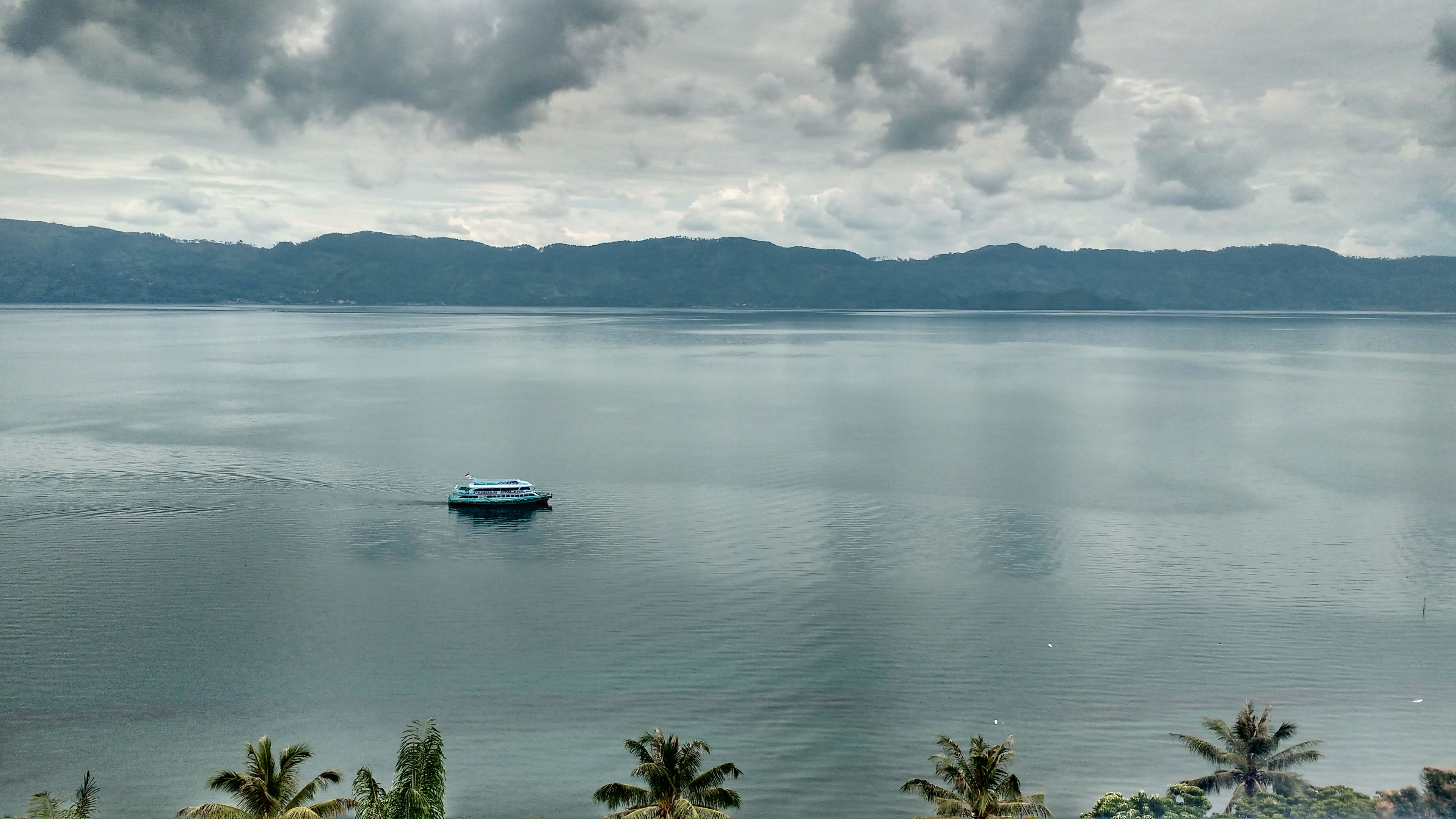
Lake Poso
After rain, the hills return slowly, as if remembered.
Lake Poso sits long and quiet in Central Sulawesi, holding weather in its bowl.
It feels less like a postcard lake and more like a living surface—changing by the minute with cloud and wind.
People come for water, but stay for the way the surrounding hills reappear, one shade at a time.
The Shoreline When the Rain Is Still Leaving
Most visits start once the sky has already decided to be clear. The overlooked hour is earlier—when the rain has stopped but hasn’t fully gone. Along Lake Poso, the shoreline doesn’t brighten all at once. It lifts in sections: a pale strip of sand, then a darker band of wet stones, then the first readable outline of trees. Listen for the small sounds that replace the downpour. Water slips from banana leaves in slow drops. A motorbike passes somewhere behind the houses, muted, as if wrapped in cloth. On the lake, the surface is not yet reflective; it’s softly stippled, as if the rain left a texture behind. If you stay near Tentena and walk out without a plan—just following the road until the lake is beside you—you’ll notice how the hills across the water return like a photograph developing. Not dramatic, just precise: one ridge appears, then another, and the whole place feels newly arranged.
The First 20 Minutes After the Rain Breaks
The transformation happens in a narrow window: the first 20 minutes after the rain breaks, while the clouds are still low enough to touch the hills. Lake Poso turns from busy weather to quiet weather. The air cools slightly, and the smell changes—earth and wet wood, then the faint sweetness of damp grass. At first, the far shore is only a suggestion, a darker mass behind a grey curtain. Then the curtain thins. A single slope becomes visible, not in full color, but in layered greens—deep, then olive, then a lighter green that looks almost powdered. The lake mirrors none of it yet; it holds the sky instead, a soft, diluted silver. This is when the water feels widest. Boats, if they move, leave an incision of darker tone that closes slowly behind them. You don’t need to chase a viewpoint. Stand still and let the lake do the revealing.
The Reflections
When the wind settles after rain, reflections arrive in fragments first—one stretch of hillside, then a strip of cloud. The mirror becomes complete only when the last ripples smooth out, and the shoreline looks doubled, slightly softened at the edges.
The Water
Lake Poso often reads as green-blue with a pale, mineral clarity, especially when clouds thin and light comes through evenly. After rainfall, it can shift toward silvery-grey, as if the sky has been poured into it, with darker jade patches where the depth drops away from shore.
The Landscape
Low hills and layered ridgelines frame the lake rather than towering over it, which makes the weather feel closer and more influential. Mist doesn’t sit like a blanket—it slides along the contours, revealing and hiding the same slopes in slow sequence.
Best Angles
Tentena lakeside road (east-facing pull-offs)
Stand close to the waterline and frame across the lake toward the hills; early morning keeps contrast low and the ridges stack gently.
Simple docks and boat landings near Tentena
Use the dock planks as leading lines; shoot low toward the water right after rain, when puddles and wet wood echo the lake’s sheen.
Open shoreline stretches away from town
Walk until the houses thin out; creators often miss the mid-lake emptiness—frame mostly water with a thin horizon for the feeling of scale.
A quiet seat under trees near the shore
Turn away from the obvious view; notice drip sounds, cooling air, and how the light returns to your hands and sleeves before it returns to the hills.
Crowd pattern — Tentena’s lakeside areas feel busiest late morning to early afternoon; early mornings after rain can feel almost unclaimed.
Effort level — mostly roadside access with short, uneven steps down to the shore; expect wet ground and slippery stones after showers.
Access note — shore access is generally informal; be respectful near homes and small docks, and ask before stepping onto private land or moored boats.
What to bring — a light rain layer, shoes with grip for wet edges, a small cloth for lens/phone, and insect repellent for still, damp evenings.
Handpicked Stays & Tables
Places chosen for beauty and intention, not algorithms. Each one is worth your time.

Ue Datu Cottages
Tentena, on the lakeshore

Tentena Garden-style Guesthouse (local homestay option)
Tentena, set slightly back from the lake

Lakeside warung stretch in Tentena
Along the main lakeside road

Pasar Tentena food stalls (evening)
Tentena market area
At Lake Poso, the day doesn’t begin with sun—it begins with what the rain allows you to see again.