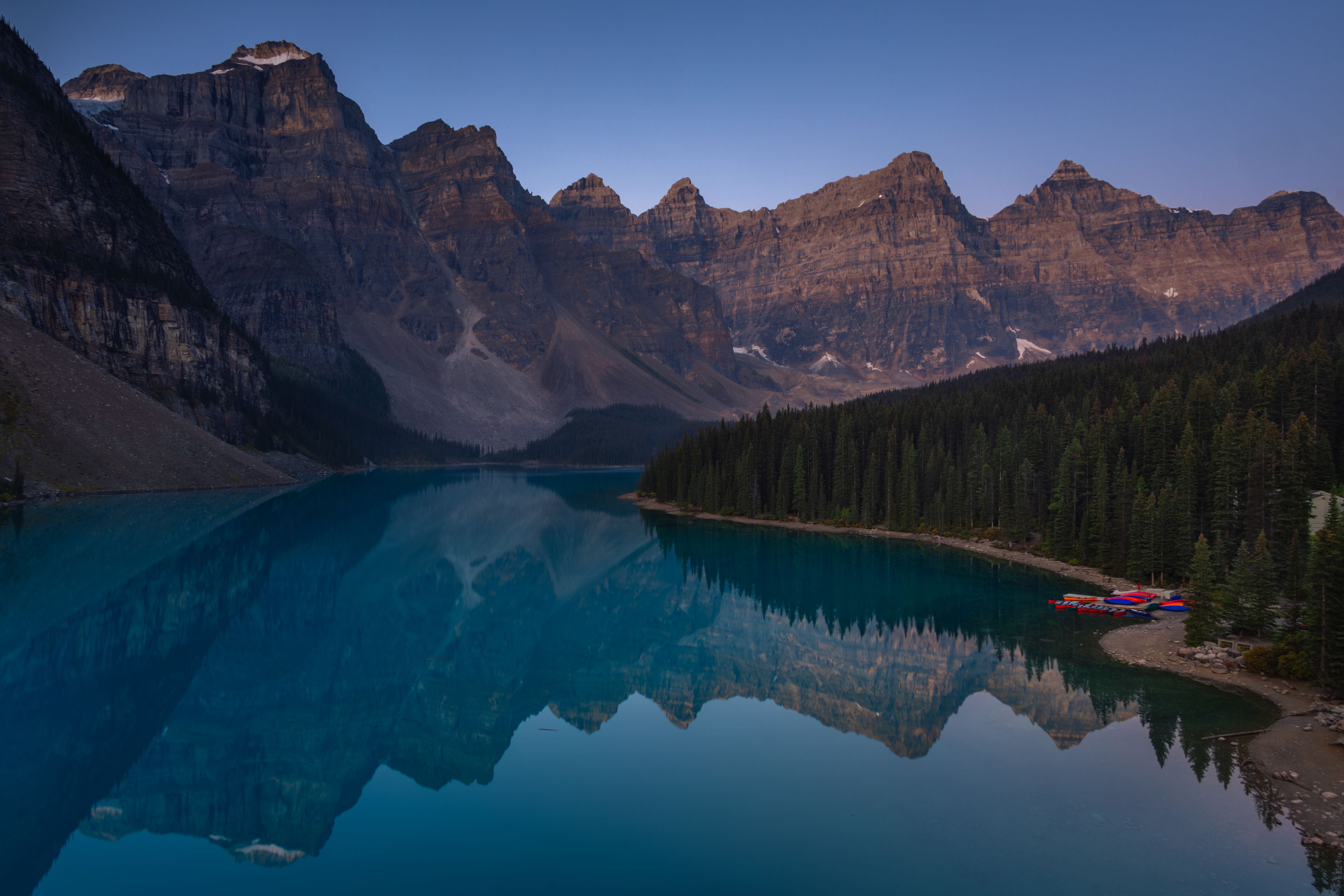
Lake Louise Sunrise
At first light, the lake turns quiet, and the shoreline tells on itself.
Lake Louise holds the morning like a held breath, just before the day arrives.
Its color is famous, but its real character shows up in the minutes when the crowd is still walking.
It pulls you in because it rewards patience: you don’t watch it, you wait with it.
The Moraine at the Waterline
Most people come for the postcard: turquoise water, Victoria Glacier, a clean horizon. At sunrise, they stand back from the edge to keep the scene tidy, framing out the shoreline like it’s an inconvenience. But the lake’s truest detail is right at your feet. In the first low light, the waterline exposes a thin moraine ribbon—small stones, silt, and pale grit left by retreating water, arranged in quiet bands. It’s not dramatic. It’s granular, patient. The surface laps once, then stops, and you can see where the lake has been working overnight: a dark wet strip, then a drying line, then a lighter edge where yesterday’s level held. When the sun finally touches the far slopes, that modest strip begins to read like a map of time—hours, not ages. People miss it because it doesn’t fit the perfect reflection. But if you kneel for a minute, the lake becomes less like a view and more like a living margin.
The Ten Minutes Before the First Sun Hits the Water
Lake Louise changes in the window when the sky has light but the valley still feels asleep. It’s the ten minutes before the first direct sun finds the water—when the air is cold enough to keep everyone quiet, and the lake holds a darker, more serious version of itself. The turquoise hasn’t fully awakened yet. Instead, the surface looks like deepened glass with a faint milky cast, as if the color is still deciding whether to appear. The mountains read sharper in this dim clarity: Mount Victoria’s shadowed faces, the glacier’s pale seams, the trees still nearly black. Then a thin warmth arrives on the upper slopes first—gold on rock, not on water. The lake remains in shade, and that delay is the point. Reflections become cleaner because there’s less glare, and the shoreline detail becomes legible: wet stones, tiny ripples, a soft line of silt. After the sun lands on the lake, the scene brightens and spreads. Before it does, it concentrates.
The Reflections
In calm conditions, the reflection is less a mirror and more a doubled drawing—mountain edges and treeline with just enough movement to feel alive. At sunrise, the lack of glare makes the reflected shadows look inked, especially along the dark forest band.
The Water
The water shifts from slate-blue to a muted, cloudy turquoise as the light strengthens. The color comes from glacial silt suspended in the lake; early on, it reads subdued, then turns more opaque and luminous as direct sun hits the surface.
The Landscape
Mount Victoria and the Victoria Glacier anchor the far end, with the forested shore forming a quiet, dark frame. In early morning, the valley holds cool air close to the lake, and any thin mist sits low and brief, disappearing as the first warmth arrives.
Best Angles
Right-side shoreline near the Fairmont Chateau (waterline edge)
Stand low at the water’s margin and aim toward Mount Victoria; include a narrow strip of stones and wet silt in the bottom of the frame so the lake feels physical, not just scenic.
Lake Louise Lakeshore Trail (toward the far end)
Walk 10–20 minutes along the eastern shore and turn back slightly; the chateau becomes small, and the mood shifts from iconic to intimate, with more quiet shoreline detail.
Canoe dock area (before rentals begin)
Frame the dock lines and empty boats against the dark water; most people arrive after this, when the geometry gets crowded and the surface breaks into wake patterns.
A bench or rock just off the main path (no camera height)
Sit facing the glacier and watch the light touch rock before water; the point is the delay, the way the lake stays in shade a little longer than you expect.
Crowd pattern — sunrise starts quiet but builds fast; by mid-morning the lakeshore path compresses into a steady flow, and the water shows more wake from canoes.
Effort level — minimal walking on flat, paved paths near the shore; if you take the lakeshore trail, expect an easy, gentle stroll with a few narrow sections.
Access note — Banff National Park entry pass required; seasonal parking restrictions and shuttles may apply, and summer mornings can still be surprisingly cold.
What to bring — a warm layer for pre-sunrise chill, a thermos, shoes with grip for damp shoreline stones, and a small cloth to wipe lake spray or dew from lenses.
Handpicked Stays & Tables
Places chosen for beauty and intention, not algorithms. Each one is worth your time.

Fairmont Chateau Lake Louise
On the lakeshore

Lake Louise Inn
Lake Louise Village

Fairview Bar & Restaurant
Fairmont Chateau Lake Louise

The Station Restaurant
Lake Louise Village
If you want Lake Louise to feel human again, watch the waterline before the sun arrives.