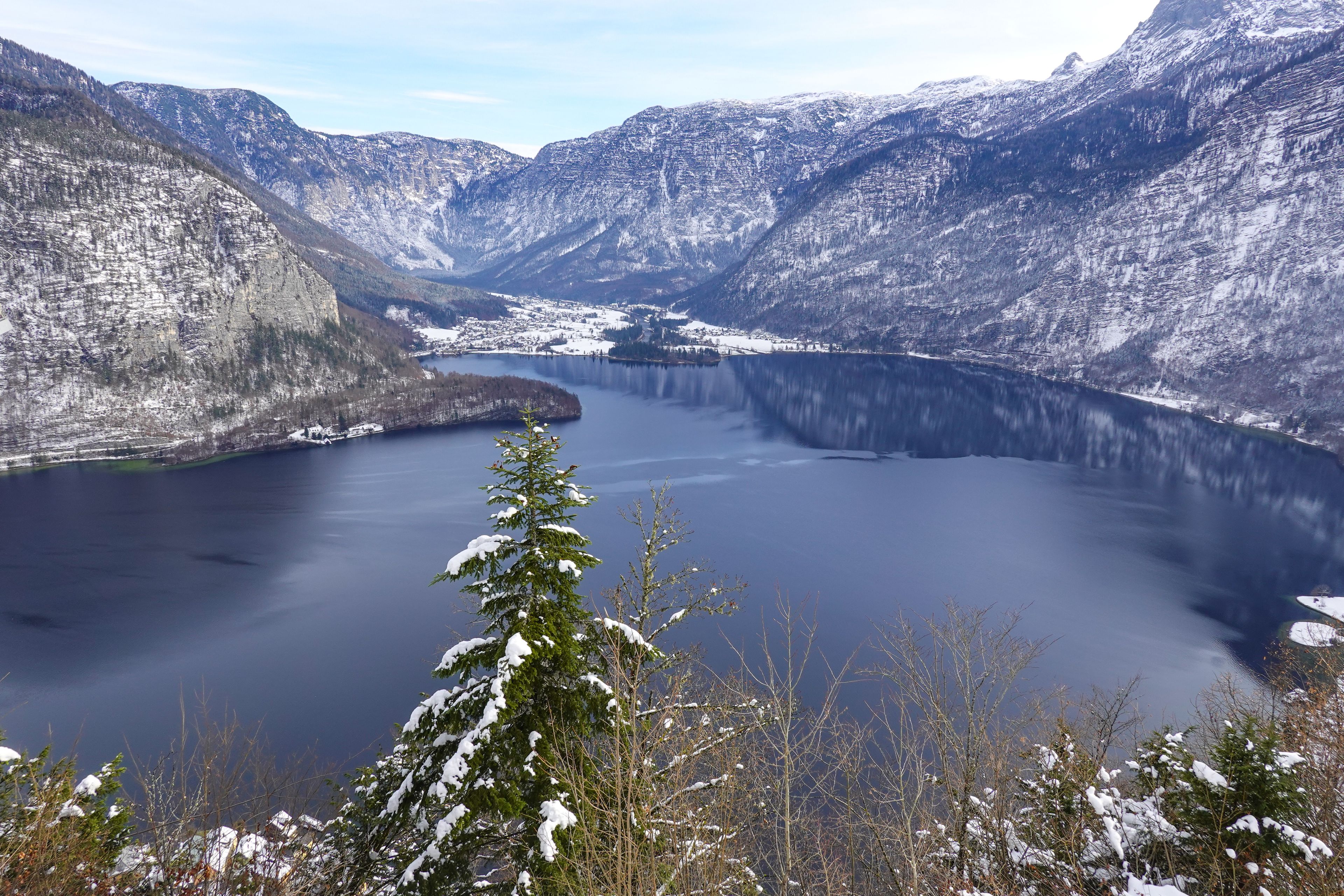
Lake Hallstatt
After snowfall, the village seems to lean closer to the water.
Lake Hallstatt is a narrow sheet of water holding a village at its edge.
Unlike wider alpine lakes, its steep walls and close houses make the surface feel like a mirror placed indoors.
After snow, the lake turns personal — quieter, smaller, and strangely intimate.
The Hour After the Snowplows Pass
Most visitors arrive when the postcard is already assembled: cleared streets, opened shutters, a steady stream of footsteps along the waterfront. What they miss is the brief interval after a night snowfall, when the village is still resetting. The plows have cut one clean channel through the slush, and the rest remains soft and unclaimed. Sound changes first. Tires hush, voices dull, and even the church bells feel wrapped. Stand near the Marktplatz and look toward the lake, not at it. You can see how the snow edits the town: railings become thin lines, roof edges sharpen, and the darker timber façades start to float against the white. On the water, there is often a faint skin of mist that doesn’t drift so much as hover, as if the lake is keeping its breath. The classic view is still there, but it stops performing. For a short time, it simply exists.
Blue Hour With Fresh Snow on the Rooflines
Lake Hallstatt changes most clearly during blue hour in winter, especially the morning after snowfall. The sun has not reached the village yet, and the mountains keep everything in shade. The color drains from the houses and returns as tone: slate roofs, pale walls, dark window cutouts. Snow becomes its own light source, lifting detail out of the dimness. This is when the lake acts less like water and more like a second street — a long, calm corridor where the village repeats itself. If there is no wind, the reflections are not dramatic; they are accurate. You can watch a chimney line become a thin graphite stroke on the surface. Boats sit low and still, their ropes drawing small V-shapes that barely move. The shift happens in minutes. As soon as the first direct sun touches the upper slopes across the water, the scene turns brighter and more readable, and the spell loosens. Before that, everything feels held in place.
The Reflections
After snow, the reflections sharpen because the bright rooflines increase contrast against the darker water. In calm conditions, the village appears as a soft double image, with the church spire drawing the cleanest vertical line.
The Water
In winter shade the water reads as deep steel-blue, sometimes nearly black, because the sun is blocked by the surrounding mountains. When thin sun arrives, it shifts toward cold green-gray as the lake catches light and the snow glare lifts the surface.
The Landscape
Steep slopes press close on both sides, giving the lake a sheltered, enclosed feel. Low mist often sits near the surface after a cold night, and the village looks pinned between water and rock.
Best Angles
Seestraße waterfront near the Evangelical Church
Stand on the lakeside edge and frame north-south so the spire and its reflection sit centered; arrive before the first tour groups to keep the waterline quiet.
Gosaumühlstraße viewpoint (upper village path)
Climb a few minutes above the center and look down toward the roofs meeting the lake; the snow creates layered geometry and the water becomes a dark band.
Lahn landing area (boat docks) looking back toward the old town
Most people shoot from the main promenade; here you can include moored boats and rope lines in the foreground to show stillness rather than scenery.
A bench along the quieter eastern shore path (when accessible)
Face back toward the village and stop photographing for a moment; the sound dampening after snow is the real subject here.
Crowd pattern — Midday is the busiest, even in winter; early morning is noticeably calmer, and evenings quiet down again after day-trippers leave.
Effort level — Mostly flat walking on the promenade; expect slippery sections after snow and some short, steep lanes if you climb above the center.
Access note — Parking is paid and limited; in heavy snow some upper paths and viewpoints can be temporarily less safe or not maintained.
What to bring — Shoes with winter grip, thin gloves for handling a camera/phone, and something warm to hold while you stand still for the light to change.
Handpicked Stays & Tables
Places chosen for beauty and intention, not algorithms. Each one is worth your time.

Heritage Hotel Hallstatt
On the waterfront in the village center

Seewirt Zauner
By the lakefront promenade

Gasthof Zauner
Central Hallstatt, near the lake

Bräugasthof Hallstatt
Near the market area in the old town
After snow, Lake Hallstatt feels less like a view and more like a pause the village agrees to share.