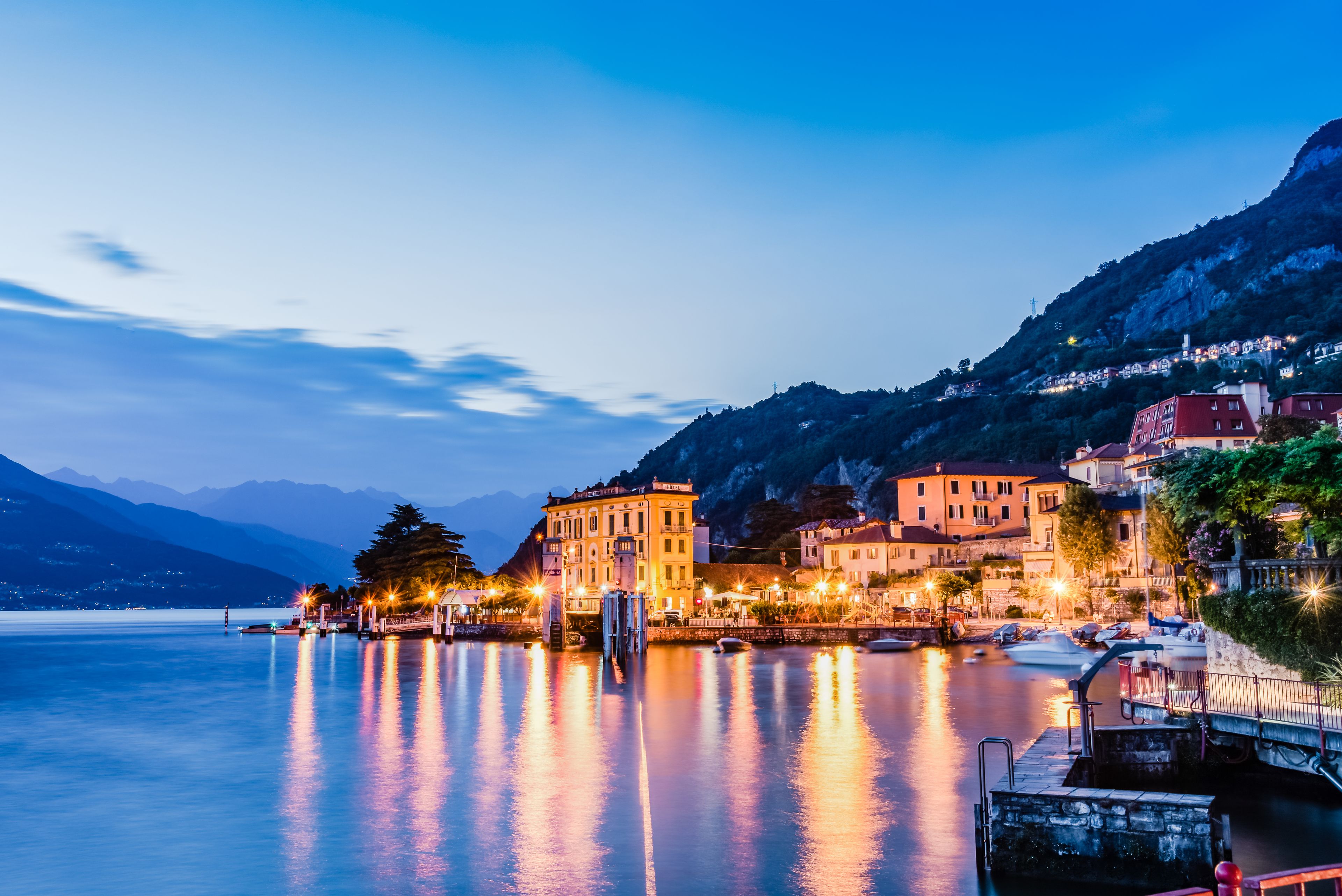
Lake Como
Between the last wake and the first bell, Como becomes a mirror.
Lake Como is a long, folded corridor of water where villages lean in close.
Unlike wide Alpine basins, it is narrow enough that light and wind feel staged, almost architectural.
It draws you back because its calm is not constant—it arrives briefly, like a held breath.
The Half-Hour After the Last Ferry
Most visitors remember Lake Como in motion: a steady seam of wakes, engine hum, water chopped into fragments beneath villas. What gets missed is the quiet interval after the last scheduled ferry has passed and before the nightlife takes over—often a plain, unannounced half-hour when the shoreline relaxes. In that gap, the lake’s surface begins to “heal.” The V-shaped ripples widen, soften, and then vanish, leaving only small, deliberate rings from a coot or a drifting leaf. Streetlights along the promenades in Bellagio and Varenna stop shimmering like broken glass and start drawing clean vertical lines instead. Even the façades—pale stucco, dark shutters, a single lit window—feel less like scenery and more like presence. If you stand still long enough, you notice how sound changes first: the voices thin out, the slap of waves against stone becomes a quieter, slower syllable, and the lake finally seems to belong to itself.
The Hour the Lake Stops Moving
It happens on windless evenings, usually between late spring and early autumn, when the day has spent its heat and the mountains begin to cool the air. The transformation starts the moment the last strong wake reaches the wall of a harbor—Menaggio’s waterfront, the small landing in Varenna, the edge of Bellagio—then rebounds once, twice, and gives up. For a while, the lake doesn’t look “calm” so much as paused. The surface becomes a single sheet with a faint metallic tension, and the distance between shorelines feels shorter, as if the water has stopped insisting on space. Lights come on in scattered rooms; their reflections hold steady instead of vibrating. The dark slopes above the villages deepen into one continuous shape, and the water takes on that in-between tone—neither day nor night. If you arrive one hour too early, you’ll watch the lake trying. If you arrive one hour too late, it will already be moving again.
The Reflections
When the wakes fade, reflections stop glittering and become columns: lamp to water, window to water, hillline to water. Boats at moorings double cleanly, hull and mast repeated with only a slight seam where the water breathes.
The Water
In the still hour, the water shifts from green-blue to a deep slate with hints of ink, colored by the steep shadow of the mountains and the sky losing its warmth. Near stone steps and pale walls, it turns briefly silvery, picking up the last available light like a thin skin.
The Landscape
Como is framed by slopes that rise quickly and hold the lake in a narrow grip, so the horizon feels close and sheltered. On quiet evenings, the mountains read as a single dark mass, and the villages become small constellations pinned to the edge.
Best Angles
Varenna waterfront (Passeggiata degli Innamorati)
Stand near the railings by the ferry pier and face south toward Bellagio; frame the village lights against the dark slopes while the water turns slate and begins to hold vertical reflections.
Menaggio promenade (Lungolago di Menaggio)
Walk to the quieter western end and look across toward Varenna; the lake narrows in perspective here, and the last wakes often flatten into long, slow lines.
Bellagio, Punta Spartivento
Most people come for midday clarity; return at dusk and aim slightly off-center so the two branches of the lake read as darker corridors, with the still surface knitting them together.
Como city, Tempio Voltiano steps
Go not for the perfect frame but for the pause: sit facing the water when the promenade quiets, and watch for the moment the reflections stop trembling.
Crowd pattern — Midday waterfronts are busy from late morning to late afternoon; the lake thins noticeably after dinner and again in the final hour before the last ferry routes finish.
Effort level — Mostly flat walking along promenades; a few towns involve stairs and short uphill lanes if you leave the waterline.
Access note — No permits for promenades; ferry schedules vary by season and day, so check the last return times if you’re crossing branches.
What to bring — A light layer for the temperature drop after sunset, a small towel or scarf for damp stone seating, and patience for 15 minutes while the water “settles.”
Handpicked Stays & Tables
Places chosen for beauty and intention, not algorithms. Each one is worth your time.

Hotel Villa Cipressi
Varenna

Grand Hotel Tremezzo
Tremezzina

Il Cavatappi
Varenna

La Punta
Bellagio
If you wait for the wakes to disappear, Lake Como stops performing and simply rests.