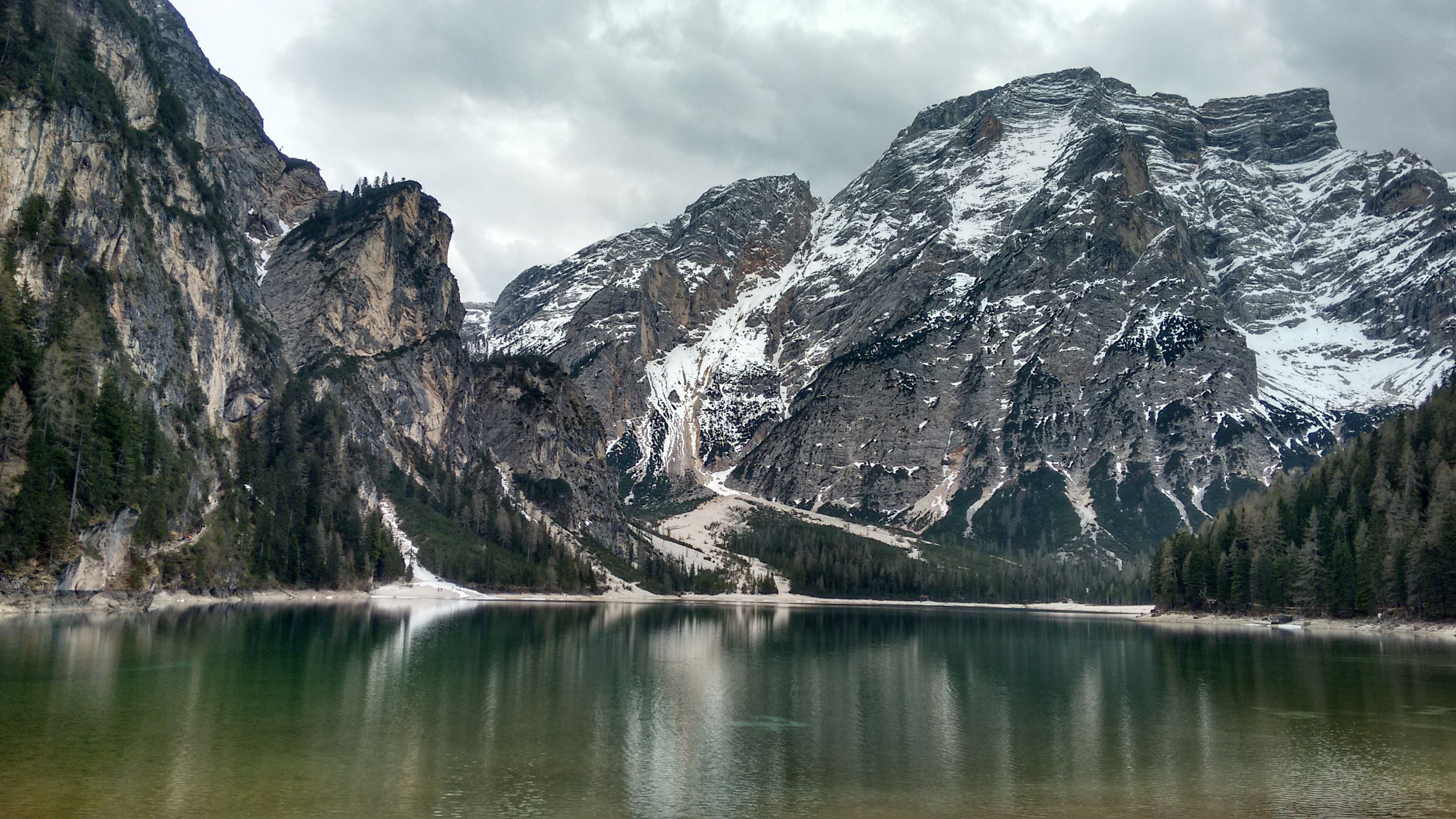
Lake Braies
Before the rowboats wake, the mountains speak in one color.
Lake Braies is a small basin of water that holds the Dolomites close, like a kept secret.
Unlike wilder alpine lakes, it sits right at the edge of access—so its quiet is always temporary, always timed.
It matters because it teaches attention: the lake is most itself in the minutes when nobody is asking it to perform.
The Shoreline When the Boathouse Is Still Locked
Most people arrive with the boathouse in mind, and they stay in front of it, facing the postcard. Before the first visitor, the more honest Lake Braies is to the left of that scene—along the quieter curve where the path meets the water and the gravel darkens with dew. Here the lake doesn’t look staged. It looks listened to. In the early dimness, you can see how quickly the surface changes: a single falling leaf makes a clean set of rings that travel until they touch the shore, then vanish. The waterline is finely drawn, almost deliberate, and the limestone beneath the shallows turns pale like bone. If there’s been a cold night, a skim of new ice can cling to the edges in thin, clear plates—gone by the time cameras line up. What visitors miss is not another view. It’s the lake’s first condition: unclaimed, untroubled, and briefly private.
The Ten Minutes Before the First Oars Touch Water
The transformation happens just before the lake becomes a destination—when the parking is quiet, the boathouse lights are still off, and the water has not yet been broken into patterns. In that narrow window, Lake Braies feels less like a place to visit and more like a surface that is thinking. The mountains across the water—Croda del Becco and its pale faces—appear darker than they will in full morning, as if they’re still holding the night. The lake takes that darkness and softens it, turning stone into a slow, liquid shape. Sound arrives in layers: a distant door, a bird that tests its voice once, then stops. If there’s no wind, the reflections are so complete you can’t tell which line is shore and which is its duplicate. Then it changes quickly. Footsteps begin to stitch the path. The first boat nudges loose from the dock. The spell isn’t broken—it’s simply replaced.
The Reflections
In calm conditions the lake mirrors the Dolomite walls with near-vertical clarity, including the darker seams in the rock. The most delicate detail is the treeline: a thin, precise band that looks drawn onto the water rather than reflected.
The Water
The water reads as milky turquoise with a faint jade cast, caused by glacial flour and limestone-rich sediments suspended in the lake. Before direct sun hits, that color deepens toward teal, and the shallows near shore turn glass-clear over pale stones.
The Landscape
Steep forested slopes funnel the view into a single amphitheater of rock, making the lake feel contained and close. Mist, when it appears, doesn’t drift wide—it hangs low over the surface and gathers near the far end where the valley tightens.
Best Angles
Boathouse dock, facing north toward Croda del Becco
Stand at the outer edge of the dock and frame slightly right so the boathouse stays peripheral; keep the horizon centered to emphasize symmetry in still water.
West shore path, 5 minutes left from the boathouse
Look back toward the boathouse with the mountains behind it; this angle turns the iconic building into a quiet scale marker instead of the subject.
Far-end bend (southern tip) where the trail narrows
Creators usually skip this because it feels less dramatic, but it’s where the lake becomes more intimate—reeds, shallows, and softer reflections.
A low crouch at the pebbled edge near the first curve of the loop trail
Forget the skyline and frame only water, stones, and the first slice of reflection; it captures the lake’s early mood better than any wide shot.
Crowd pattern — busiest from mid-morning to mid-afternoon in summer; emptiest at first light and during shoulder-season weekdays.
Effort level — minimal walking on well-made paths; the loop is gentle, but expect occasional narrow sections where people pass.
Access note — parking is paid and can fill early; seasonal traffic management can apply in peak periods, so plan for early arrival or shuttle options when required.
What to bring — a warm layer even in summer mornings, quiet footwear for damp gravel, and a microfiber cloth (the air is often cool and lenses fog easily at dawn).
Handpicked Stays & Tables
Places chosen for beauty and intention, not algorithms. Each one is worth your time.

Hotel Lago di Braies
On the lake’s edge

Hotel Trenker
San Candido (Innichen)

Restaurant of Hotel Lago di Braies
Beside the boathouse area

Gasthaus/Restaurant in San Vito di Braies (local options)
Village area of Braies/Prags valley
If you meet Lake Braies before anyone else does, it feels less like a landmark and more like a promise kept.