Jökulsárlón
Where the wind edits the lagoon into silence.
Jökulsárlón is a moving lake that pretends, at first glance, to be still.
Its surface is never just water: it is melt, tide, and ice negotiating in plain view.
People come for the spectacle; the quieter shore offers the part that lingers afterward.
The Upwind Shore Where the Ice Stops Performing
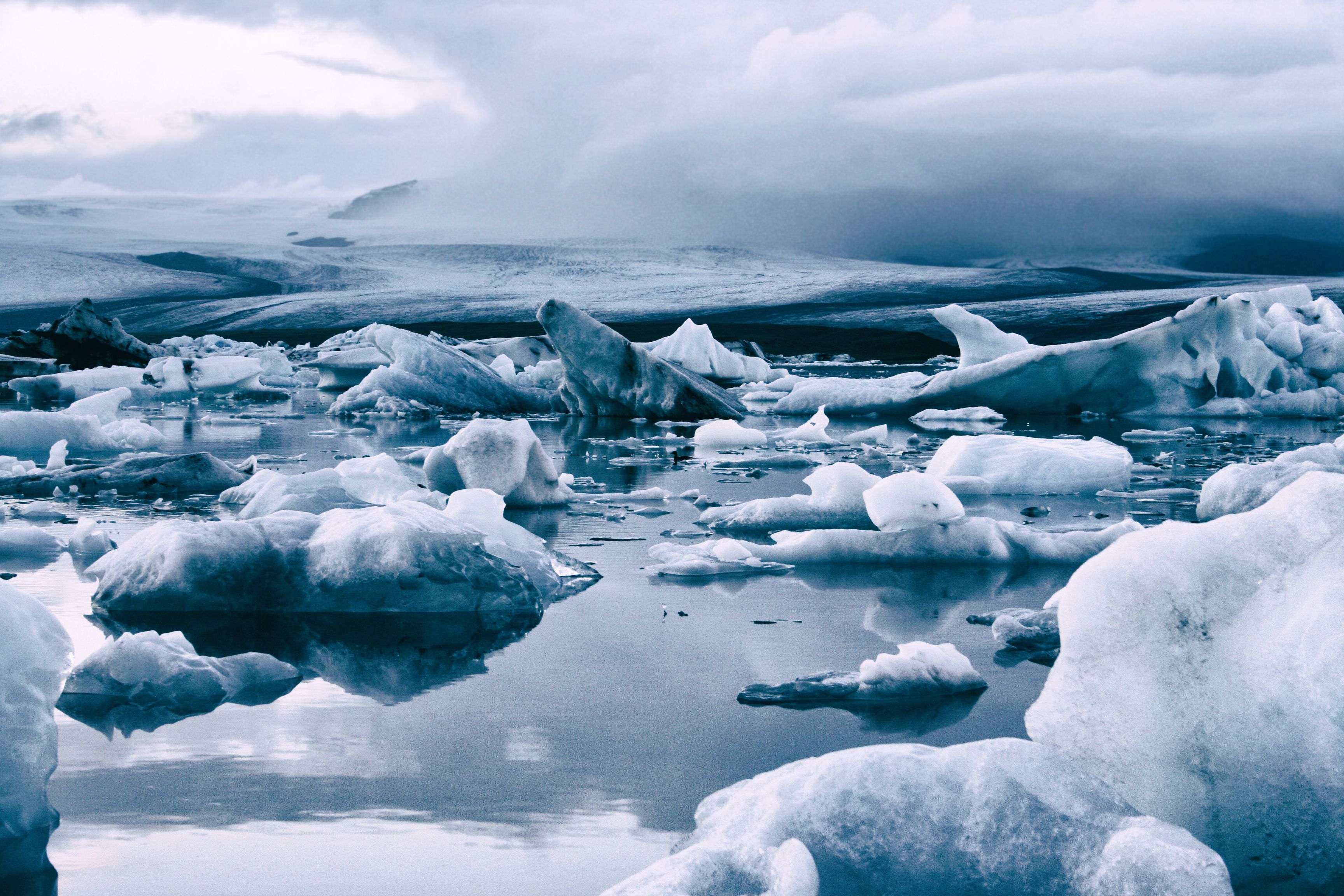
Most visitors stay near the parking lot and the boat dock, where the lagoon feels like a stage: engines, voices, easy angles. The upwind shore is different. It takes a short walk away from the noise, and the reward is not a bigger view—it is a change in tempo. When the wind leans in from the glacier side, the ice doesn’t cluster for photos. It spreads out, each piece keeping its distance, rotating slowly as if deciding where to be. The water shows more of its true color here, a diluted gray-blue that carries silt like a memory. You start noticing small sounds: the dry tick of ice edges touching, the faint fizz of bubbles released from old compression, the occasional hollow knock when a piece rolls. This side teaches scale. A berg that looked decorative from the bridge becomes heavy and private up close. And because fewer people come here, the lagoon feels less like an attraction and more like a place with its own weather.
The Ten Minutes After the Wind Drops
The transformation isn’t sunrise or sunset, though both can be beautiful. It’s the moment the wind finally lets go. You feel it first in your face—less pressure, less salt. Then the lagoon changes its posture. The surface, which has been broken into restless texture, begins to smooth in patches. Those patches widen quickly, like someone ironing fabric. Ice that was drifting with purpose starts to hesitate, then settles into slower arcs. The soundscape thins: fewer flutters of jackets, fewer raised voices, and the lagoon’s own small noises become legible. In that short interval, Jökulsárlón stops looking like a moving corridor and becomes a mirror with weight. The bergs appear more sculptural because they’re no longer being shoved into new positions. Darker pieces—stained with ash and age—start to read as tones rather than objects. If you’re on the upwind shore when this happens, the whole place feels newly arranged, not by you, but by the absence of force.
The Reflections
When the wind eases, reflections arrive in fragments first: a pale strip of sky, then the darker band of the mountains. Icebergs reflect as softened doubles, their edges blurring where the brackish water still moves underneath.
The Water
The water is a silty, glacial gray-blue, clouded by fine sediment carried from Breiðamerkurjökull. Near the outflow it can darken toward steel, especially under overcast light, because the lagoon is deep and the tide pulls ocean color into it.
The Landscape
The lagoon is framed by the low pull of the moraine and the distant, calm mass of Vatnajökull. Weather moves fast here—mist can appear as a thin veil that makes the ice look closer than it is, then lift and leave the surface feeling exposed.
Best Angles
Upwind shoreline east of the main lagoon area
Walk away from the dock until the engine noise fades; face back toward the glacier for a quieter, more spacious composition with separated ice.
Bridge viewpoint over the channel to the sea
Stand on the safe pedestrian side and look down the current; frame the tug-of-war between lagoon ice and tidal pull for a more dynamic mood.
Farther along the lagoon edge away from Diamond Beach crowds
Most creators stop at the first easy pull-off; keep going until footprints thin, then use the darker, older ice pieces as foreground anchors.
Low angle at the waterline on a calm patch
Kneel where small ripples lap the pebbles; let the ice enter the frame slowly and focus on the sound and pace more than the photograph.
Crowd pattern — busiest late morning through mid-afternoon when day tours arrive; quietest early morning and later evening, especially outside summer.
Effort level — mostly flat walking, but expect uneven gravel, wet edges, and sudden gusts that make the cold feel sharper than the temperature suggests.
Access note — parking is paid and can fill; winter storms can bring temporary closures or poor visibility on Route 1.
What to bring — windproof layers, waterproof footwear, gloves that still let you use a camera/phone, and a thermos for waiting out the moment the wind drops.
Handpicked Stays & Tables
Places chosen for beauty and intention, not algorithms. Each one is worth your time.

Fosshotel Glacier Lagoon
Hnappavellir area, between Skaftafell and Jökulsárlón

Hali Country Hotel
Near Jökulsárlón

Heimahumar (Höfn)
Höfn

The Soup Company (Kirkjubæjarklaustur)
Kirkjubæjarklaustur
On the upwind shore, Jökulsárlón feels less like a destination and more like weather taking its time.