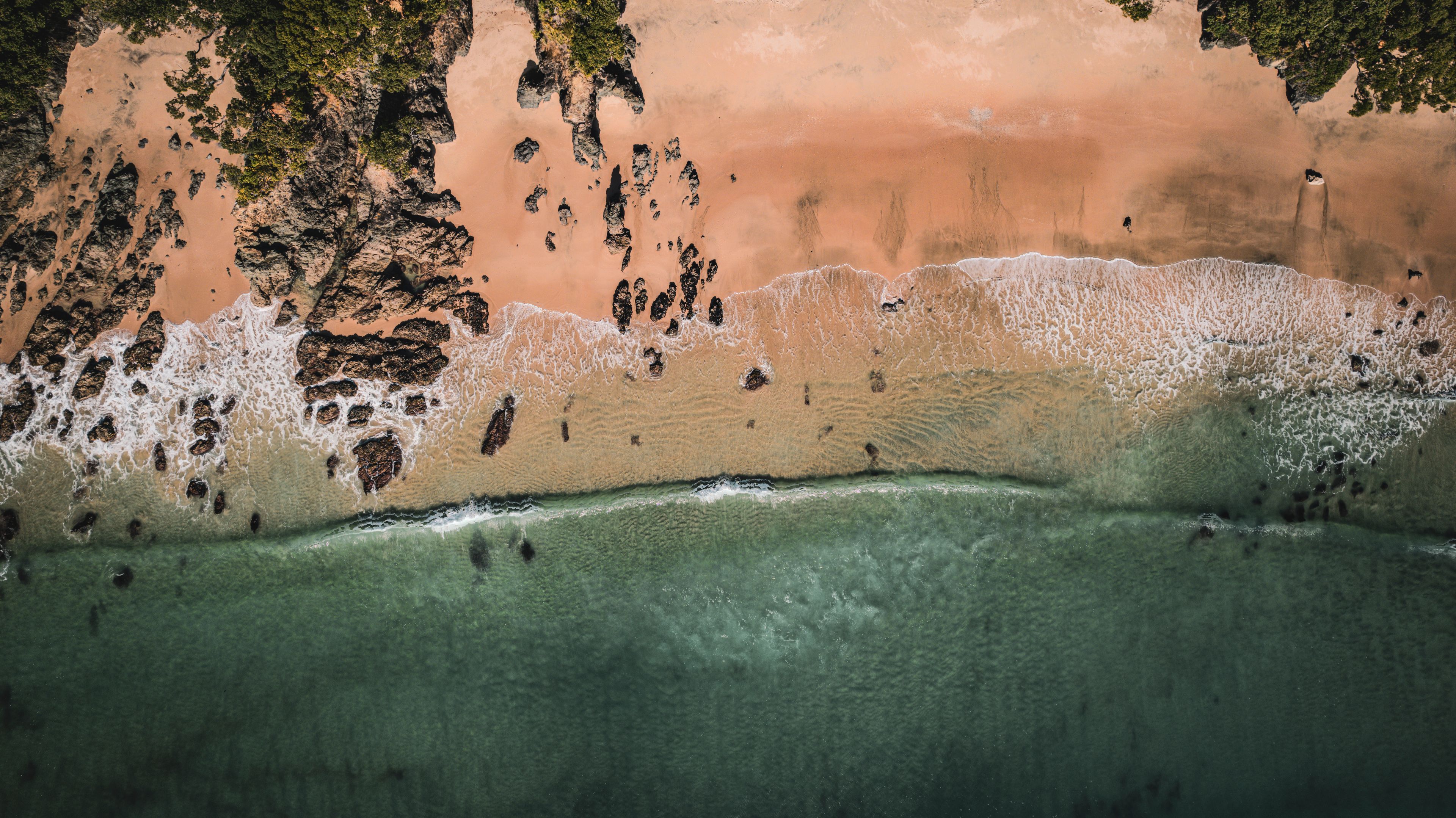
Hot Water Beach
On a Coromandel shoreline, warmth isn’t everywhere—it's a thin, shifting seam you have to read like a tide line.
Hot Water Beach matters because it turns the coast into a live experiment—Pacific surf on one side, geothermal heat pulsing up through sand on the other, and you standing in the argument between them.
Most people come for the novelty and dig anywhere. The real story is a narrow band that moves with the tide… a few steps wide, briefly readable, and easy to walk right past while staring at your shovel.
When you find it, the beach feels intimate instead of busy. You stop performing the checklist and start listening—to water, to heat, to timing—and the place gives you something oddly personal.
The Steam Line: Reading the Beach Like a Map
Hot Water Beach is not a single “hot spot.” It’s a moving seam—an intersection between underground springs and the ocean’s pressure—that appears and disappears as the tide breathes in and out. The giveaway isn’t the crowd, and it isn’t the obvious pits. It’s the narrow band where sand suddenly feels different: slightly looser, subtly warmer, sometimes marked by faint steam when the air is cool… or by nothing at all on a bright day. Most travelers step over it because they arrive thinking the beach will behave like a pool. They choose a patch of sand based on space, not on temperature. But the heat here is patterned—threaded through the beach in veins. Dig a meter too far toward the dunes and your water stays lukewarm. Dig too close to the sea and the next set of waves will flood you with cold and collapse your walls. The sweet spot is a compromise: close enough to feel the heat rise fast, far enough to build a lip that survives the next wash. When you find the seam, you stop copying other people and start paying attention. You test with your palm, adjust depth, let a wave cool the pool instead of ruining it. The experience becomes less about novelty and more about timing—your own small coordination with a coast that doesn’t hold still.
You arrive with the tide low and the beach already humming—spades scraping, small laughs, the hush of surf folding and refolding itself on darkened sand. The air smells like salt and wet iron. You walk toward the center of the bay where the crowd seems to thicken, but the real cue is underfoot: a sudden softness, then warmth, as if the beach exhales. You kneel and dig fast. Steam threads up in thin ribbons, then the hole fills—first with clear water that feels shockingly alive, then with a surge of heat that makes you pull your hands back. Someone nearby tests their pool with a toe, negotiating the temperature like a chef, not a swimmer. A wave runs in and skims the edge of your pit, cooling it in one quick silver pass. You rebuild the lip, reshaping sand like a small, temporary wall. For a few minutes you sit in your own handmade bath while the Pacific roars at your shoulder, and you feel the coastline doing two contradictory things at once.
The Water
The ocean is a mineral blue-green that deepens quickly, with white foam that reads almost fluorescent against the darker sand. In your dug pool, the water looks deceptively clear—until it clouds with stirred silt, turning milky and pearled in the steam.
The Cliffs
This is the Coromandel in miniature: a broad crescent of sand backed by low dunes and coastal vegetation, with headlands holding the bay in place. Underneath, geothermal water rises through fractures—an inland heat source briefly exposed by the sea’s schedule.
The Light
Early morning gives you cleaner color and a softer beach—steam is more visible, and the bay looks newly rinsed. Late afternoon brings warmer tones on the sand and a more sculpted look to the surf, especially when side light picks up the ridges and footprints.
Best Angles
Mid-bay at low tide (hot zone)
You can frame steam, shovels, and surf in one scene—proof the heat is real, not imagined.
Northern end looking back across the crescent
The beach reads as a wide arc, and the scale of people digging becomes part of the story.
At the waterline beside your pool
This angle captures the tension—cold waves lapping near a steaming hole, two temperatures in one frame.
Low angle on the sand ridges
Side light reveals texture—wet sand gloss, footprints, and the small walls people build like miniature fortifications.
Close-up of hands testing the water
It’s intimate and human: the moment of negotiation when you decide whether it’s soothing or too hot.
Check the local tide chart and plan around low tide—arriving at high tide can mean no digging zone and rougher conditions.
Bring a sturdy spade; flimsy plastic shovels struggle in compacted wet sand and slow you down when the tide turns.
Test temperature carefully with your hand first—some spots can be scalding; mix with cooler seawater or dig a second “cold” channel to temper it.
Wear footwear for the walk and the dig zone; the sand can be hot in patches and scattered shells can be sharp.
Respect space and stability—don’t undermine other pits, and keep an eye on incoming sets that can collapse walls quickly.
Handpicked Stays & Tables
Places chosen for beauty and intention, not algorithms. Each one is worth your time.

The Church Accommodation
Hahei
Stylish, design-forward rooms with a calm, coastal palette that feels deliberately uncluttered after a busy beach. You’re close enough to time low tide without turning it into a logistical mission.

Saltwater Retreat
Whitianga
A polished base with a spa-minded feel and a little more breathing room than beach-adjacent stays. It suits travelers who want Hot Water Beach as one chapter, not the whole itinerary.

The Pour House
Hahei
Casual but thoughtful—good coffee, solid breakfast, and a relaxed pace that matches early tide starts. It’s the kind of place where sandy ankles don’t feel out of place.

Luke’s Kitchen
Kuaotunu (seasonal, short drive)
A long, leisurely lunch stop with local produce and an easy coastal rhythm. Go when you want the Coromandel to feel expansive again after the tight focus of the hot zone.
When you finally sit in that narrow band of heat, you understand the beach isn’t hot—it’s briefly, precisely warm where you learn to stand.