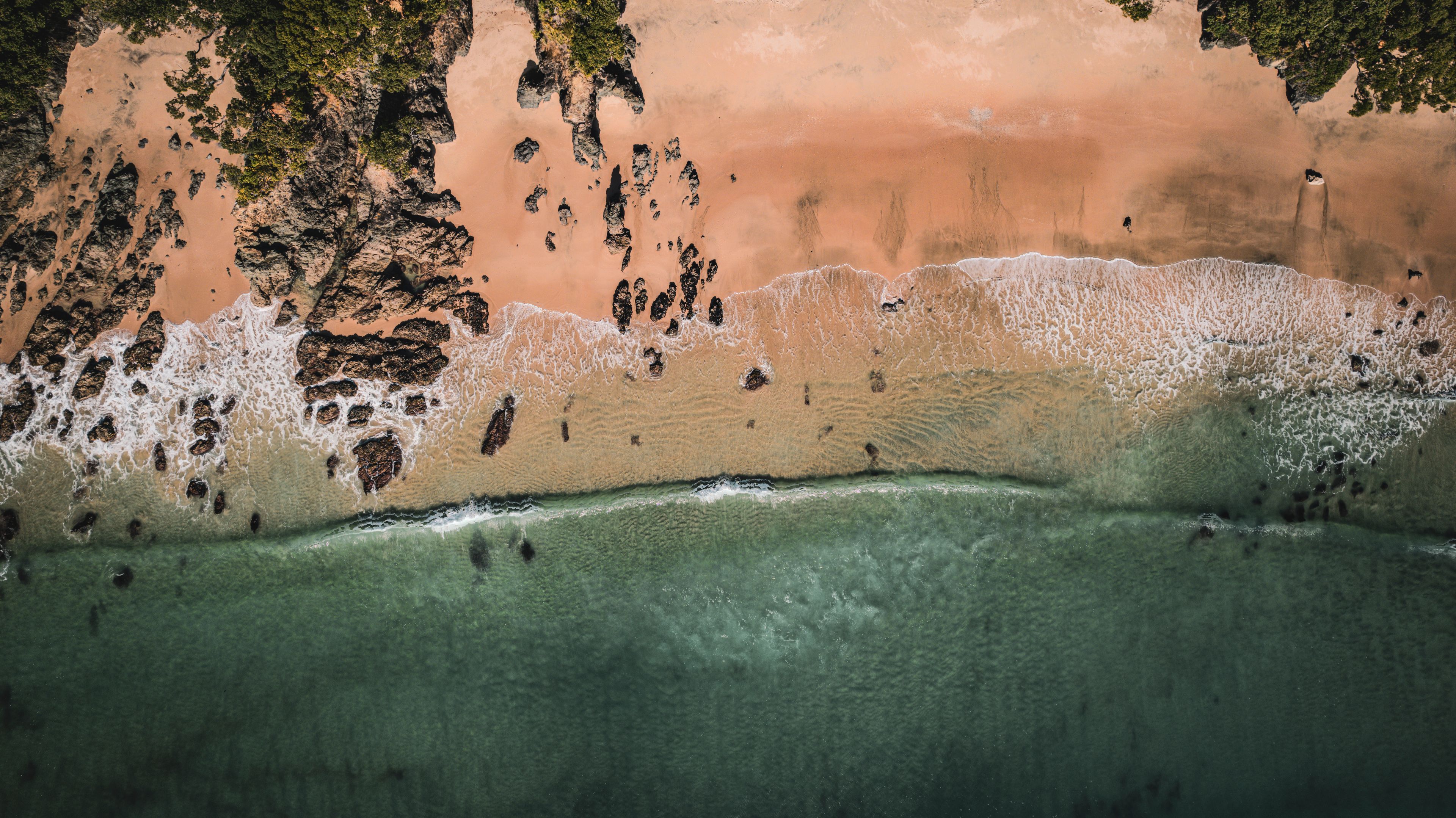
Hot Water Beach
Take the headland first—then watch steam rise from sand you can only read from above.
Hot Water Beach matters because it rewrites what a “swim” can be—ocean on one side, geothermal heat under your feet, and the Pacific doing its tidal math in real time. You are not just visiting a beach; you are stepping onto a living fault-line story where water, rock, and timing decide the experience.
Most people arrive straight to the sand, grab a spade, and miss the headland approach from Hahei—the moment you understand the beach as a system. From above, the shoreline looks composed, almost calm… and then you notice the faint breath of steam, the way crowds cluster in a precise band, and how the tide line dictates where heat can exist.
The payoff is strangely intimate. You dig a shallow basin, sit down, and feel warmth bloom around your ankles while the sea hisses and retreats a few meters away. It’s playful, yes—but it also makes you feel small in a very comforting way, like the planet is briefly letting you in on a secret that runs underneath everything.
The Beach Is a Clock, and the Hot Water Only Shows at the Right Minute
Hot Water Beach is often described as a novelty—dig a hole, sit in warm water, take a photo. But the real experience is about timing and perspective, and the headland walk from Hahei gives you the one thing the car park can’t: context. From above, you see how narrow the usable geothermal strip actually is. The hot water doesn’t “live” across the whole beach; it appears in a band where underground springs reach the surface and the tide hasn’t yet smothered them. You notice a subtle choreography: people spreading out, then compressing toward the same few meters as the ocean turns and begins its return. The scene isn’t random. It’s a temporary permission slip issued by the tide. Down on the sand, the trick is restraint. Digging deeper doesn’t always mean hotter—it can mean scalding, especially in small pockets where the water rises near-boiling. The best pools are mixed: a shallow basin that lets cool seawater seep in around the edges so the heat becomes soakable rather than shocking. You learn by feel—testing with a hand, nudging the lip of your pool so temperature changes gradually. What most people miss is the feeling of being inside a moving boundary. Your bath exists only until the sea decides otherwise, and that impermanence makes the warmth sharper, sweeter… and oddly memorable.
You start on the Hahei side, where the track lifts you over the headland and the air smells of sun-warmed pōhutukawa and salt. The ocean is loud here—clean, percussive, scattering white across dark rock. As you round the shoulder, Hot Water Beach opens beneath you like a wide sheet of pale sand pinned between green farmland and a restless Pacific. From this height you can read it: the tide pushing in a glossy, steel-blue band; the congregation of bodies near the middle; the quick, purposeful movements of people carrying spades like tools rather than toys. You drop down, the sand cool at first, then softer underfoot. Near the hot zone, you kneel and dig—just a little—and the ground turns damp, then suddenly warmer, as if someone has switched on a low, hidden radiator. Steam curls up in the breeze. You sit back into your own hand-made pool while a cold wave sighs nearby, threatening to reclaim everything you’ve built.
The Water
The sea shifts from slate-blue to a clearer, bottle-green as the sun rises and the wind eases. In shallower bands it turns milky-turquoise where waves grind sand into the water, then clears again between sets.
The Cliffs
This is a working edge of the Coromandel—soft, pale sand backed by rolling pasture and low, rugged headlands that catch the wind. Under it all, geothermal springs rise through fractured rock, turning an ordinary shoreline into a place with literal temperature gradients.
The Light
The beach looks most sculptural in the first two hours after sunrise, when the headland casts long shadows and the sand holds texture like brushed suede. Late afternoon can be beautiful too—warmer color, calmer crowds—but the contrast is softer and the scene feels more social than cinematic.
Best Angles
Hahei headland track overlook
You see the whole “clock face” of the beach—tide line, hot zone, and the human pattern that forms around it.
Northern end near the rocks
The shoreline curves away with fewer people in frame, and the darker rock adds scale and drama to the pale sand.
Mid-beach at the geothermal strip (standing back, not inside it)
Steam drifting across sand reads best from a slight distance—more atmosphere, less chaos.
Waterline looking back toward the dunes
For photographers: low angle gives reflective wet sand, layered figures, and a clean horizon when sets are small.
Your pool’s edge, knee-level
The intimate angle is tactile—bubbles, ripples, and the quiet absurdity of a hand-dug bath beside the Pacific.
Check the tide chart and plan around low tide; without it, the “hot” part becomes a spectator sport.
Bring or rent a sturdy spade in advance (often available locally, but supply can run out at peak times).
Test the water temperature with your hand before stepping in—some pockets can be dangerously hot, especially if dug deep.
Wear sandals or water shoes if you have them; the walk over hot sand and around scattered shells can be uncomfortable barefoot.
Pack a warm layer and a towel even in summer—the wind off the Pacific can cool you fast once you step out of your pool.
Handpicked Stays & Tables
Places chosen for beauty and intention, not algorithms. Each one is worth your time.

Hahei Beach Resort
Hahei
A polished, easy base close to the headland approach, with self-contained options that feel calm after a tidal-window morning. You can wake up, walk out, and arrive at Hot Water Beach with the advantage of altitude and quiet.

Oceans Resort Whitianga
Whitianga
Apartment-style luxury with space to exhale, ideal if you want restaurants and services nearby. It’s a comfortable counterpoint to the beach’s elemental unpredictability—hot sand one hour, cool linens the next.

Hot Waves Cafe
Hot Water Beach
The practical, comforting stop when you come off the sand salt-streaked and slightly windburned. Coffee, simple meals, and a front-row view of people sprinting the last meters before the tide turns.

The Church Bistro
Hahei
A small, well-loved room where local produce and thoughtful cooking feel like the grown-up version of a beach day. Go in the soft light of evening, when the conversation quiets and you can still taste the ocean in your hair.
Arrive from the headland, read the shoreline like a map, and you sit in warmth that exists only for the length of a turning tide.