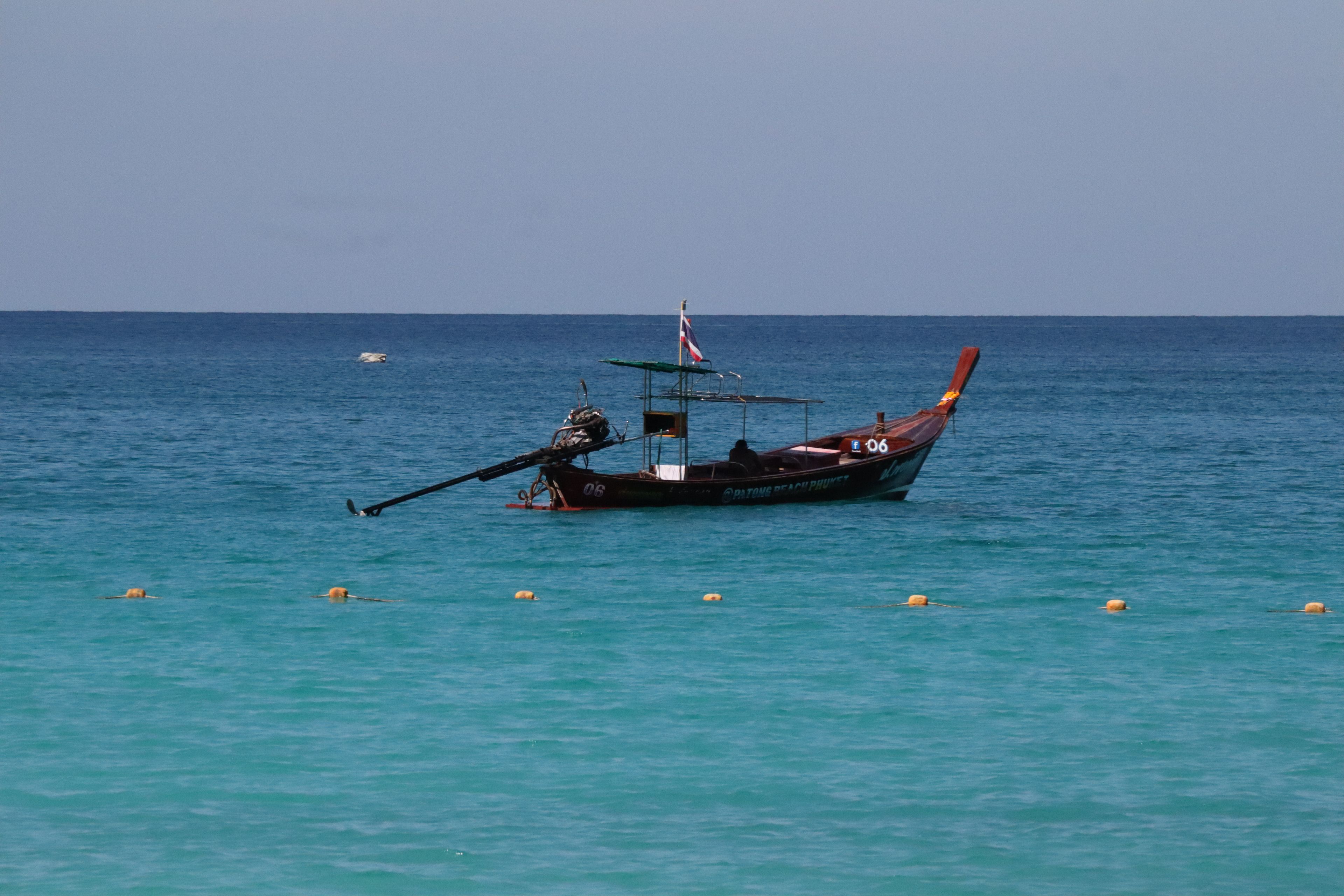
Freedom Beach
In Phuket’s wet season, Freedom Beach trades postcard gloss for a quieter, more cinematic truth.
Freedom Beach matters because it shows you Phuket without the performance—when weather edits the noise, the shoreline feels like a real place again, not a backdrop.
Most people only know it as a dry-season day trip, but in monsoon months the beach’s character changes: the sand darkens, the forest leans in, and the water turns to layered mineral tones that look almost painted.
The payoff is intimacy. You feel the island breathing—rain-soft air, muted colors, and a kind of permission to slow down that Phuket rarely gives you in high season.
The Monsoon Palette: Where the Beach Starts Looking Like Stone
Freedom Beach’s dry-season reputation is all brightness—clean turquoise, sun-bleached sand, the easy geometry of a perfect bay. In monsoon season, the beach reveals its structure. You start noticing how the cove is shaped like a bowl, how the headlands pinch the water into darker bands, how the jungle doesn’t just frame the sand but presses against it, making the whole place feel protected and slightly secretive. The detail most people miss is the sand itself. After rain, it changes texture and color—less powder, more silk. It clings lightly to your feet, holds footprints crisply, and reflects the sky like a dim mirror. The shoreline becomes a gradient: wet sand the color of slate, then a lighter strip where the last wave thins out, then dry sand under the trees with a faint pink-beige cast. And then there’s the water. On overcast days it stops competing with the sky and starts answering it. The surface reads as layered mineral—graphite near shore, greenstone farther out, occasional pale flashes where a shaft of sun breaks through. This is the season when Freedom Beach feels less like a tropical poster and more like a film location. You come for the mood, not the perfection…which is exactly why it stays with you.
You arrive with the sky still deciding what it wants to be—pewter light, a brief flare of white, then the hush of rain somewhere offshore. The path down feels steeper in the wet, the leaves slick and glossy, the air scented with warm soil and crushed green. At the bottom, Freedom Beach opens wide, but not loud: a long crescent of sand pressed between jungle and sea, the treeline ragged with palms and sea-almonds. The water isn’t the usual tropical glass. It’s slate near shore, then a milky jade that deepens as the bay drops away…color held in suspension. Small sets roll in and unravel with a soft, deliberate sound, as if the beach is exhaling. The sand—normally pale—turns dense and silky underfoot, cool where the rain has just passed. You find shade under the leaning trees and watch the bay change every few minutes, clouds dragging shadows across the surface like slow brushstrokes. Even the longtail boats keep their distance. You don’t pose here. You listen.
The Water
In monsoon light, the water runs in bands—graphite at the lip of the shore, then jade-tea green, then a deeper bottle green where the bay drops. When the sun cuts through briefly, the surface doesn’t turn neon; it turns luminous, like light trapped in glass.
The Cliffs
Freedom Beach sits in a tight cove under Phuket’s south-west hills, with dense coastal forest dropping almost to the sand. The headlands on either side make the sea feel contained, and after rain the whole scene reads more sculptural—rock, tree, and water in heavy tones.
The Light
The beach looks its most cinematic in late afternoon when storm clouds thin and the sun arrives low, grazing the wet sand so it shines. Right after a shower, when the air clears and the greens go saturated, the bay takes on its richest slate-and-jade contrast.
Best Angles
North-end treeline bend
You get the full crescent with the jungle leaning in—perfect for showing scale and mood without crowds.
South headland edge (from the sand)
This angle compresses the bay so the water’s color bands read clearly, especially under overcast skies.
Mid-beach at the waterline
Low perspective turns wet sand into a reflective plane and makes incoming sets look slower and more deliberate.
Stair/footpath break in the canopy
Shoot upward through leaves after rain—droplets, filtered light, and a glimpse of the bay as a reward frame.
Under the sea-almond shade pockets
A quieter, intimate composition—textured trunks, fallen leaves, and the sound of surf just beyond the shadow line.
Wear footwear with grip for the descent and ascent; the path can be slick with leaf litter after rain.
Bring a light rain layer and a dry bag—showers can arrive suddenly and linger.
Skip swimming if the sea is rough or red flags are up; monsoon currents can be deceptively strong even in a sheltered bay.
Pack water and something small to eat; options can be limited or closed in low season, and the climb back up feels longer in humidity.
If you’re shooting photos, carry a microfiber cloth—salt mist and drizzle film over lenses fast in this light.
Handpicked Stays & Tables
Places chosen for beauty and intention, not algorithms. Each one is worth your time.

The Shore at Katathani
Kata Noi
Low-rise villas with private pools and a calm, adult-leaning feel—excellent when you want Phuket to quiet down after the beach. The service is tuned and unshowy, and the sunsets (when the sky clears) are the right kind of slow.

Rosewood Phuket
Emerald Bay (near Patong)
A polished resort that still feels anchored to the landscape, with pavilions tucked among mature trees. In monsoon season, the architecture and moody light make staying in feel like part of the itinerary, not a compromise.

Ta Khai
Rosewood Phuket, Patong area
Seafood and southern Thai flavors with a charcoal-and-wood rhythm that suits rainy evenings. Go for grilled catch, bright herbs, and the sense you’re eating close to the elements even under cover.

Baan Rim Pa
Near Patong
Classic Phuket institution perched above the water—worth it for the view when clouds lift and the Andaman goes metallic. The menu leans royal Thai with confident spice and a formal, old-Phuket cadence.
When the rain rewrites Freedom Beach, you stop chasing the color everyone came for—and start noticing the island underneath it.