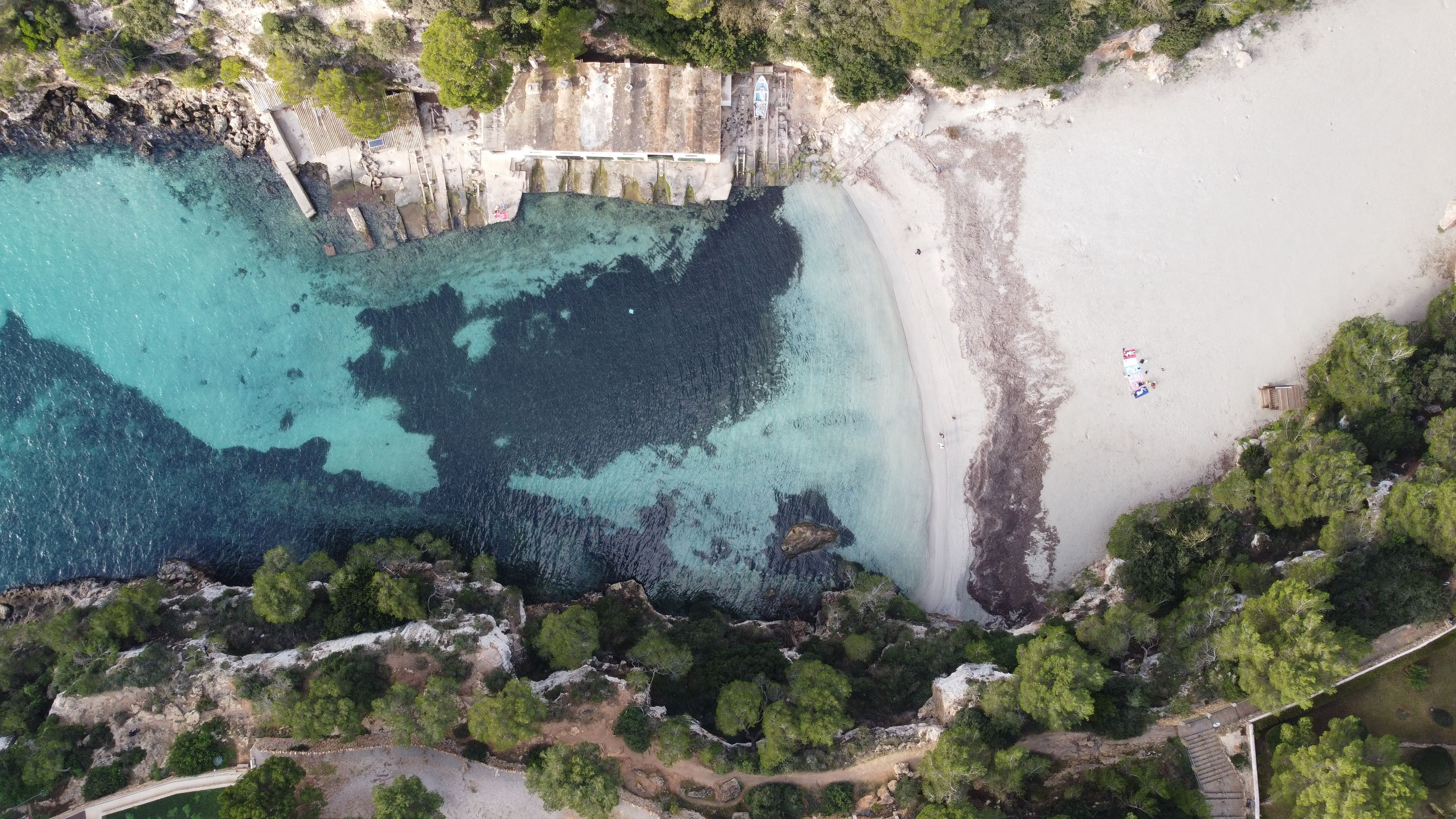
Cala Varques
At sea level, Cala Varques stops being a beach and becomes a limestone cathedral you swim through.
Cala Varques matters because it still asks something of you—time, heat, salt on your skin—before it gives you that first clean view of Mallorca’s untamed east coast. There’s no promenade, no tidy row of loungers, just pale sand tucked between cliffs that look like they’ve been carved with a chisel.
Most people stop at the shore and call it done. They miss the moment when you leave the beach behind, slip into the water, and let the coastline reveal its architecture: arches, undercuts, and a shadowed passage where the sound changes and your breath becomes part of the place.
The payoff isn’t just beauty. It’s the quiet competence you feel when you’ve navigated there on your own terms—when the island stops performing and you start paying attention.
The Arch Is a Threshold, Not a Landmark
On the map, Cala Varques is a cove. In photos, it’s sand and turquoise. At water level, it’s something else entirely: a lesson in limestone and timing. The arch and the adjacent sea-cave-like openings aren’t decorative flourishes—they’re the coastline’s working edges, where the island is actively being edited by swell, wind, and slow chemical erosion. Most visitors treat the rock as a backdrop and stay dry. But if you swim out—calm day, no bravado—the acoustics tell you when you’ve crossed the line. The beach chatter drops away; your own breathing becomes the dominant soundtrack. Under the arch, the light stops being “bright” and becomes directional. You notice the color temperature shift: warm sunlight outside, cooler blue-green inside, with silver ripples skating across the ceiling. It’s not a cave, not quite… but it asks for the same respect. This is also where you understand Cala Varques’ real scale. From shore, the cliff looks like a neat frame. From the water, the wall rises higher, rougher—pitted like coral, streaked with iron, sharp enough to snag a careless hand. You don’t come here to conquer anything. You come to be briefly, pleasantly small—and to leave with your senses tuned a little finer than when you arrived.
You arrive warm and slightly dusty from the walk, the kind of heat that clings to your collarbones. The sand is a soft, pale ribbon, and the sea holds that Mediterranean clarity that makes your brain briefly recalibrate distance. You wade in slowly, letting the first cold layer bite your ankles, then your thighs… and you push off. The beach noise thins behind you. Ahead, the limestone arch sits low to the water like a bent wrist, its underside stained with honey tones and darker seams where the rock stays damp. As you swim closer, the light turns theatrical—sun flickering on the ceiling in moving scales, the water beneath you shifting from mint to cobalt where the bottom drops away. Under the arch, the temperature dips. Your strokes sound louder, more deliberate. You pause without meaning to, floating in the shade, tasting salt and mineral on your lips, listening to small waves slap stone as if the coast is breathing.
The Water
The water reads as pale aquamarine over sand, then turns glassy jade where seagrass begins. Under the arch it cools into deep blue-green, with mirrored sunlight flickering like a moving mosaic on the rock.
The Cliffs
Cala Varques is a bite taken out of Mallorca’s eastern limestone—chalky cliffs, undercut edges, and small cavities where wave action keeps worrying at the stone. The beach sits like a soft pause between harder lines, with scrub and pines holding on above.
The Light
Late morning to early afternoon gives you the clearest water and the strongest light play under the arch, especially on calm days. Golden hour is gentler and more cinematic, but shadows expand quickly along the cliff, and the arch can read darker than you expect.
Best Angles
Waterline under the limestone arch
You get the full cathedral effect—cool shade, textured ceiling, and the water’s reflected patterns doing the storytelling.
Right-hand rocks (facing the sea) just beyond the swim area
A low angle back toward the beach compresses the sand, cliff, and swimmers into a clean, editorial frame.
Cliff-top edge near the approach path
The overhead view reveals the cove’s geometry and the subtle gradient from sandbar to deeper blue.
Inside the arch looking outward
For photographers: expose for highlights and let the arch silhouette frame the bright sea—instant sense of place without feeling postcard.
Shallow sand shelf at the left side of the beach
The intimate angle—close-up water textures, rippled sand, and quiet details when the cove is still waking up.
Bring plenty of water and something salty to eat—the walk back in heat feels longer than it looks on a map.
Wear sturdy shoes for the approach; switch to swim shoes if you plan to explore rocks and shallows around the arch.
Use a dry bag for phone/keys if you intend to swim under the arch; a floating strap helps in swell.
Skip windy days with swell if you’re planning water-level exploration—the arch area can become pushy and unpredictable.
There are no facilities: pack out all rubbish, and consider a small bag for any litter you find… it changes the mood of the cove instantly.
Handpicked Stays & Tables
Places chosen for beauty and intention, not algorithms. Each one is worth your time.

Can Simoneta
Canyamel (east coast)
A cliff-top retreat with a hushed, grown-up rhythm—stone, sea views, and a sense of deliberate distance from the crowds. Ideal when you want Cala Varques’ wildness by day and precision comfort by night.

Finca Serena Mallorca
Near Montuïri (inland, central Mallorca)
An inland counterpoint to the coast: olive groves, soft light, and rooms designed for silence. You trade immediate sea access for space, calm, and a spa-level exhale after the hike.

Sa Cova
Porto Cristo
A classic port-side address for seafood with views over moored boats and evening light on the water. Come for simply handled fish and the feeling of returning to civilization, slowly.

Roland Restaurant
Porto Cristo
A smaller, more intimate room where the cooking leans modern Mediterranean and the service feels personal. It’s a good choice when you want something thoughtful after a salt-and-sun day.
When you leave Cala Varques, you carry the sound of water on stone—like the island speaking in a lower, truer voice.