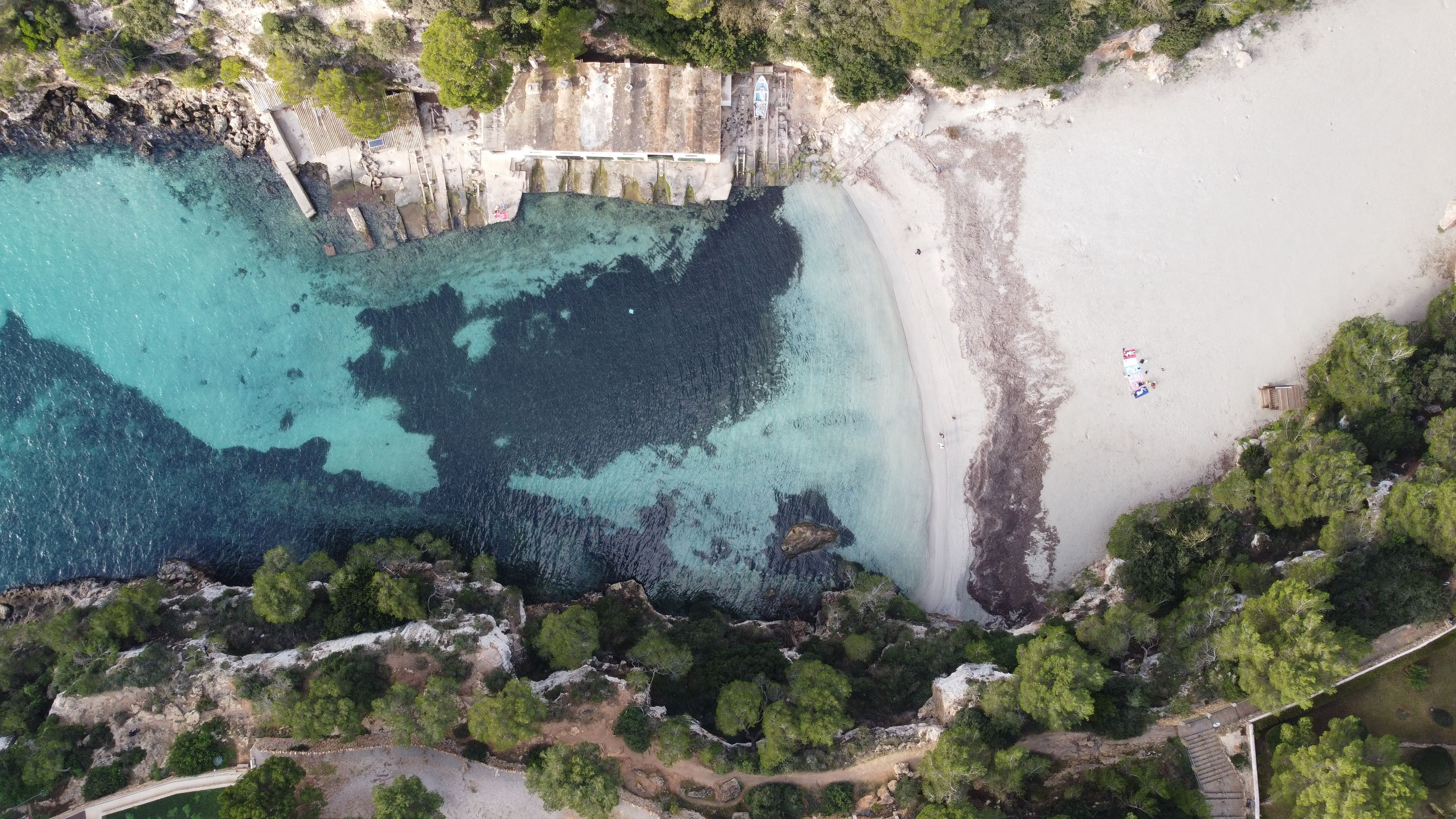
Cala Varques
Trade the dusty shortcut for sea air—Cala Varques is better when you earn it along the cliffs.
Cala Varques matters because it still feels like Mallorca before the railings and ticket booths—raw limestone, salt wind, and a shoreline that makes you slow down without being told.
Most people treat it as a destination and miss the approach: the cliffline is the real prologue, where the island’s geology, light, and silence do the heavy lifting before you ever see sand.
Arriving from the coast changes your mood on contact—you step onto the beach already rinsed clean of noise, already tuned to the cadence of waves and the scrape of rock underfoot.
The cliff approach is the filter that makes Cala Varques feel private
The main track delivers you to Cala Varques like a product: walk, arrive, claim a patch of sand. The coastal route does something subtler. It edits your senses. On the cliffs you’re forced into attention—reading the grain of limestone, watching where the loose stones collect, noticing how the wind behaves differently at each bend. That attention carries onto the beach, and suddenly Cala Varques isn’t just “pretty water.” It’s a cove with a temperament. Look closely as you traverse the headlands and you’ll see why the beach feels so sheltered even when the rest of the coast is busy: the cliffs don’t simply frame the bay, they fold it. The rock is pocked and undercut, with small ledges that catch salt spray and pockets where scrub survives on almost nothing. Those textures soften the soundscape; the cove absorbs noise rather than amplifying it. You also arrive from above, which matters. From the track, your first view is often other people. From the cliffs, your first view is water—its color shifts mapped out like layers of glass, from clear shallows to saturated cyan, then deep blue where the seabed drops. You don’t feel like you’ve “found” Cala Varques. You feel like you’ve approached it properly.
You leave the inland track behind and the air changes first—cooler, wetter, threaded with wild fennel and sun-warmed pine. The path narrows into limestone shelves that tilt toward the sea, and your steps start to sound deliberate… rubber on stone, a small crunch of grit. Below, the water flashes through gaps in the scrub—an electric ribbon that keeps disappearing, then returning, brighter each time. When the wind lifts, you hear it in layers: the hiss of waves, the dry clatter of cicadas, the soft percussion of grasses hitting rock. A pale arch of limestone appears like a stage prop, and then the cove opens with the kind of suddenness that makes you stop mid-stride. Sand the color of almond flour. Cliffs streaked with rust and chalk. A few swimmers far below, reduced to moving dots in a bowl of turquoise. You descend carefully, palms occasionally brushing the rock for balance, and by the time your feet hit the beach, you already know the place—not as a photo, but as a sequence you lived.
The Water
The shallows read as transparent aquamarine with a pale, milky edge where sand lifts in the swell. A few meters out, it turns into a clean turquoise that looks almost backlit, then deepens to cobalt in the darker pockets near the cliff shadows.
The Cliffs
Cala Varques sits in Mallorca’s limestone country—white rock stained with iron-orange streaks and scalloped by water over time. The cove is a bowl of chalky cliffs, low scrub, and the occasional pine leaning toward the sea.
The Light
Late afternoon gives the cliffs warmth and pulls amber tones from the stone while the water stays unrealistically bright. Early morning is cooler and quieter, with softer contrast and a glassier surface that makes the shallows look like polished crystal.
Best Angles
Western headland ledge (cliff approach)
You get the full sweep of the bay with layered water color, plus the sense of scale that the beach flattens.
Natural rock arch near the cove
The arch frames swimmers and sea in a way that adds drama without needing a wide lens.
Pine-shadow edge of the beach
A cooler, intimate perspective—textured sand, dappled shade, and the bright water beyond.
High point above the eastern side (before descending)
Best for photographers: you can shoot diagonally across the cove for depth and separation, especially in late-day light.
Waterline at the cliff shadow
Stand where sunlight meets shade and you capture the real palette shift—turquoise to ink—within a single frame.
Wear proper shoes for the cliff approach—limestone is sharp, smooth in places, and loose underfoot; flip-flops make the descent stressful.
Bring more water than you think you need; there are no facilities and the cliff route feels hotter once the wind drops in sheltered sections.
Pack a light snorkel mask—the clearest water is often along the edges near rock, not in the center shallows.
Take a small dry bag for your phone and keys; getting in and out over rock shelves is easier when your hands are free.
Treat the cove as leave-no-trace territory: carry out all rubbish, including food scraps, and avoid trampling scrub on the cliff tops.
Handpicked Stays & Tables
Places chosen for beauty and intention, not algorithms. Each one is worth your time.

Can Simoneta
Canyamel (northeast Mallorca)
An adults-focused hideaway on a cliff edge where the sea is the constant soundtrack. Rooms are restrained and tactile—stone, linen, and light—built for slow mornings before you drive south to Varques.

Fontsanta Hotel Thermal Spa & Wellness
Colònia de Sant Jordi (southeast Mallorca)
A low-slung, serene base with thermal pools and a quietly luxurious rhythm. It’s well placed for coastal days and resets your body after the limestone miles.

Ca’n March
Porto Cristo
Classic Mallorcan cooking with seafood that suits a salt-skin afternoon. Order simply and let the produce do the work—this is a place for unhurried dinners.

Vora Mar
Porto Cristo (harborfront)
Sit close to the water and keep it light: grilled fish, salads, and a view that eases you back into civilization. The harbor glow at dusk mirrors the softness you leave at Cala Varques.
When you come in over the cliffs, Cala Varques doesn’t feel like a beach you reached—it feels like a coastline that let you in.