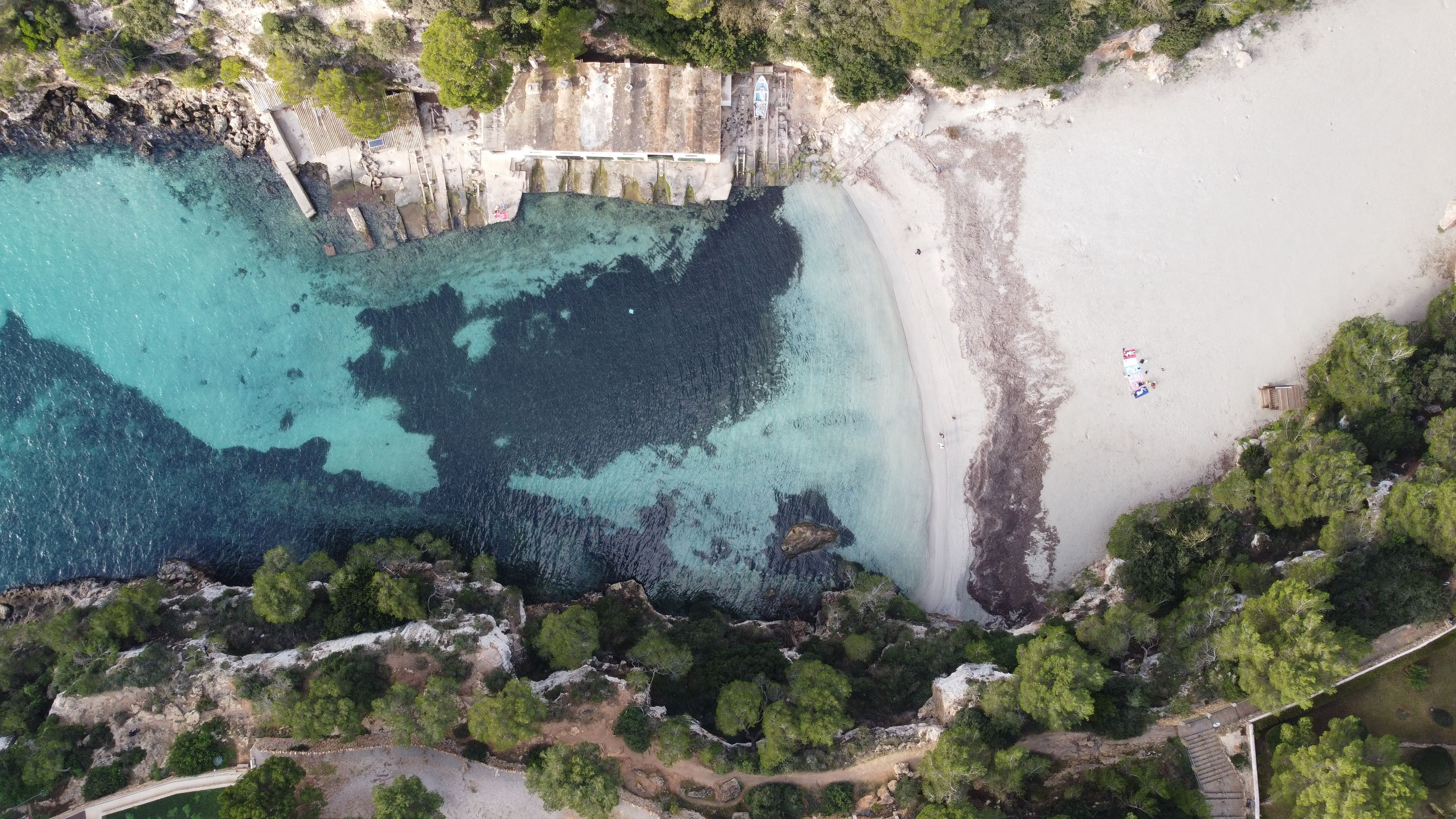
Cala Varques
On Mallorca’s wild east, the real Cala Varques begins where the beach noise ends.
Cala Varques matters because it still feels like Mallorca before the island learned to perform for you—limestone, pine shade, salt wind, and a cove that asks you to arrive on foot and pay attention.
Most people stop at the sand and the waterline. They miss the pinède behind it: a sun-dappled, resin-scented corridor that edits the whole experience, turning a popular cove into something quieter and more personal.
When you step back under the trees, your body drops a gear. The heat softens, the soundscape changes, and you realize the beach is only the finale—not the story.
The Pine-Scented Backstage That Makes the Cove Feel Private
Cala Varques is photographed as a single image—water, sand, limestone. Experienced as a single act—arrive, swim, leave. But its real design is behind you. The pinède isn’t decoration; it’s infrastructure for your senses. Under the pines, the temperature drops just enough to make you stop chasing shade like a problem to solve. The ground is a soft crunch of needles over rock, and the scent is immediate—resin, sap, sun-warmed wood—so specific it becomes a memory trigger later, even in a city. This is also where the cove’s social energy thins out. On the sand, everyone occupies the same stage. In the trees, you get rooms—small clearings, limestone shelves, natural partitions made by trunks and low branches. You can eat without sand in your food, change clothes without feeling on display, and reset between swims. If you’re paying attention, you’ll notice the way the wind behaves: on the beach it’s a bright, direct push; in the pinède it becomes a whisper that moves the canopy and makes the light flicker like water. The payoff is subtle but lasting. You leave with salt on your skin, yes—but also with the feeling that you found Cala Varques’ quieter pulse, the one that doesn’t need an audience.
You reach Cala Varques with dust on your shoes and that faint, earned thirst that makes the first glance at water feel sharper. The cove opens like a cut in the coast—chalky limestone on both sides, the sand a pale wash between them. Down on the beach, voices bounce off rock and soften into the steady hush of small waves. But you don’t stay in the open for long. You slip behind the first line of pines where the air turns aromatic—warm needles, sun-baked bark, a clean mineral note rising from the stone. Light falls in moving coins through the canopy; it flashes on your forearms, then disappears. You can hear the beach without seeing it, a muffled soundtrack beyond the trees. A lizard ticks across dry leaves. Somewhere, a climber’s quick chalk clap echoes from the cliff, then fades. You find a flat slab of limestone like a natural bench, sit, and watch the cove through branches—turquoise framed in green—until you feel less like a visitor and more like someone let in on how this place actually works.
The Water
The water reads as layered glass—nearshore it’s pale aquamarine, then it deepens into a saturated turquoise with cobalt seams where the seabed drops. On calm days, the surface is so clear you can track shadows of small fish over the sand ripples.
The Cliffs
This is Mallorca’s limestone coast at its most tactile: pale cliffs with pockets and ledges, rough as coral to the touch, framing a compact sandy pocket. The pinède behind the beach stitches the cove to the inland scrub, giving you a green ceiling that makes the sea look even more electric.
The Light
Late afternoon is the sweet spot when the sun slides lower and the cliffs warm into honey tones while the water keeps its clarity. In high summer, the first hour after sunrise is quieter and cleaner—less glare, more detail in the rock textures and the pine canopy.
Best Angles
Pine-framed waterline
Stand just where the first trunks begin and shoot through branches—green foreground makes the turquoise feel unreal without oversaturating.
Left limestone shoulder (facing the sea)
Climb a little up the rocks for a wider cove read—sand curve, water gradient, and the sense of enclosure.
Back-of-beach pinède clearing
The unexpected angle is inward: photograph the dappled light on needles and limestone with the sea as a soft blur beyond.
Natural stone ledge above the beach
For photographers, this gives a clean, editorial top-down: bathers reduced to scale, water color bands clearly separated.
Water-level from the right side
The intimate angle—float near the edge and look back at the sand and pines; the cove feels like a small amphitheater.
Bring more water than you think you need—there are no services, and the walk back feels hotter than the walk in.
Wear shoes you can hike in; flip-flops turn the last rocky sections into a slow, slippery negotiation.
Pack out everything, including fruit peels and tissues—the pinède is part of the experience, and it shows every trace.
If the swell is up, be conservative near the rocks; limestone shelves can be slick, and waves rebound off the cliff faces.
For shade without crowding, aim for the pinède behind the beach rather than fighting for a strip at the waterline.
Handpicked Stays & Tables
Places chosen for beauty and intention, not algorithms. Each one is worth your time.

Hotel Can Simoneta
Canyamel (northeast Mallorca)
A grown-up, cliff-top retreat with a quiet, sea-forward mood and sharp service. You come back from Cala Varques to linen textures, thoughtful breakfasts, and a coastline that stays in view even at rest.

Fontsanta Hotel Thermal Spa & Wellness
Colònia de Sant Jordi (south Mallorca)
A design-led wellness stay anchored by Mallorca’s natural thermal springs. It’s a calmer counterpoint to a beach day—long soaks, soft light, and the kind of sleep you can feel in your shoulders.

Can March
Porto Cristo
Classic Mallorcan cooking in a setting that feels local rather than performed. Order simply, eat slowly, and let the day’s salt and sun settle into something like appetite.

Roland Restaurant
Porto Cristo
A more refined room with carefully handled seafood and seasonal plates. Ideal if you want a clean, polished finish after the raw textures of limestone and pine.
Cala Varques gives you the sea you came for—then, under the pines, it gives you the version of Mallorca that stays with you.