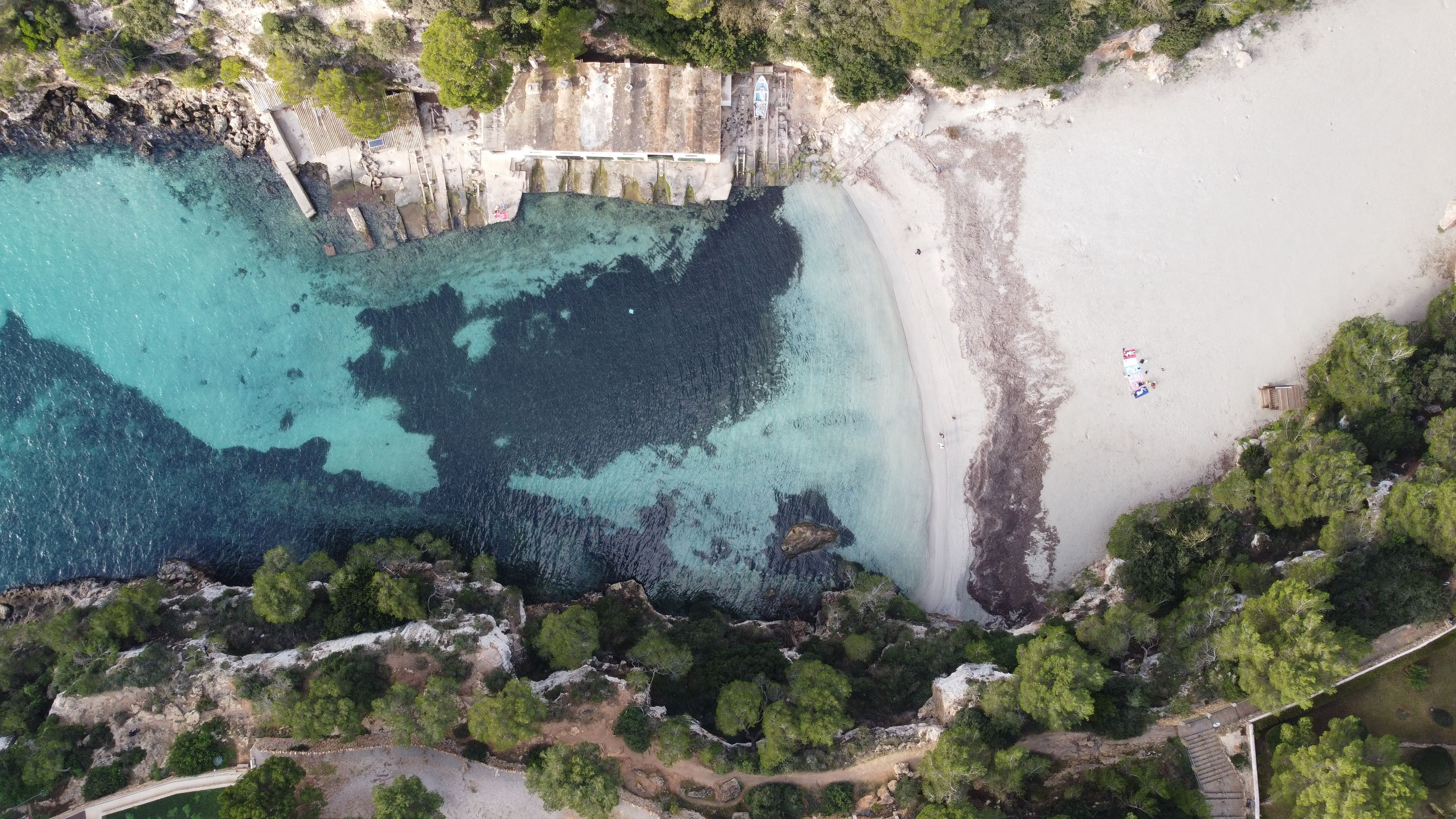
Cala Varques
Mallorca’s limestone cove where late-day light turns the beach into brushed metal.
Cala Varques matters because it still feels earned—no road drops you at the sand, no promenade edits the shoreline. You arrive on foot to a crescent of pale limestone and pine shade, and the sea is loud enough to reset your breathing.
Most people come for the turquoise and leave after lunch. They miss the way the cove changes after 4 PM, when the sun slips low enough to rake across the beach and the sand stops looking white—it starts reading as bronze, like a thin skin of metal laid over stone.
Stay into the late afternoon and the place stops being a postcard and becomes a mood. You feel your day slow down; conversations soften; even the water sounds thicker, as if the cove is closing its doors for the evening.
The Bronze Hour Starts When the Sun Leaves the Water
Cala Varques is photographed as a midday color study—white sand, electric sea, harsh contrast. But the cove’s real performance begins when the sun is no longer above you. After 4 PM (earlier in spring, later in peak summer), the light comes in low from the west and skims the beach at a shallow angle. That’s when the sand stops acting like a mirror and starts acting like a surface. Tiny grains cast tiny shadows; the beach develops depth. What looked chalky at noon turns warm and metallic—bronze with hints of peach—especially along the damp band near the waterline where the grains darken and pack tighter. This isn’t just pretty; it changes how you move. You stop chasing the “best spot” and start noticing transitions: dry to wet, shade to sun, rock to sand. The cliffs go from flat beige to sculpted limestone, and the sea becomes readable—clear windows over rock shelves near the edges, a deeper blue channel in the center, and a darker seam where the bottom drops away. If you stay, the crowd thins without drama. You hear the cove again: a paddleboard creak, a gull’s click, the soft percussion of wavelets against stone. Cala Varques becomes less about swimming and more about witnessing a coastline changing minute by minute.
You step off the dusty track and the temperature drops a degree under the pines, resin-sweet and dry. The cove opens suddenly—limestone shoulders, a pocket of sand, and water so clear it looks like air with color added. Midday swimmers flicker over the seabed, their shadows sliding across rippled rock. You walk the edge where the sand is cool and compact, then warm and loose, then wet enough to darken your footprints to a brief brown stain. After 4 PM, the light changes its angle and everything gains texture: the cliff face shows its cuts and cavities; the sea turns from bright turquoise to layered glass—mint near shore, then cobalt where it drops. The sand stops reflecting and starts glowing, bronze and honey at once, like it’s been polished by thousands of tides. You sit with salt drying on your skin, listening to small waves tap stone, and the cove feels less like a beach and more like a room with perfect acoustics.
The Water
Near shore, the water is a transparent mint laid over pale rock, with sandy shallows turning it milky-turquoise. A few strokes out, it shifts to saturated aquamarine, then a clean cobalt where the seabed drops and the cove deepens.
The Cliffs
The cove is carved into Mallorca’s limestone coast—pocked, layered, and slightly jagged, with pockets of rock shelves that make the shallows feel like a natural pool. Aleppo pines and low scrub lean toward the salt air, softening the stark geometry of the cliffs.
The Light
Late afternoon is the signature: low sun brings out the limestone’s grooves and turns the sand bronze along the wet edge. In early evening, the water loses its glare and becomes more transparent, letting you see the seabed’s textures and color bands.
Best Angles
Pine-shade edge above the main sand
You frame the cove with dark green needles and let the water read as layered glass below.
Right-hand limestone shelf (facing the sea)
A lower, more intimate perspective—rock foreground, swimmers reduced to scale, and the beach curving away.
Waterline at the bronze band
The wet-sand strip catches the metal-like glow; footprints and foam lines add texture and story.
Center of the cove, chest-deep facing back to shore
For photographers: cliffs and pines stack behind the sand, and the beach reads like a crescent set into stone.
Far-left rocks near the quieter entry to the water
You get a calmer, less crowded corner with reflective water and a softer soundscape.
Bring more water than you think you need—there are no services at the beach, and the walk back can feel hotter than the walk in.
Wear closed-toe shoes for the approach; flip-flops are fine once you’re on the sand and rock shelves.
Pack a small dry bag: the best swimming is along the rocky edges where splashes and slippery exits are common.
If you plan to stay late, take a light layer—the breeze can rise as the sun drops, even in summer.
Leave no trace: take all rubbish out, and avoid stepping on fragile scrub at the cliff edges.
Handpicked Stays & Tables
Places chosen for beauty and intention, not algorithms. Each one is worth your time.

Boutique Hotel Can Cera
Palma Old Town
A polished, quiet base in a historic townhouse—stone arches, soft lighting, and a sense of retreat once you close the door. Ideal if you want Cala Varques as a day trip with Palma’s dinners and galleries at night.

Son Penya Petit Hotel & Spa
Near Manacor (Mallorca’s east)
A rural finca stay that suits early starts and late returns—countryside calm, spa downtime, and an easy drive to the east-coast coves. It feels private without being remote.

Sa Parada
Porto Cristo
A reliable post-beach stop where seafood and Mallorcan plates come without theater. You sit close to the harbor air, still tasting salt on your lips.

Roland Restaurant
Porto Cristo
A more considered room for when you want your evening to feel deliberate—seasonal cooking, careful service, and a pace that matches the late light you just watched fade.
Leave when the sand cools back toward pale stone, and you’ll understand Cala Varques as a time of day, not just a location.