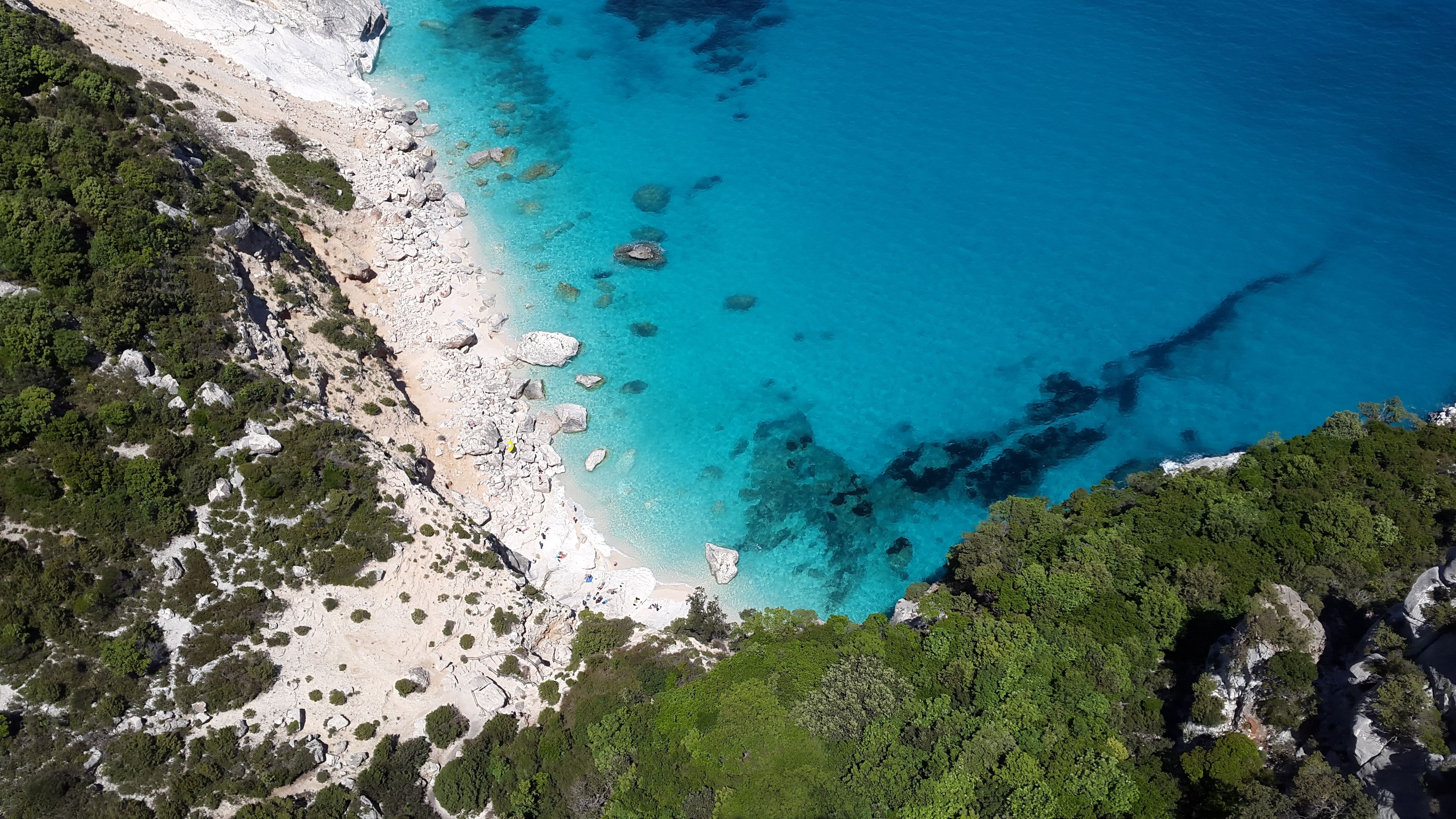
Cala Goloritzé
On a Maestrale day, Sardinia’s famous white pebble cove turns moody, metallic, and unforgettable.
Cala Goloritzé matters because it isn’t just beautiful—it’s a lesson in scale. A limestone amphitheater drops to a sliver of shoreline, and the sea arrives as a living surface, changing by the hour. You come for the iconic needle of rock and the shock of clear water… then you realize the real drama is in the air.
Most people miss what the Maestrale does here. When that northwesterly wind reaches the Gulf of Orosei, it doesn’t simply ruffle the bay—it sculpts it. The usual Caribbean-like turquoise tightens into a colder spectrum, as if someone turns down the saturation and increases the clarity.
The payoff is emotional, not just visual. You feel the cove sharpen—sounds crisp, edges defined, the beach suddenly quieter in your body. It’s the same place, but it asks something different of you: attention, stillness, and a little humility.
The Wind Is the Curator Here
Cala Goloritzé is often sold as a static icon: white pebbles, a limestone needle, unreal clarity. But the cove is less a postcard than a stage, and the Maestrale is the director. On calmer days, the water reads as luminous turquoise—friendly, almost decorative. When the Maestrale arrives, it edits the scene. The surface tightens into a fine-grained texture, and that texture changes everything you perceive: reflections sharpen, shadows deepen, and the shallows stop looking tropical and start looking mineral. You notice it first along the shoreline. The foam doesn’t sprawl; it draws thin, disciplined lines over the stones. The water becomes “harder” in color—steel-blue with a green undertone, like oxidized metal, then suddenly transparent where a gust flattens a patch. The cove’s limestone walls seem whiter against this colder sea, and the pinnacle looks less romantic, more geological… a reminder that this place is the result of collapse, erosion, and time. The surprising part is what it does to you. The wind strips away beach languor. You sit differently, you watch longer. Even the crowd behaves in a quieter register—fewer voices competing with the gusts, more people simply looking. If you time your visit for a Maestrale day, Cala Goloritzé stops being “pretty” and becomes exact, austere, and strangely intimate.
You arrive on foot with dust on your calves and salt already in the air, the path tilting you toward a sudden opening of light. The limestone walls hold the heat, but the Maestrale threads through like a cool blade, bringing a faint scent of wild juniper and dry herbs from the plateau above. Below, the beach is not sand but white pebbles—clean, loud under your shoes, then softening into a hush when you stop. The famous arch and the 143-meter pinnacle stand like punctuation marks against the sky, but your eyes keep returning to the water: it isn’t “blue,” it’s layered—steel at the surface, ink in the deeper pocket, then a bright, glassy band where the wave thins over pale stones. Wind skates across the cove, combing the sea into tight ripples that catch the sun and throw it back in quick flashes. You wade in and the temperature feels honest. Everything here is precise—lines, textures, silence between gusts—and you understand why people call it protected, not just photographed.
The Water
In Maestrale conditions the bay shifts from bright turquoise to a disciplined steel-blue, with graphite tones in the deeper pocket. Over the white pebbles, the shallows flash pale aquamarine for a second, then snap back to clear, cold color as ripples tighten the surface.
The Cliffs
This is limestone country—sheer pale walls, a freestanding pinnacle, and a natural arch framing a narrow strip of shore. The cove feels like a carved basin, where white stone amplifies light and makes the sea’s darker mood look even more deliberate.
The Light
Late morning gives you clean illumination without turning the water into glare, especially when the wind textures the surface. Late afternoon is best for contrast: warmer light on the cliffs, cooler tones in the bay, and long shadows that reveal the cove’s depth.
Best Angles
Belvedere above Cala Goloritzé (on the descent trail)
It delivers the full geometry—pinnacle, arch, and the bay’s color gradient—before you get pulled into beach-level details.
Left side of the beach facing outward (near the limestone wall)
You get a stronger sense of enclosure and scale, with the cliffs rising like a pale backdrop behind the steel-blue water.
Waterline looking back toward the pebble shore
The Maestrale’s ripples turn the shallows into shifting glass; the white stones glow and the beach reads almost luminous.
Near the natural arch (keeping a respectful distance)
For photographers, the arch gives structure and shadow—perfect for framing the sea’s darker tone and the cliff’s bright edge.
The far right edge of the beach where pebbles meet calmer shallows
It’s the intimate angle: smaller sounds, clearer water, and close-up textures—pebble whites, foam lines, wind-driven shimmer.
Bring sturdy shoes for the hike—those white pebbles roll underfoot and the descent can feel deceptively easy on the way down.
Carry more water than you think you need; there are no services on the beach and the limestone reflects heat back at you.
Pack a thin wind layer even in summer—the Maestrale can make the cove feel suddenly cooler once you’re wet.
If you’re sensitive to glare, bring polarized sunglasses; they cut the surface shimmer and reveal the bay’s darker bands and underwater stones.
Respect the protected status: take everything out, avoid climbing on sensitive areas, and keep a calm footprint on a place that already carries a lot of attention.
Handpicked Stays & Tables
Places chosen for beauty and intention, not algorithms. Each one is worth your time.

Arbatax Park Resort & Spa
Arbatax (Ogliastra coast)
A polished base with spa facilities and easy access to boat excursions along the Gulf of Orosei. Choose it if you want comfort and logistics handled, then spend your days in wilder settings.

Hotel Santa Maria
Santa Maria Navarrese
A relaxed coastal stay with the right proximity for early starts toward Baunei’s trails. It suits travelers who want simplicity, sea air, and a practical launch point without losing Sardinia’s slower rhythm.

MeC Puddu’s
Santa Maria Navarrese
A dependable stop for Sardinian flavors after a hike—think hearty plates and a setting that feels lived-in rather than staged. Come hungry and order with the confidence of someone who’s earned dinner.

Ristorante Su Murale
Baunei
A village table where the food matches the landscape—direct, local, and satisfying. It’s ideal when you want to trade beach brightness for mountain-town calm and a slower meal.
When the Maestrale lays its hand on Cala Goloritzé, the cove stops performing for you—and starts telling the truth.