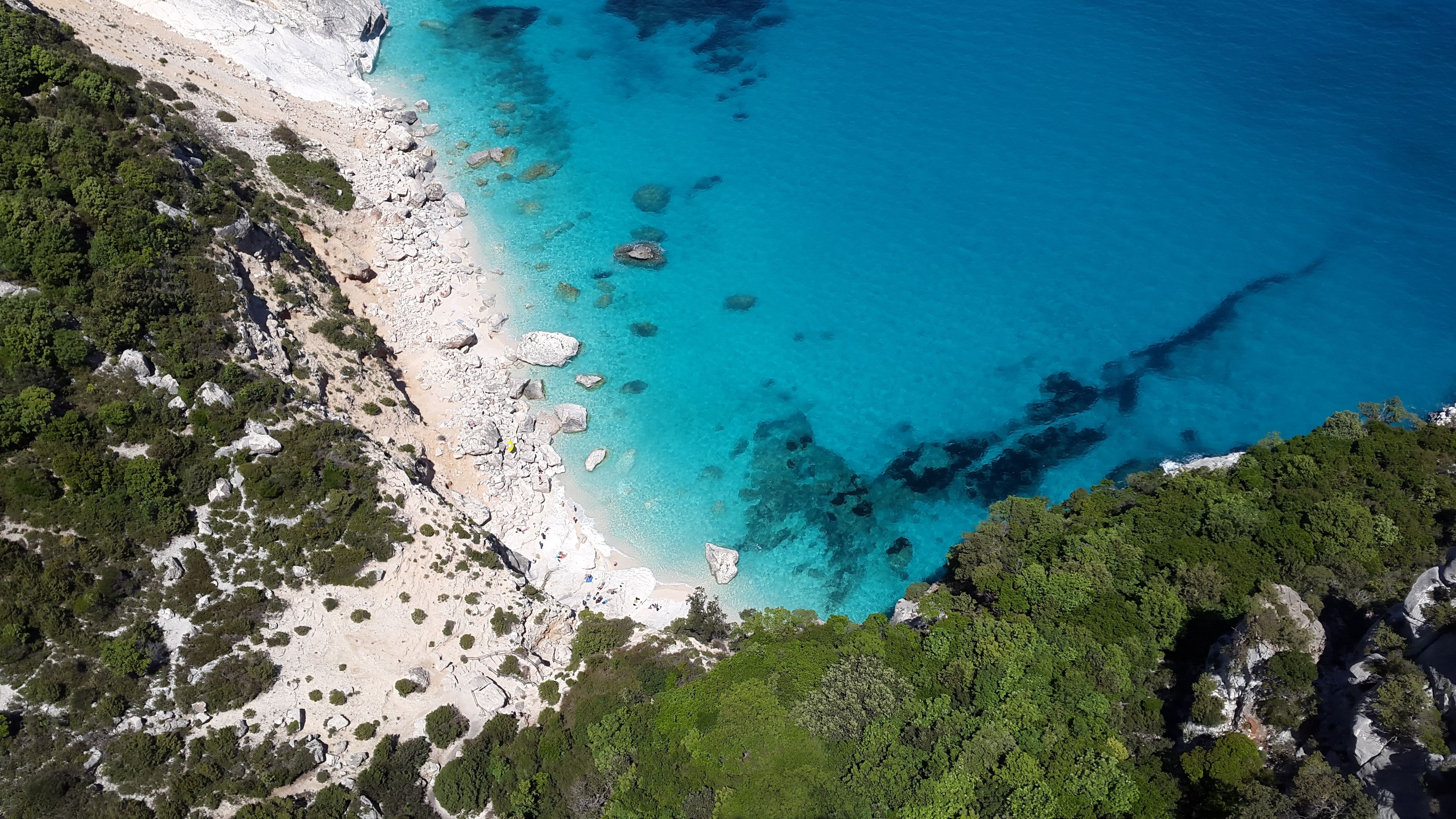
Cala Goloritzé
Cala Goloritzé isn’t a beach—it’s a threshold, and the real destination is where the waterline teaches you to slow down.
You arrive to a cove that looks impossibly composed—white limestone, a needle of rock, water so clear it feels like missing a layer of reality. Cala Goloritzé matters because it’s one of the rare Mediterranean icons that still requires your body to participate. You earn it in heat and dust, and that changes how you look.
Most people stop at the obvious: the spire, the headline shade of turquoise, the first flat patch of pebbles. What they miss is that Cala Goloritzé is not a single view but a moving line—the waterline itself, constantly redrawing the beach and rearranging where calm begins.
When you follow that line, the place stops being a backdrop and becomes a conversation: salt on your lips, stone underfoot, your breath syncing with small waves. The payoff is quiet pride and a kind of attention you don’t get from easier shores.
The Cove’s True Center Is a Moving Line
Cala Goloritzé is famous for a single frame: the Aguglia rising behind a bright wedge of water. The problem is that the photograph teaches you to stand still. The cove doesn’t reward stillness—it rewards a slow orbit. Start at the first open patch of pebbles and you’ll feel the beach as a public room: towels pinned close, chatter bouncing off rock. Now do the small, almost counterintuitive thing—follow the waterline. Walk where the pebbles are wet and slightly heavier, where the wave leaves a clean edge like a pencil line. The sound becomes metronomic. The crowd thins without drama. As you move, the limestone walls change character. One side holds shade longer, turning the water in front of it into a deep bottle-green; the other side reflects sun back into the shallows, making the seabed look lit from within. That contrast is the real composition of Cala Goloritzé. The “true center” is the point where your attention stops jumping between landmarks and starts reading texture: the slickness of stone under a thin sheet of water, the way pebbles roll under a receding wave, the sudden drop where the blue turns serious. It’s not a secret spot—it’s a way of arriving.
You start in scrubby perfume—juniper, warm thyme, sun-struck rock—and the path drops through Ogliastra’s limestone like a long exhale. Your calves warm as the trail tilts, dusting your shoes with pale grit. Then the cove appears in fragments: first a slice of electric water between cliffs, then the Aguglia, a stone needle catching light like a wick. Down on the beach, the sound changes—pebbles clacking softly as the shore breathes in and out. You step into water that is cold at the ankles, startlingly clean, and watch your toes sharpen into focus through the blue. Boats idle beyond the swim zone, their voices thinning into the open sea. You walk the edge where wet stones darken to graphite, your shadow bending across the shallows. Each few meters, the color shifts—mint to cobalt to a glassy, almost silver skin—and the cove’s center reveals itself not as a point, but as a pace you finally match.
The Water
The water runs in layers: pale aqua at the lip of the shore, then a minty transparency that shows every rounded stone, then a hard sapphire where the seabed falls away. In calm moments, the surface takes on a glass sheen that mirrors the cliff like polished metal.
The Cliffs
This is Supramonte limestone—white, porous, and dramatic, carved into ledges and vertical faces that catch sun like a reflector. The Aguglia di Goloritzé rises like a mineral exclamation, while the cove itself is a small amphitheater where sound and light rebound.
The Light
Late morning gives you the cleanest color separation in the shallows, especially when the sun sits high enough to penetrate the water without glare. Late afternoon softens the limestone to cream and pulls longer shadows across the beach, making textures—pebbles, striations, salt stains—feel tactile.
Best Angles
Belvedere viewpoint above Cala Goloritzé
This is the classic reveal, but it works because you see the geometry: the wedge of beach, the spire, and the gradient of blues in one glance.
Waterline walk toward the right-hand cliff (facing the sea)
The cliff throws deeper tones into the water, giving you richer contrast and fewer people in frame.
Shallow wade just inside the swim zone
From knee-deep water, the pebbles become a luminous foreground and the cove reads as a bowl of light rather than a crowded beach.
Low angle from the darker wet pebbles
Shoot along the wet-stone edge to turn the waterline into a leading line; it adds depth and a sense of motion.
Under-cliff shade pocket in the afternoon
This intimate angle is about texture and quiet: cool rock, hushed sound, and a more contemplative palette.
Bring proper hiking shoes or grippy trail sandals—the path is rocky and loose in places, and the return climb is demanding.
Carry more water than you think you need; there’s no reliable water source at the beach and the hike back is exposed.
Pack a small shade solution (light umbrella or compact sun shelter) since natural shade is limited and shifts quickly.
Use reef-safe sunscreen and consider a rash guard—the sun reflection off limestone and water is intense.
Bring a dry bag and a pair of swim goggles; the shoreline stones are beautiful, and the underwater visibility is part of the experience.
Handpicked Stays & Tables
Places chosen for beauty and intention, not algorithms. Each one is worth your time.

Su Gologone Experience Hotel
Oliena (inland, toward Supramonte)
An art-filled, design-forward base that feels deeply Sardinian, with gardens scented by herbs and a serious kitchen. It’s not next door to the cove, but it pairs the coast with an inland, cultural counterpoint.

Hotel Goloritzé
Santa Maria Navarrese
A polished, practical coastal stay with easy access to the Baunei coast and a calmer seaside rhythm at night. It’s ideal if you want morning trail time and an evening promenade without complexity.

Ristorante Su Gologone
Oliena
A destination meal anchored in Sardinian tradition—expect handmade pastas, local cheeses, and dishes that taste of smoke, herbs, and wheat. Come hungry and let the pace slow down.

MeC Puddu’s
Santa Maria Navarrese
A reliable, well-loved stop for seafood and regional staples after a day on the coast. The mood is relaxed, the portions generous, and the evening air carries salt from the marina.
When you leave, it’s not the spire you replay—it’s the quiet discipline of that waterline, teaching you where to stand and when to move.