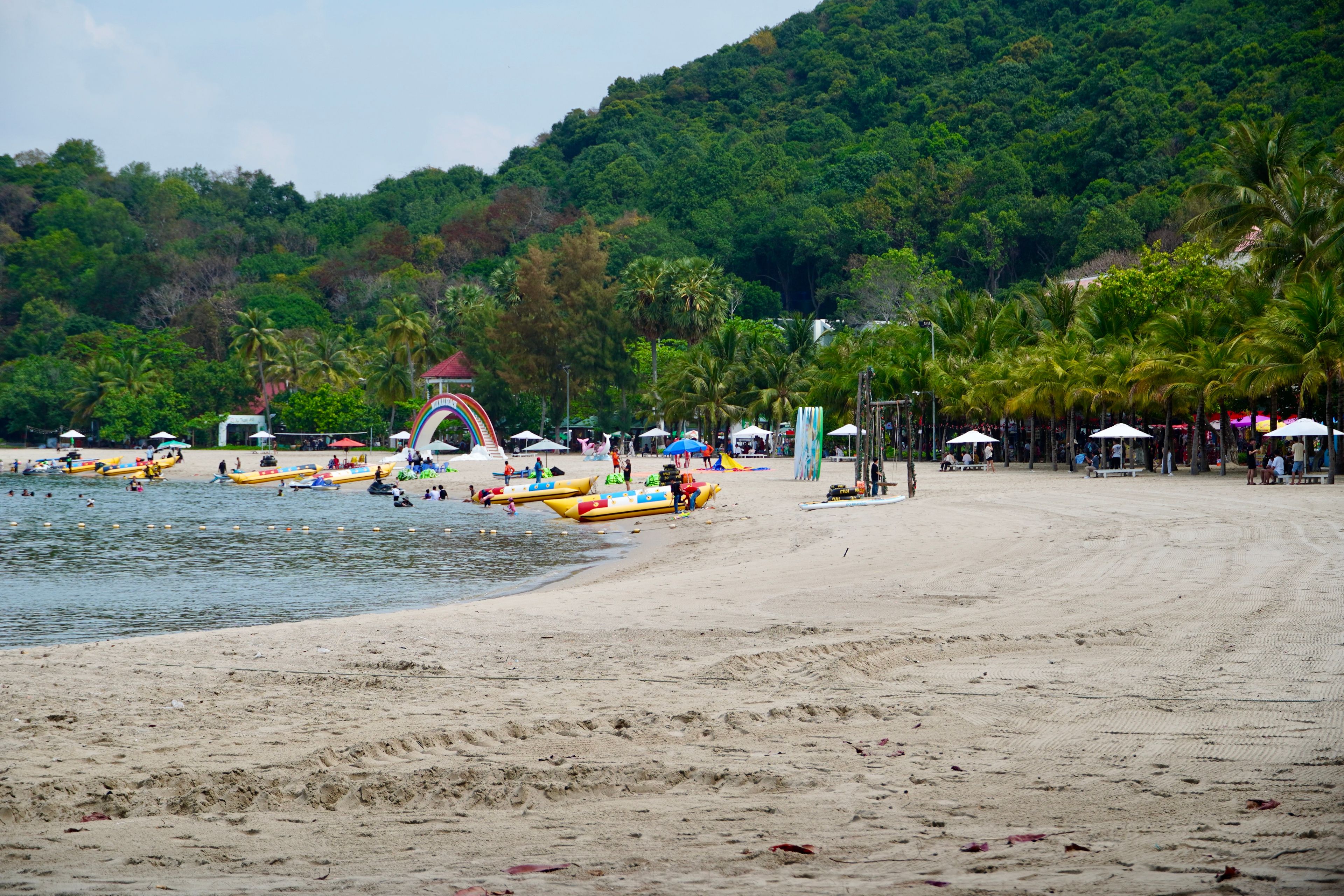
Banana Beach
A single ribbon of shade turns Banana Beach from a stop into a place you actually stay.
Banana Beach on Phuket’s northwest edge isn’t about spectacle from afar—it’s about how your body relaxes the moment the sand cools underfoot and the noise of the road drops away. You come here for the sea, yes, but you remember it for the way the beach lets you settle into the day without trying to entertain you.
Most people walk straight through the most important feature: a long, slightly tilted line of casuarina trees that stitches the back of the sand together. It’s not “a few trees.” It’s a living canopy that changes the entire temperature, sound, and pace of the beach.
Once you step into that shade, the beach stops being a photo and becomes a small, private ritual—salt on your skin, cool needles under your feet, and time stretching out in a way Phuket rarely allows.
The Casuarina Shade Line—Banana Beach’s Real Boundary
Banana Beach looks simple from the sand: swim, sun, repeat. But its real design is drawn by the casuarinas—the tall, fine-needled trees that form a continuous shaded seam along the back edge of the beach. People treat them like background landscaping and keep marching toward the brightest patch of sand, as if comfort is something you earn by enduring heat. Step under the canopy and you understand the beach’s intended rhythm. Casuarinas don’t throw shade like palms. Their canopy is higher, softer, and more even, turning harsh tropical glare into a kind of coastal chiaroscuro. The light becomes readable. The water’s color looks truer because your eyes aren’t squinting. Skin stops feeling “on display.” You hear the surf more clearly because the trees absorb and sift the beach’s small noises—cooler air, quieter mind. The line also functions like a natural promenade. Walk it slowly and you get alternating frames of the bay through trunks and branches, like a sequence of private viewing windows. It’s where you find the best resting spots without feeling you’re occupying the center of the scene. If you’re traveling with someone, this is where conversation gets easier—less performance, more presence. Banana Beach isn’t asking you to conquer it. The shade line is the invitation most people miss.
You arrive with bright light still clinging to your eyes from the road, then the path opens and the beach reads like a slow reveal—pale sand, a clean crescent of water, a low hush of waves folding onto shore. The first steps are hot and fast, your shoulders instinctively tightening against the sun. Then you notice it: the casuarina shade line running behind the beach like a backstage corridor. You move toward it and the temperature drops a few degrees. The air smells faintly resinous, like sun-warmed wood, and the ground is softly padded with needles that shift under your soles. Through the branches, the sea is cut into panels—turquoise, then deeper green, then a quick flash of silver where the surface catches light. The trees filter sound, too. Conversations blur. The longtail engines out on the water become distant punctuation. You sit, and the beach becomes less about what you do and more about what you stop doing.
The Water
The water shifts from pale jade in the shallows to a clearer turquoise farther out, with occasional darker bands where depth drops suddenly. On calm days, the surface takes on a glassy, green-blue sheen that makes the bay feel contained and intimate rather than open-ocean vast.
The Cliffs
The beach sits in a small, protected cove, edged by low rocky headlands and dense coastal vegetation. Behind the sand, the casuarina belt acts like a natural terrace—an elevated, textured backdrop that keeps the scene feeling composed.
The Light
Late afternoon brings the most flattering contrast: softer highlights on the water and longer, more graphic shadows from the trees. Mid-morning can be bright and beautiful, but the glare is sharper—use the shade line to keep the colors from washing out.
Best Angles
Casuarina Shade Walk
You get framed sea views through the trunks—layered, editorial, and naturally cinematic.
North Headland Rocks
A slightly higher angle compresses the bay into a clean crescent and emphasizes water color gradients.
Waterline at Mid-Beach
Low angle makes the shallows glow and catches gentle reflections, especially on calmer days.
South-End Tree Break
A natural gap in the canopy gives you a balanced composition: shade foreground, bright bay beyond.
Under-Canopy Seating Pockets
The intimate angle—close textures of needles, bark, and filtered light with the sea softly present behind.
Bring reef-safe sunscreen, but plan to use the casuarina shade line as your main sun protection between swims.
Wear sandals with a bit of grip for the access path and any rocks at the ends of the beach.
If the sea looks choppy, don’t force a swim—use the shade line for a slower beach day and stay close to shore.
Carry small cash for drinks/snacks if vendors are around, and don’t expect luxury facilities on the sand.
Pack a light towel or sarong to sit on under the trees—the needle carpet is soft but can cling to damp skin.
Handpicked Stays & Tables
Places chosen for beauty and intention, not algorithms. Each one is worth your time.

Anantara Layan Phuket Resort
Layan Beach
A polished, low-key luxury base near Banana Beach with a sense of space and calm. Villas and pools lean into privacy, making it easy to keep your beach days unhurried.

The Pavilions Phuket
Layan / Choeng Thale hills
An adults-oriented retreat set above the coastline, where the breeze and viewpoints do the work. It’s ideal if you want quiet mornings, strong design, and easy access to the northwest beaches.

PRU
Trisara area (near Naithon)
A serious dining destination focused on local sourcing and refined Thai flavors. Go for a long, intentional meal when you want the island to feel less busy and more considered.

Age Restaurant
Layan
A stylish, dependable spot for seafood and Thai classics with a slightly dressier mood. It works well after a late-afternoon beach session when you want comfort without noise.
On Banana Beach, the real luxury isn’t the view—it’s the moment you step into the casuarina shade and stop rushing.