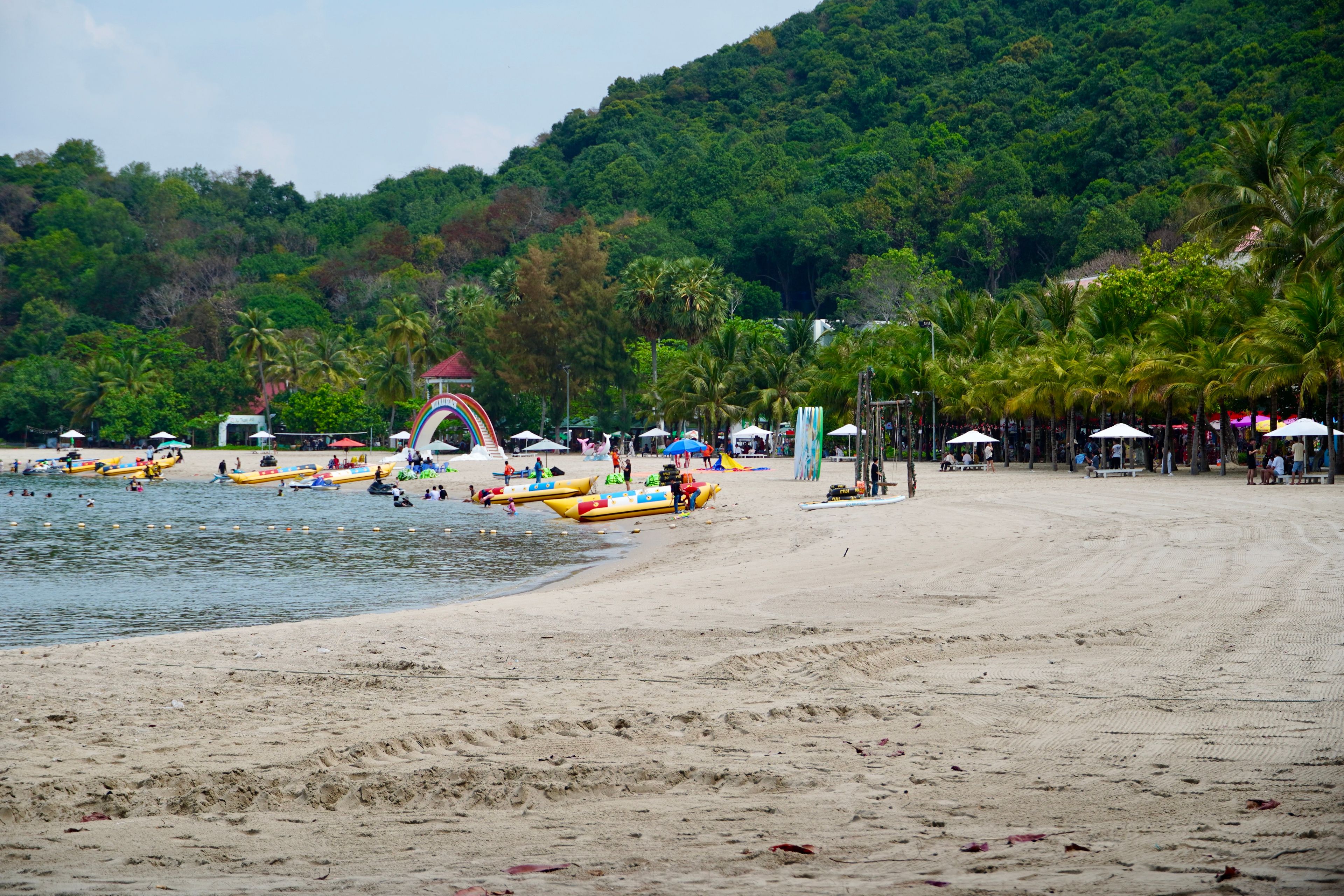
Banana Beach
In monsoon season, Banana Beach trades turquoise for graphite—and the mood becomes the main attraction.
Banana Beach matters because it proves Thailand’s coastline isn’t only a postcard at noon—it’s a living shoreline that changes character when the weather turns and the Andaman lowers its voice.
Most people come hunting for clear water and leave the moment clouds arrive. They miss how the headlands, rain-slick granite, and darkened sea compress the scenery into something more cinematic—less beach day, more atmosphere.
The payoff is quiet intimacy. You feel the coast as texture and sound: warm rain on your shoulders, salt in the air, and that rare sense of having a famous island moment entirely to yourself.
The beach isn’t the subject—the weather is
Banana Beach is often described as a color story: white sand, green fringe, blue water. In monsoon light, it becomes a study in tone and contrast, and that is when it quietly outperforms the better-known beaches. The clouds act like a giant softbox, flattening harsh shadows and making the details you usually ignore suddenly legible—the grain of the sand, the brushstrokes of lichen on rock, the way a palm trunk twists like rope. What most people miss is how the cove’s shape holds mood. The headlands on both ends block some of the wind, so the water can look restless offshore but comparatively controlled near the sand, with small, fast sets that leave a reflective sheen at the tide line. That mirror effect is the monsoon’s gift: a thin film of water that doubles the sky and turns footprints into temporary calligraphy. If you’re expecting a swim day, you’ll be disappointed. If you’re willing to treat the beach like a scene—watching rain bands move across the horizon, waiting for a brief brightening when the cloud ceiling lifts—you get something rarer in Phuket: a sense of scale and solitude. The Andaman turns slate, and suddenly you’re not consuming beauty. You’re inside it.
You arrive to a sky the color of pewter, the kind that makes the greens on the hillside look freshly painted. The path drops through palms and pandanus, damp underfoot, and the air carries a clean, peppery scent of wet leaves. When the beach opens out, the Andaman isn’t turquoise today—it’s slate, rippled with wind, edged by foam that reads almost white against the dark water. Longtail boats don’t idle here now; instead, you hear the small percussion of rain on broad leaves and the steady inhale of shorebreak. The sand is compacted and cool, scattered with fallen fronds and the occasional glossy shell that seems brighter in the muted light. Out on the rocks at either end, granite shines as if varnished, and every tide pool becomes a little mirror catching the moving sky. You walk slower without meaning to, watching the rain come and go in veils, and noticing how the whole cove feels closer—like the landscape has leaned in to speak.
The Water
In monsoon weather the water shifts from green-blue to deep slate, sometimes edged with olive near the shallows. Whitecaps draw bright seams across the surface, and the foam line looks crisp against the darker sea.
The Cliffs
Banana Beach sits in a small cove backed by steep, jungle-covered slopes that drip after rain. Granite boulders and low headlands bookend the sand, creating tide pools and reflective rock faces when the sea pulls back.
The Light
The beach looks most dimensional under overcast skies just after a rain shower, when the sand darkens and the rocks gleam. If the cloud cover breaks for a few minutes, you get a silvered horizon and saturated greens without the harsh midday glare.
Best Angles
North headland rocks
You get the full sweep of the cove with slate water in the foreground and the jungle rising behind—best for showing scale in monsoon conditions.
South end tide pools
The tide pools turn into small mirrors that catch moving cloud patterns and palm silhouettes, especially right after a shower.
Mid-beach at the wet-sand line
Shoot low along the reflective sand to double the sky; the monsoon sheen makes simple compositions feel deliberate.
Tree line edge
From under the palms you can frame the sea through dripping leaves—a natural vignette that emphasizes the weather without showing umbrellas or crowds.
Boulder gap near the shoreline
Step into the narrow spaces between rocks for an intimate view: texture, beads of water on stone, and the sound of surf funneling through.
Treat this as a look-and-walk beach in monsoon months; if red flags are up, don’t swim—currents can be strong.
Bring sandals or trail shoes with traction; the access path and rocks get slick after rain.
Pack a light rain shell and a dry bag for phone/camera—showers arrive fast and sideways.
Mind the tide if you plan to explore the boulders; some tide pools and rock passages disappear quickly.
Carry water and a small snack; services are limited compared with Phuket’s main beaches, especially in low season.
Handpicked Stays & Tables
Places chosen for beauty and intention, not algorithms. Each one is worth your time.

Anantara Layan Phuket Resort
Layan Beach (near Bang Tao)
A polished, low-slung resort where the design leans calm rather than flashy, and the bay stays relatively serene. It’s well-placed for reaching Banana Beach while keeping you away from Phuket’s louder nightlife.

Trisara
Near Nai Thon
Private villas set above the sea with a sense of distance from the rest of the island. On stormy days, the view becomes the experience—grey water, dark headlands, and that slow, hypnotic movement of weather offshore.

PRU
Trisara area, near Nai Thon
A serious, ingredient-led dining room where the pacing feels as measured as the monsoon outside. Come for a long dinner after a wet beach walk, when you want warmth, polish, and quiet.

Suay Cherngtalay
Choeng Thale
A stylish local favorite balancing Thai flavors with a modern, well-edited menu. It’s an easy anchor for the area when the weather keeps you off the sand but you still want a Phuket night that feels intentional.
When the Andaman turns slate, Banana Beach stops performing for the camera and starts telling the truth about the coast.