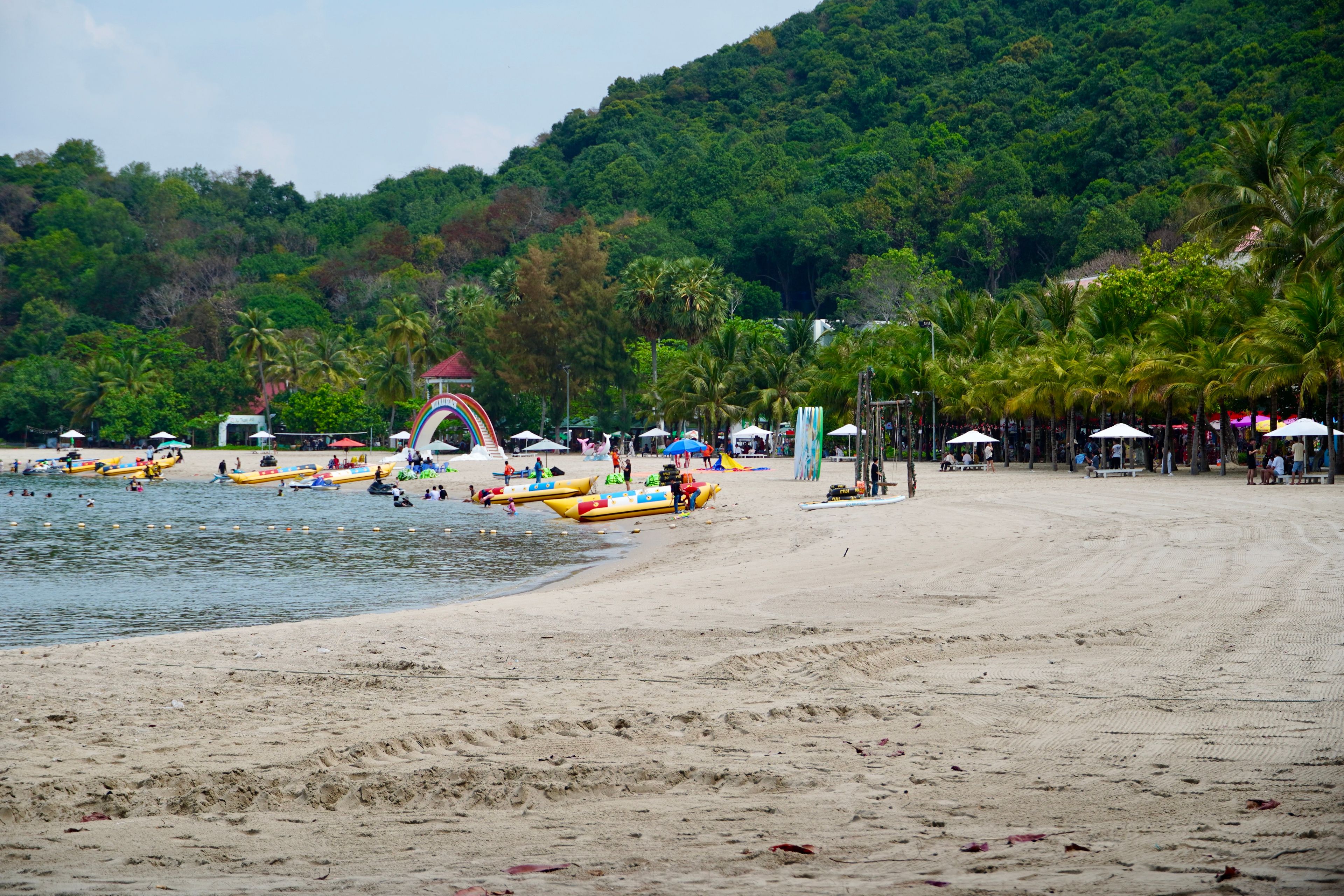
Banana Beach
Skip the road noise—arrive by longtail and feel Banana Beach reset your senses in minutes.
Banana Beach sits on Phuket’s northwest edge like a soft pause between bigger, louder names—a short arc of sand backed by casuarina trees and warm, resin-scented shade. Coming by longtail from Bang Tao turns it into a coastal arrival, not a roadside stop, and that shift changes how you inhabit the place.
Most people miss that the beach’s mood is dictated less by the sand than by the approach: the moment the boat noses into shallow water, you hear the shoreline before you see it—small waves tapping rock, a low chorus of cicadas, the slap of a longtail prop lifting clear.
When you arrive this way, you don’t feel like you’ve come to “see” Banana Beach. You feel like you’ve been delivered into it—salt on your skin, the day slowed down, your attention tuned to color and sound instead of signage.
The beach is quieter from the sea—because you arrive already detached
Banana Beach is often described like a checklist: a small cove, pretty water, easy swim. True, but the real distinction is psychological. If you come by road, you arrive with Phuket still ringing in your ears—engine heat, parking logistics, the subtle rush to “get there” before someone else. You step down onto sand already carrying the tempo of the island. From Bang Tao by longtail, you arrive with a different internal soundtrack. The sea does a gentle kind of work on you: it strips away the need to optimize. You watch the coastline rather than a screen. You feel distance in your body—the vibration of the hull, the salt drying at your wrists, the steady wind that makes you blink slower. By the time the cove comes into view, you’re already in a coastal mindset: observant, unhurried, receptive. That matters here because Banana Beach is a place of small-scale pleasures. The best details are intimate: the way casuarina needles soften footfalls near the back of the beach, the faint scent of sun-warmed pine, the sudden coolness when a cloud passes over the headland. Arriving by sea makes you notice those things first, not last. And once you do, the beach stops being “another stop” and becomes a scene you’re actually inside.
You leave Bang Tao with the shoreline sliding past at water level—resort geometry dissolving into headlands and darker green. The longtail rattles and then settles into its steady percussion, a sound that makes the sea feel closer, more physical. Spray catches the sun and lands on your forearms like warm needles. As you round the last point, Banana Beach appears not as a grand reveal but as a quiet, pale curve held between granite and trees. The water shifts from open-sea blue to a clear, bottle-glass green, and you can see the bottom changing texture—sand to scattered stones to sand again. The driver eases in, lifting the prop with a practiced motion; suddenly the noise drops and you hear the beach breathing. You step into ankle-deep water, the sand cool where it’s been shaded, and walk the last few meters with your bag held high. Behind you, the boat drifts, bow tethered, as if it’s waiting for your pace to catch up. In front, the shade line is sharp and inviting, and the day feels newly edited.
The Water
In calm weather the water reads as pale jade at the shoreline, deepening to a clear aquamarine a few strokes out. When the sun is high, the shallows turn almost glassy—you can track ripples across the sand like moving lines of light.
The Cliffs
The cove is framed by low granite and a belt of casuarina trees that filters light into fine, trembling shade. Offshore, scattered rocks break the surface and give the water its shifting tones—dark accents against translucent green.
The Light
Late morning brings the cleanest water color and the most transparency in the shallows. Golden hour is gentler and more editorial: warmer sand, longer shadows, and a softer, brushed-satin sea as the wind often calms again.
Best Angles
Longtail approach line (from the east)
You get the full cove in one frame—sand arc, tree line, and the water’s gradient unfolding toward you.
North end rocks at water level
Shoot low with the granite in the foreground to make the beach feel intimate and textural, not just scenic.
Shade line under the casuarinas
The contrast is the story here—bright sand beyond, cool green shade behind, with needles and roots adding detail.
Mid-cove wade-out (knee depth)
For photographers: place the horizon high and let the rippled sand and water clarity carry the image.
Tethered-boat portrait zone
The most personal angle—a longtail bow floating just off the sand, implying arrival and escape in the same shot.
Bring cash for the longtail negotiation and any beach services; card payment is not something you should rely on.
Wear sandals you can get wet—you may need to step into shallow water to disembark and again to reboard.
Pack a dry bag or at least a waterproof pouch for phone and wallet; spray and wake can surprise you even on calm days.
If you’re sensitive to sun, bring your own shade strategy (hat, lightweight cover-up)—the shade line shifts fast as the sun moves.
Ask your boatman what the pickup plan is before you step off: time, exact spot, and what to do if conditions change.
Handpicked Stays & Tables
Places chosen for beauty and intention, not algorithms. Each one is worth your time.

Twinpalms Phuket
Surin (short drive from Bang Tao)
Polished, design-forward, and quietly indulgent, with a pool scene that feels curated rather than chaotic. It’s well placed for Bang Tao longtail departures while keeping you in a more refined pocket of Phuket’s west coast.

SAii Laguna Phuket
Bang Tao Beach (Laguna Phuket)
A beachfront base that makes early departures simple and sunset returns feel effortless. Rooms lean contemporary coastal, and the lagoon setting gives you a calmer rhythm than staying further south.

Ta Khai
Rosewood Phuket (Patong area, destination dining)
Seafood-led southern Thai cooking in a setting that feels elemental—wood, fire, and herbs in the air. Go when you want Phuket flavors executed with restraint and real attention to ingredients.

The Farmer and The Fisherman
Bang Tao (Boat Avenue area)
A convenient, well-run option after the boat: reliable seafood, Thai classics, and a lively but not rowdy dining room. It’s the kind of place that makes logistics easy without feeling like a compromise.
When you let the sea deliver you to Banana Beach, you don’t just arrive—you downshift into the scale of the cove.