Bamboo Island
On Bamboo Island, the shoreline doesn’t sparkle—it glazes, like sugar cooled into glass.
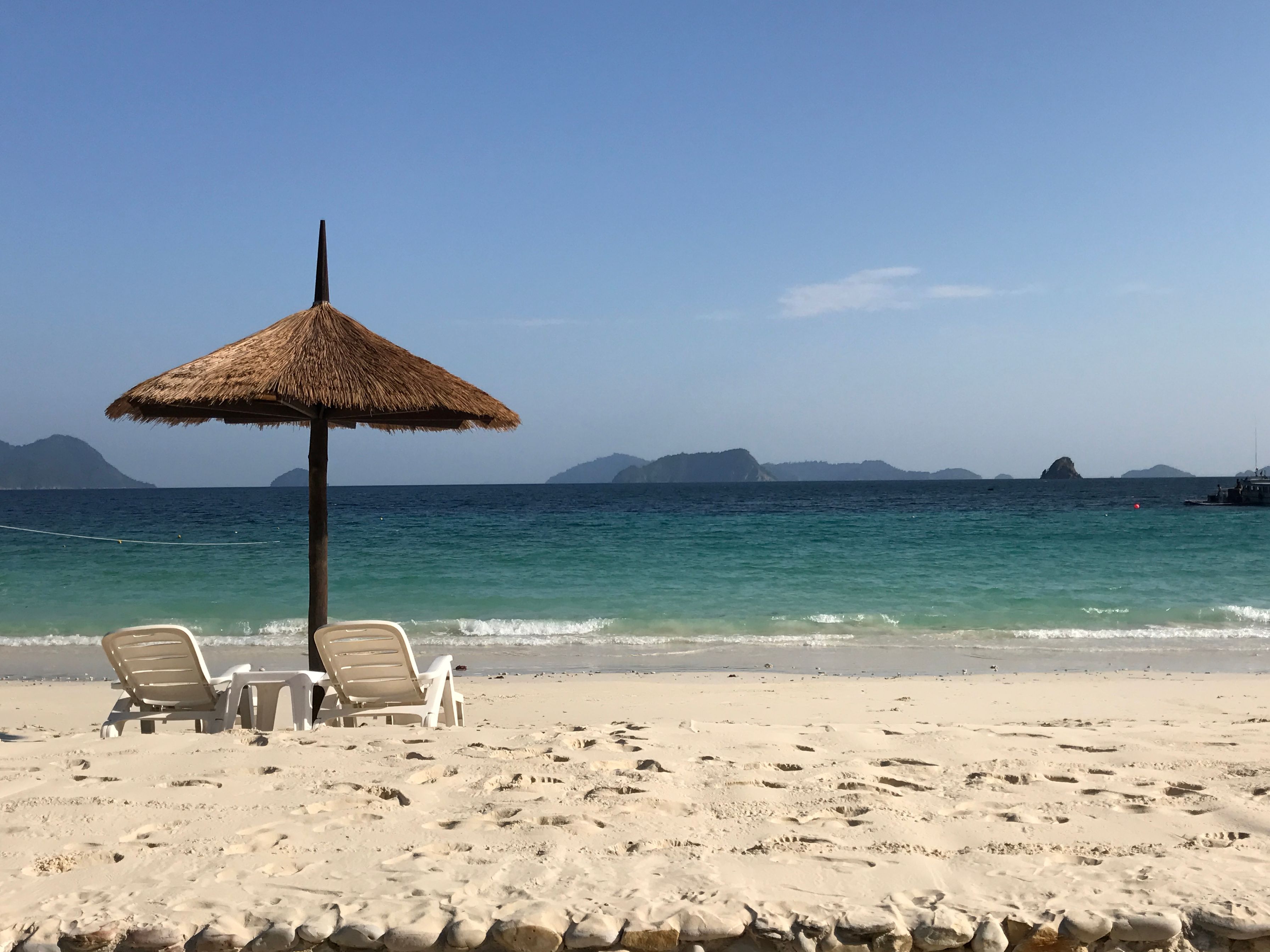
Bamboo Island (Koh Mai Phai) is the Phi Phi archipelago on mute—no cliffs, no spectacle, just a low, pale ring of sand and sea that recalibrates your sense of scale. You come for a day, but the island works on you more slowly: a quiet perimeter where the horizon feels close enough to touch.
Most people treat it like a swim stop and never walk the outer rim. The difference is everything. Ten minutes away from the boat cluster, the sand tightens underfoot, flecked with crushed coral and shell that catches light like ground glass—subtle, not glittery, the kind of shine you notice only when you stop performing for the view.
The payoff is a rare kind of ease. You feel your shoulders drop, your hearing sharpen—water shushing over coral, a longtail engine fading, wind combing casuarina needles. It’s not adrenaline or awe. It’s calm with texture, the kind you carry back onto the mainland.
The Outer Rim Walk That Resets the Island
Bamboo Island’s headline is “white sand, turquoise water,” but the real story is geometry. This is a near-perfect ring—beach, then a thin belt of trees, then interior scrub—surrounded by a shallow reef that acts like a breakwater. When you stay near the boats, you experience the island as a postcard. When you walk the rim, you experience it as a system. On the far side, the light hits differently. The beach narrows, the sand is more coral-rich, and it takes on a faint translucence—less powdery, more crystalline. In places, it looks almost lacquered where waves have combed and compacted it. That “sand turns to glass” feeling is really thousands of years of reef and shell, ground down and sorted by tide into a fine, reflective mix. This is also where the water tells the truth. At the landing, the sea is busy with fins and bubbles; on the outer curve, it’s clear enough to see the reef’s topography—small bommies, pale plates, darker channels where fish move like quick commas. You don’t need to swim far. Even standing shin-deep, you can watch the color gradient change as the bottom drops away. Take the slow lap, and you’ll notice how quickly the island empties once you leave the “front.” That emptiness is the luxury here—not isolation for its own sake, but space to pay attention.
You step off the longtail into ankle-deep water warm as bathwater, then colder where a seam of current slides past the sandbar. The beach is a thin, bright arc—white with a faint champagne tint—backed by casuarina trees that sift the light into stripes. Near the landing, snorkel fins slap and cameras rise; a guide calls names over the engine’s idle. You walk away anyway, following the shoreline as it curves out of sight. With each minute the soundscape thins: fewer voices, more water. The sand changes texture—powder to grit—then becomes strangely firm, as if pressed. At the island’s outer rim, the sea turns from mint to a lucid, bottle-green edge, and the shallow coral gardens sketch dark punctuation under the surface. You stop where the surf is barely surf, just a soft, repetitive exhale. Salt dries on your forearms. Sunlight flashes off broken shell like tiny panes. For a while you do nothing but watch the tide pull its own thread along the coast.
The Water
The water starts as a milky aquamarine in the shallows—sunlit sand reflecting up—then shifts to clear jade along the reef edge. Beyond that, it deepens into a calmer sapphire, especially when the tide rises and the sandbar disappears.
The Cliffs
Bamboo Island is low and flat, a sand-and-reef construction rather than a dramatic limestone stage. Casuarina and beach scrub hold the interior together, while the surrounding reef forms a protective collar that shapes the island’s gentle surf.
The Light
Late morning brings the clearest, most top-down visibility—water like glass, reef shadows sharp. If you want softness, come late afternoon when the sun lowers and the beach turns from stark white to warm ivory, with longer tree shadows striping the sand.
Best Angles
Landing Beach Crescent
You get the classic Phi Phi palette—white sand, shallow aquamarine, and longtails parked like brushstrokes.
Outer Rim Curve (walk 10–15 minutes left from the pier)
The island empties out and the shoreline becomes more sculptural; the sand reads more crystalline and tactile.
Reef Edge Wading Line
Stand shin-deep where the color drops from mint to jade—the gradient becomes the composition.
Casuarina Shade Band
For photographers, the striped light under the trees adds contrast and scale—skin tones and sand both look richer.
Far-Side Quiet Strip (opposite the main anchorage)
The intimate angle: fewer footprints, softer sound, and a horizon that feels uninterrupted—best for contemplative frames.
Bring reef-safe sunscreen and apply it well before you enter the water; the shallows here are essentially a living aquarium.
Wear water shoes—the sand is soft in places, but the coral fragments near the rim can feel sharp when the tide shifts.
Carry cash for longtail hires and park fees (if applicable via your operator); ATMs are on Phi Phi Don, not here.
Pack your own water and a light snack; facilities are limited and can be seasonal, and midday heat is intense on a flat island.
Walk away from the landing before you decide what the island is—ten minutes changes the entire mood.
Handpicked Stays & Tables
Places chosen for beauty and intention, not algorithms. Each one is worth your time.

Zeavola Resort
Laem Tong Beach, Koh Phi Phi Don (north end)
A barefoot-luxury base that leans into teak, lantern light, and generous beach space—ideal for early departures before day-trippers. Service is calm and precise, and the north-end location shortens your boat time to Bamboo Island.

SAii Phi Phi Island Village
Loh Ba Kao Bay, Koh Phi Phi Don
Set on a long curve of sand with a self-contained feel—good if you want resort ease without the Tonsai noise. Book a room that catches morning light, then arrange a private longtail for a quieter Bamboo Island schedule.

Ruan Thai Restaurant (Zeavola)
Laem Tong, Koh Phi Phi Don
A polished Thai menu with the kind of pacing that suits slow island evenings. Come for seafood done cleanly, then linger as the light drops and the beach turns silver.

Api Restaurant & Bar (SAii Phi Phi Island Village)
Loh Ba Kao Bay, Koh Phi Phi Don
Reliable, sea-breeze dining with strong sunset timing and an easy-going wine-and-cocktail rhythm. It’s not trying to be trendy—just comfortable, scenic, and well-run.
Walk far enough around Bamboo Island’s rim and the day stops being an itinerary—and becomes a shoreline you actually inhabit.