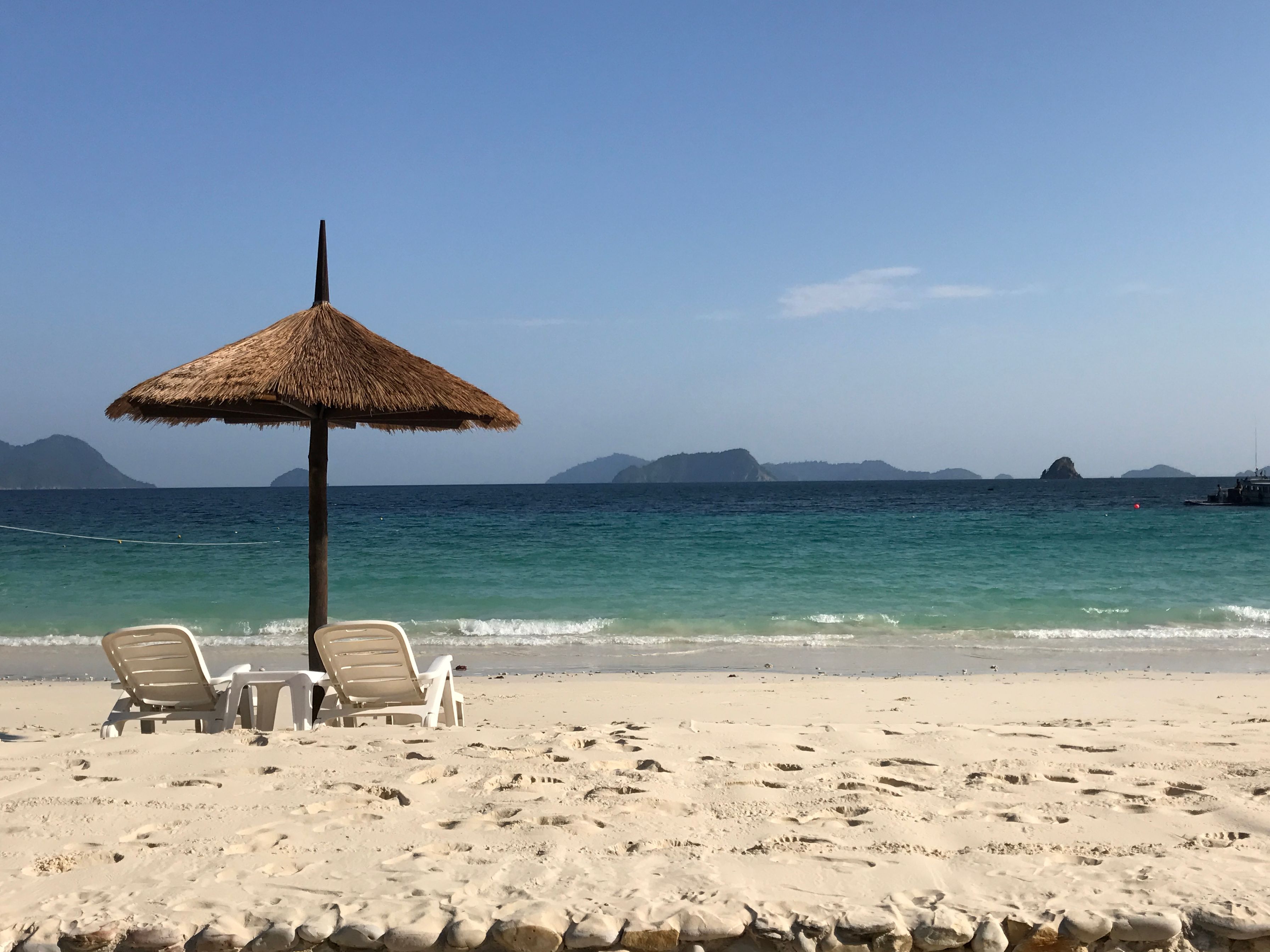
Bamboo Island
On Bamboo Island, low tide doesn’t just reveal sand—it changes the island’s proportions and your sense of space.
Bamboo Island (Koh Mai Phai) matters because it’s one of the rare places in the Phi Phi–Krabi seascape where the ocean’s daily rhythm is the main attraction. When the tide drops, the shoreline unbuttons and the island feels like it has taken a slow breath outward—more room, more silence between boats, more sky reflected in shallow water.
Most people stop at the postcard strip: white sand, teal water, a quick swim, a photo, back on the longtail. What they miss is how the island widens at low tide—sandbars appear, the water thins to glass over rippled flats, and the line between “beach” and “lagoon” becomes a moving, temporary architecture.
The payoff is oddly intimate. You’re not just visiting a pretty island—you’re watching it change in real time, and you start matching your pace to it. The day feels less like a checklist and more like a small, precise moment you can actually inhabit.
The Island’s “Second Shoreline”
Bamboo Island is famous for its simple geometry—an almost oval ring of beach with a low, green center. But the real structure isn’t fixed. It’s tidal. When the water pulls back, the island reveals a second shoreline: a broader, quieter perimeter made of sand flats and shallow channels that don’t exist in most people’s photos. You feel it the moment you stop trying to swim and start walking. The sea becomes a thin, reflective skin over the sand, and the island’s edges soften into gradients—dry sand to damp sand to clear water, each band a different color temperature. This is when the island feels largest, not because it has “more beach,” but because the usable space expands. You can wander farther without needing to commit to deep water, and you can find angles that don’t include the queue of boats. This second shoreline is also where the light becomes more interesting. In the shallows, the sun catches tiny ridges and makes the beach look textured, almost sculpted. The water’s color shifts from saturated turquoise to a pale, milky aquamarine that reads as calm rather than dramatic. If you time your visit to the falling tide, you watch the scene actively rearrange itself—channels narrowing, sandbars linking, reflections growing. It’s the island telling you, quietly, that it isn’t a backdrop. It’s a moving piece of coast.
You step off the boat and the first thing you notice is sound: longtail engines thinning into the distance, the soft percussion of small waves tapping the sand. The air tastes faintly of salt and sunscreen, but under it there’s a clean, warm limestone smell that belongs to Krabi’s sea. At low tide, the water near shore turns from swimming depth to ankle depth in a few steps, and you walk through it as if crossing a sheet of blown glass. The sand underfoot is pale and fine, but not powdery—there’s a subtle grit that catches the light. Ahead, the island looks wider than it should, its edges stretched into curved tongues of sand that pull you away from the crowd without any real effort. You pause where the sea has combed the beach into ripples… each ridge holding a thin line of darker water. A hermit crab drags its borrowed shell across the flats, and for a moment the whole place feels slowed—like the island is letting you see how it works.
The Water
At high tide, the water reads as clean turquoise with a deeper jade line where the seabed drops. At low tide, it turns translucent and layered—pale aquamarine over sand, then a thin ribbon of brighter teal where the channels hold depth.
The Cliffs
Bamboo Island sits in the Andaman’s limestone-and-coral world, a low, sandy ring with shallow reefs and seagrass patches offshore. The island’s center is scrubby green, but the real drama is the gentle shelf of seabed that makes the tide’s retreat so visible.
The Light
Late morning gives you clarity—water so transparent you can read the ripples in the sand. The most flattering light is late afternoon, when the sun lowers and the shallows turn reflective, stretching the island’s “wide” feeling into long, soft gradients.
Best Angles
Northwest sandbar edge
At low tide, this side lets you frame the island as a sweeping curve—more negative space, fewer boats, cleaner horizon lines.
Shallow flats facing Phi Phi Don
The water becomes a mirror here; you get layered blues and subtle reflections that make the scene feel calmer and more editorial.
Treeline shadow line behind the main beach
Step back into the shade for contrast—bright sand and water in front, textured green behind, and a cooler color palette on skin tones.
Longtail mooring line corridor
Shoot along the ropes and bows when boats are anchored farther out; the leading lines add scale without turning the frame into a marina.
Ankle-deep channel at the tide’s edge
Get low. The thin water film turns ripples into pattern, and your subject looks like they’re walking across light.
Check the tide chart for Phi Phi/Andaman coast and plan for a falling or low tide window if you want the island to feel “wider.”
Bring reef-safe sunscreen, a hat, and more water than you think—shade is limited and the light off the sand is bright.
Wear water shoes if you plan to wander the shallows; coral fragments and shell grit can be sharp in places.
Carry small cash for national park fees and basic purchases on tour boats; cards are not a reliable option.
Pack a dry bag for phone and camera—getting on and off longtails can mean sudden splashes, especially with chop.
Handpicked Stays & Tables
Places chosen for beauty and intention, not algorithms. Each one is worth your time.

Zeavola Resort
Laem Tong Beach, Koh Phi Phi Don
You stay on the quieter end of Phi Phi Don, where evenings are about candlelit sand and low conversation rather than music spill. It’s an easy base for early departures to Bamboo Island before day-trippers stack up.

Rayavadee
Railay, Krabi
Set among limestone walls and tropical gardens, it makes the sea feel curated—calm breakfasts, polished service, and boats arranged on your schedule. You’re well positioned for private or semi-private Andaman day runs.

Krua Phranang
Railay, Krabi
You eat Thai classics in a setting that still feels tied to the beach—salt air, warm wood, and a menu that understands spice without turning it into a stunt. Ideal after a long day on the water.

Pad Thai Restaurant (Ton Sai area)
Koh Phi Phi Don
A straightforward, well-known stop when you want something quick and satisfying after boats and sun. Go early to avoid the busiest rush and keep the evening feeling unhurried.
When the sea steps back, Bamboo Island doesn’t just look better—it gives you room to notice what the water has been quietly arranging all day.